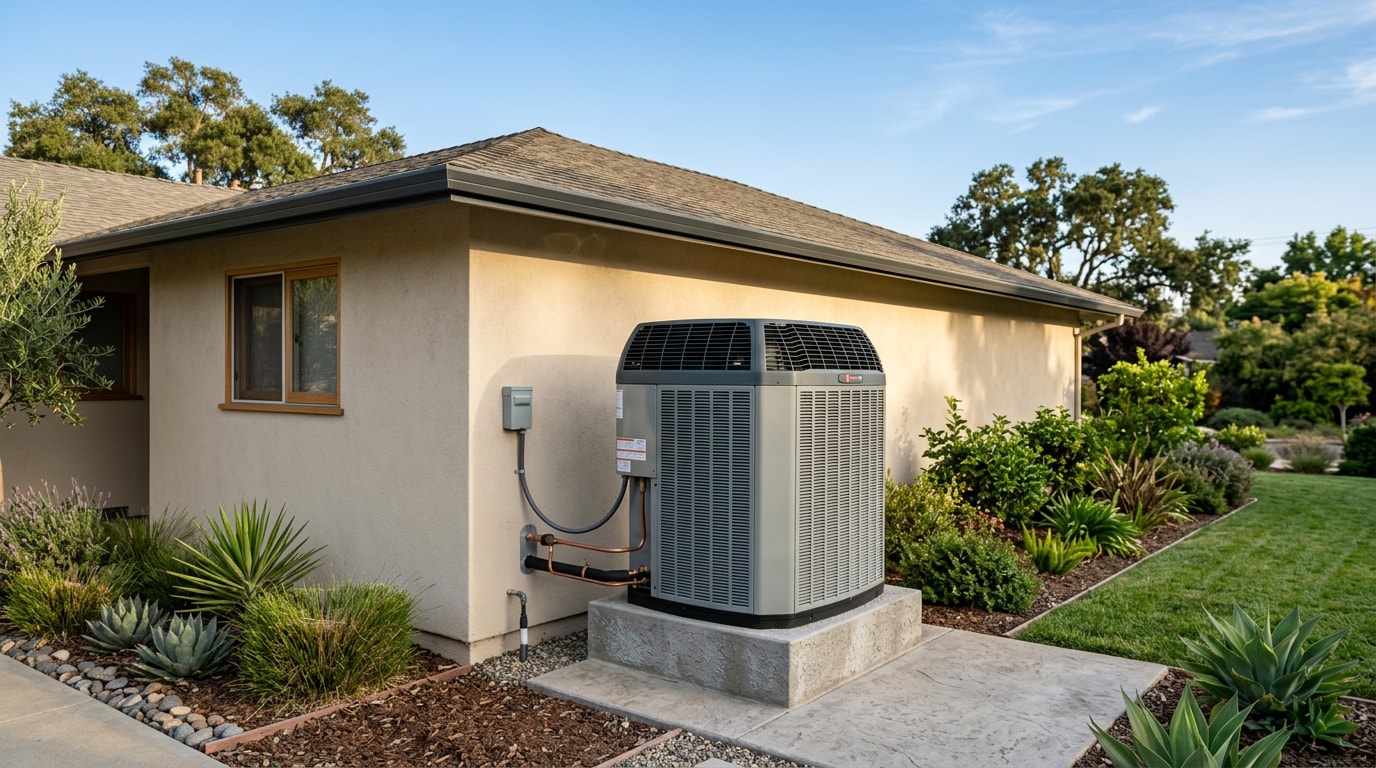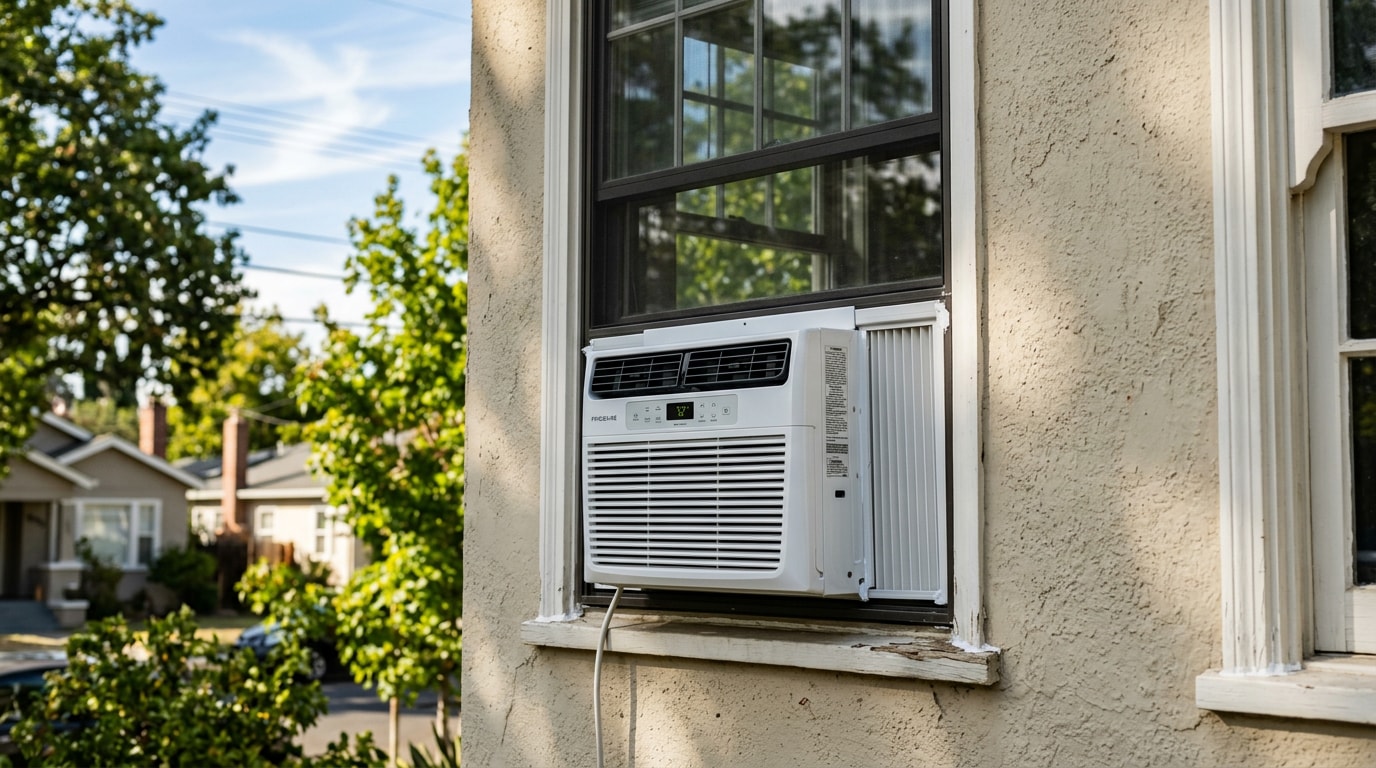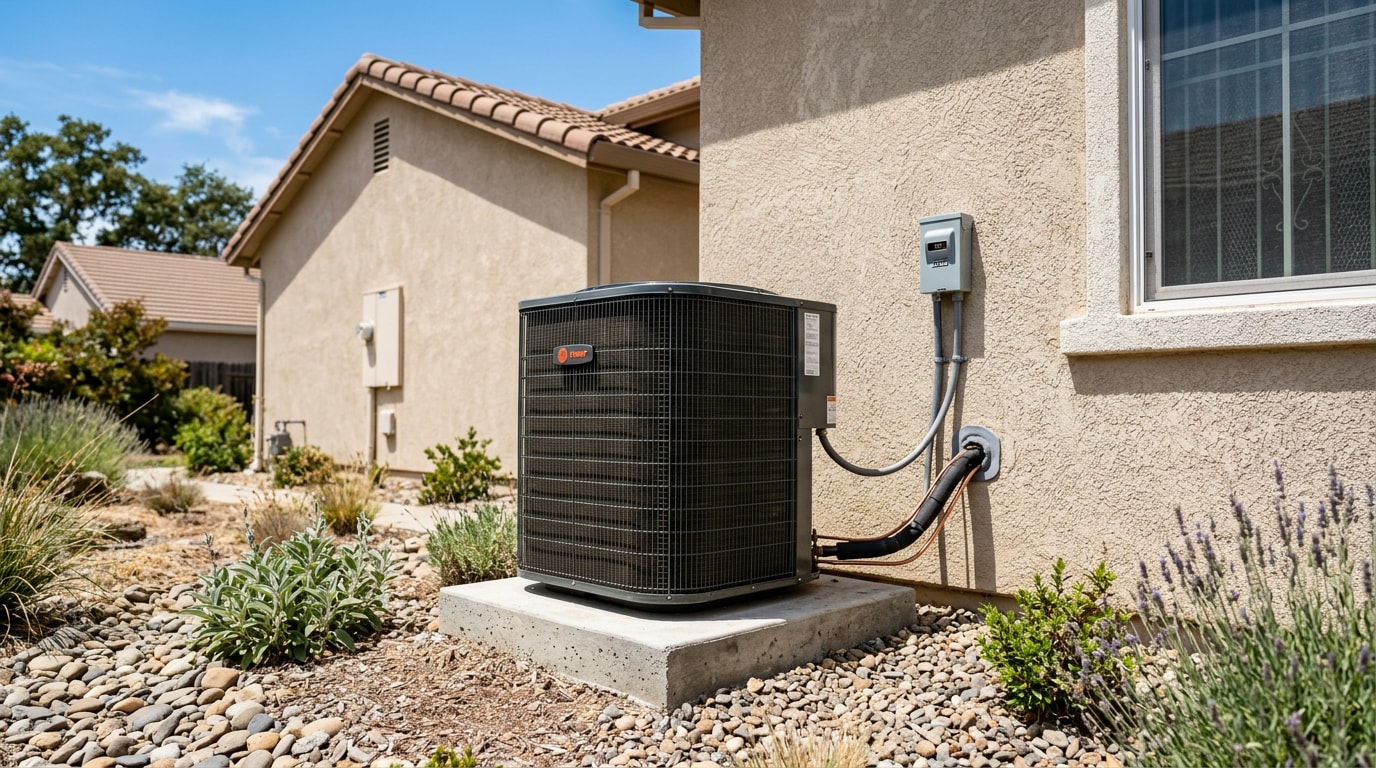
A central ac unit Sacramento, CA homes can rely on has to survive months of triple-digit afternoons, not just the occasional hot weekend. This guide breaks down what installation actually costs in 2026, which repairs come up most in the Sacramento Valley, and a rebate rule most homeowners get wrong before they shop. Get the numbers first, then call if you want a technician to run them against your actual home.
How Much Does a Central AC Unit Cost in Sacramento?
Installed pricing depends mainly on system size (tonnage), SEER2 efficiency rating, and whether your existing ductwork needs work. Here's what Sacramento-area homeowners are typically budgeting for a full installation in 2026:
| Home Size (approx. tonnage) | Standard Efficiency (14.3 to 15.2 SEER2) | High-Efficiency (16+ SEER2) |
|---|---|---|
| Up to 1,200 sq ft (2-ton) | $5,500 to $7,500 | $7,500 to $10,000 |
| 1,200 to 1,800 sq ft (3-ton) | $6,500 to $9,500 | $9,500 to $12,500 |
| 1,800 to 2,500 sq ft (3.5 to 4-ton) | $8,000 to $11,000 | $11,000 to $14,500 |
| 2,500+ sq ft (5-ton) | $9,500 to $13,000 | $13,000 to $17,000 |
These figures include equipment, labor, and standard permitting. Ductwork repairs, electrical panel upgrades, or difficult attic access can push costs toward the high end of each range. For a number specific to your home, based on an actual load calculation rather than a square-footage guess, request a free estimate from our team.
How a Central AC System Works
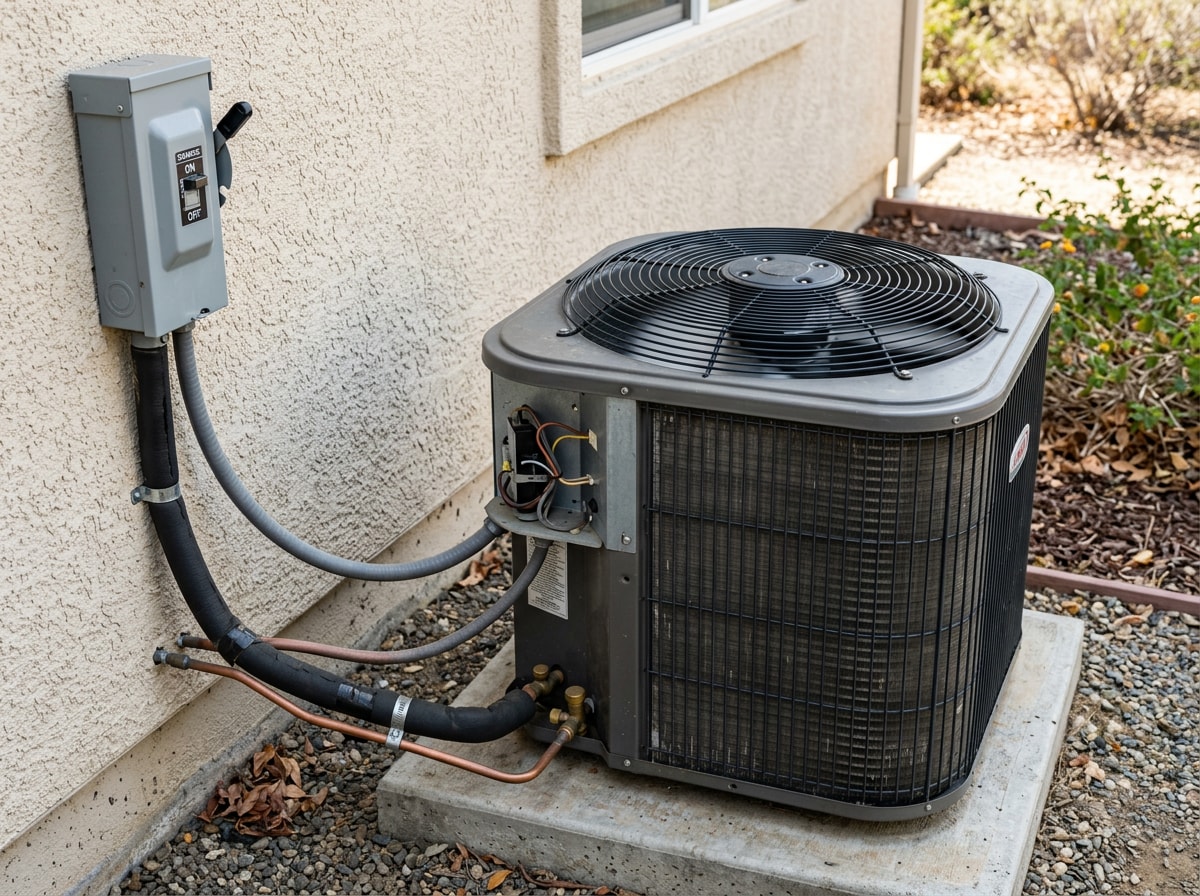
A central air conditioner cools an entire home through one connected system: an outdoor condenser and compressor, an indoor evaporator coil, a network of ducts, and a thermostat that ties it all together.
The compressor pressurizes refrigerant and sends it to the outdoor condenser coil, where heat releases outside. That's why the outdoor unit feels warm mid-summer. Cooled refrigerant then travels inside to the evaporator coil, where a blower pushes warm indoor air across it. The cooled air moves through ductwork into living spaces while the thermostat cycles the system on and off.
Older Sacramento homes sometimes have mismatched or undersized ductwork, which limits performance even when the AC unit itself is in good shape.
Browse our HVAC contractor services to see what's available for your home, or visit the homepage for an overview of our Sacramento-area work.
Signs You Need AC Replacement
Not every AC problem calls for a full system swap, but certain signs point toward replacement rather than another repair bill:
- The unit is 10 to 15 years old or older, especially if it still uses R-22 refrigerant, which is being phased out and increasingly expensive to source.
- You've called for repairs more than once or twice in the past year.
- Energy bills have crept up even though your habits haven't changed.
- Some rooms stay noticeably warmer than others despite a working thermostat.
- The system cycles loudly, rattles, or struggles to keep up on 100-degree days.
ENERGY STAR's general guidance is to consider replacement once a heat pump or air conditioner passes 10 years old, especially if it needs frequent repairs and energy bills are climbing . Sacramento summers push AC units into months of near-continuous run time, and that workload shortens the life of an aging system faster than in milder climates. An AC that limps through June often fails outright by August.
If two or more of these signs sound familiar, it's worth getting an opinion from our air conditioning installation team before your system fails during a heat wave. See ENERGY STAR's full replacement guidance for the complete checklist.
Professional Central AC Installation in Sacramento
Replacing a central AC system is more than swapping boxes. Proper installation affects efficiency, comfort, and whether your manufacturer warranty stays valid. A rushed or incorrectly sized install can leave a brand-new unit performing worse than the old one it replaced.
A typical installation starts with an in-home assessment, where a technician measures your home's square footage, insulation, and window exposure to calculate the correct system size, often called a Manual J load calculation. From there, you choose equipment based on efficiency goals and budget.
Most Sacramento-area jurisdictions require a permit before work begins, since HVAC changeouts fall under California's energy code. Your installer should pull this on your behalf.
Installation day involves removing the old unit, setting the new condenser and evaporator coil, connecting refrigerant lines and ductwork, and wiring the thermostat. A final inspection, from the installer and often the local building department, confirms everything meets code before the crew walks you through operation. Expect the full process, from quote to final walkthrough, to take anywhere from a few days to a couple of weeks depending on permitting timelines.
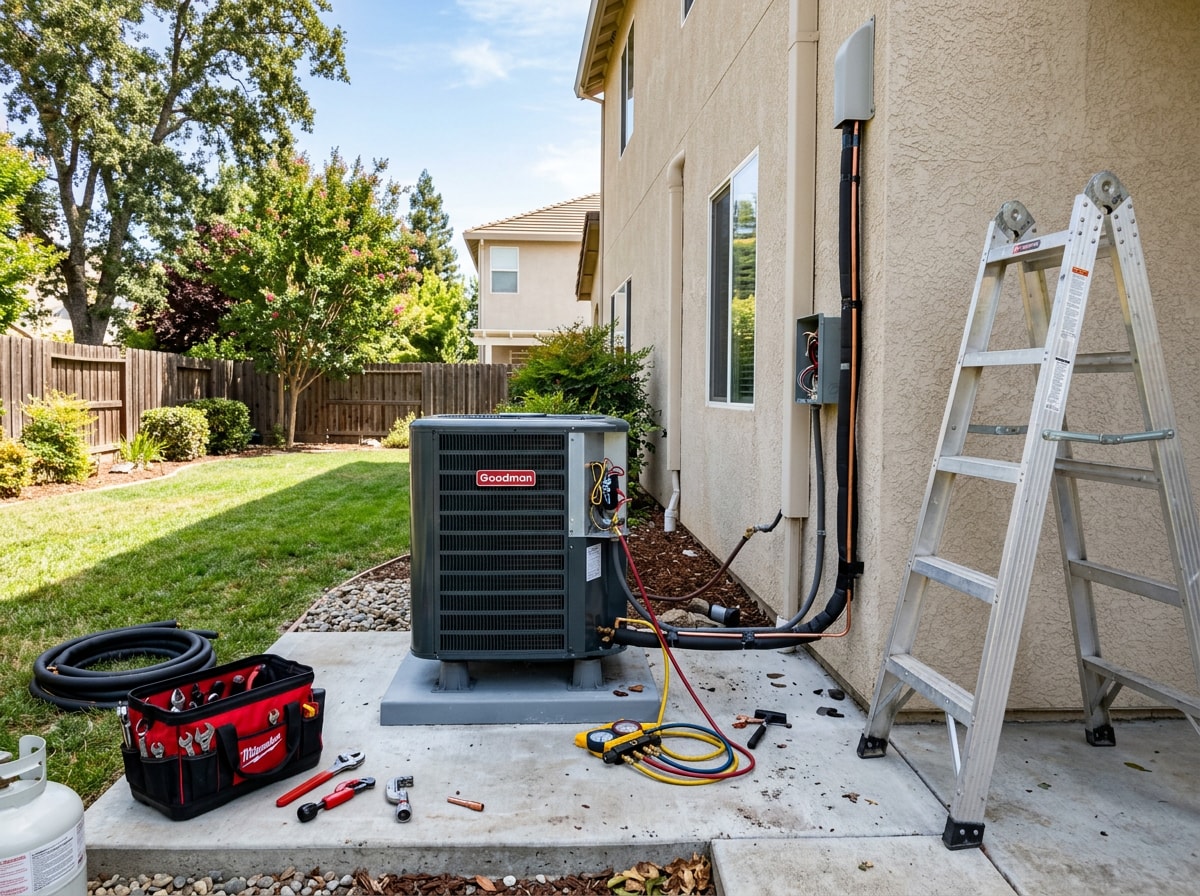
Our installers serve homeowners throughout Sacramento, CA and handle permitting from start to finish.
Common Central AC Repairs in Sacramento
Even well-maintained systems run into trouble eventually. In our service calls across Sacramento summers, capacitor failures and clogged condensate drains are consistently the two most common "no-cool" calls we see once the heat sets in. Other frequent issues include:
- Refrigerant leaks — low refrigerant causes weak cooling and ice buildup on the coil; a technician needs to find and seal the leak, then recharge the system.
- Failed capacitors — a frequent reason an AC unit won't start or the fan won't spin, especially after years of heavy summer use.
- Clogged condensate drains — blocked drain lines can trigger water damage or an automatic shutoff.
- Dirty evaporator or condenser coils — buildup restricts airflow and makes the system work harder, leading to weak cooling.
- Thermostat or electrical issues — faulty wiring or a miscalibrated thermostat can mimic bigger mechanical problems.
Many of these are straightforward fixes when caught early. If a technician flags a cracked heat exchanger or a dying compressor, that's usually a signal you're looking at replacement rather than another repair, see the signs covered above. Our central AC repair technicians can help you tell the difference, and our Air Con Repairs Sacramento, CA guide breaks down repair costs in more detail.
Central AC Maintenance That Actually Extends Lifespan
A typical annual tune-up covers more ground than most homeowners expect. Technicians usually replace or clean air filters, wash the condenser and evaporator coils, check refrigerant charge, inspect electrical connections and contactors, clear the condensate drain line, and test the thermostat's calibration.
Dirty coils and clogged filters force the compressor to work harder, which raises cooling costs and wears parts out faster. Homeowners who keep up with annual maintenance generally get more years out of a system compared to those who only call when something breaks. Ask about our HVAC maintenance plans for scheduled seasonal visits timed before summer demand peaks.
SEER2 Efficiency: What California's Rules Actually Require
SEER2 measures how much cooling a system produces per unit of energy used over a typical season. Higher numbers mean better efficiency, lower bills, and generally higher upfront equipment cost.
Here's the detail most cost guides skip: federal regional standards classify California in the "Southwest" region , along with Arizona, Nevada, and New Mexico. That classification matters because split-system air conditioners installed in the Southwest on or after January 1, 2023 must meet 14.3 SEER2 , a higher floor than the 13.4 SEER2 minimum allowed in northern states. In plain terms: a unit that's legal to install in Oregon or Colorado may not be legal to install in Sacramento.
California's Title 24 energy code layers additional requirements on top of the federal floor, including duct-sealing and load-calculation rules that affect installed cost since some older homes need modifications to meet current standards. Details are published by the California Energy Commission.
SMUD Rebates and Financing Options
This is where a lot of advice gets fuzzy, so here's the specific breakdown. As of 2026, SMUD offers up to $3,000 in rebates on energy-efficient heat pump heating and cooling systems installed by a qualifying contractor , not on a standard AC-only replacement.
| Upgrade Type | SMUD Rebate | Qualifies? |
|---|---|---|
| Gas-to-electric variable-stage heat pump HVAC | Up to $3,000 | Yes |
| Gas-to-electric two-stage heat pump HVAC (15.2 SEER2 min) | Up to $2,000 | Yes |
| Electric-to-electric heat pump upgrade | $1,000 | Yes |
| Straight AC-to-AC replacement (gas furnace stays) | $0 | No |
If you're replacing a straight central AC unit and keeping your existing gas furnace, you generally won't qualify for SMUD's HVAC rebate. If you're open to converting to a heat pump system instead, the math can shift meaningfully. Full technical requirements and current funding availability are on SMUD's heating and cooling rebates page.
Beyond utility rebates, most Sacramento HVAC companies also offer financing plans, ranging from short-term no-interest options to longer monthly payment plans depending on credit approval. Ask your installer which offers currently apply to your project.
This guide is maintained by the licensed technicians at Hot Cold HVAC, who install, repair, and service central air systems across the Sacramento region every cooling season. Have a question about your specific setup? Contact our team for a free, no-pressure estimate, or check out our service areas to see recent work near you.
FAQ
What Size Central AC Do I Need for My Sacramento Home?
AC sizing depends on square footage, insulation quality, window exposure, ceiling height, and which direction your home faces. A professional load calculation, called a Manual J, accounts for all of these factors to recommend the right size unit. Skipping this step and guessing tonnage from square footage alone often leads to a system that struggles or runs inefficiently.
How Long Does a Central AC Unit Last in Sacramento?
Most central air conditioners last somewhere between 12 and 20 years nationally, but Sacramento's long, heavy cooling season tends to push well-used systems toward the lower end of that range. ENERGY STAR recommends starting to consider replacement once a unit passes 10 years old , especially if repairs are becoming frequent.
When Should I Consider Replacing Rather Than Repairing My AC?
Consider the system's age, how often it's needed repairs recently, and whether the repair cost approaches a meaningful fraction of a full replacement. Systems over 10 to 12 years old with recurring issues usually make more financial sense to replace. Younger systems with a single, isolated problem are usually worth repairing. The $5,000 rule below offers a more specific way to run those numbers.
What Is the $5,000 Rule for HVAC?
The $5,000 rule is an informal contractor guideline: multiply your AC unit's age by the estimated repair cost, and if the total exceeds $5,000, replacement is typically the more cost-effective choice. For example, a 12-year-old system needing a $500 repair scores 6,000, above the threshold, suggesting replacement. It's a rough guide, not a formula, so weigh it alongside your technician's actual assessment.
How Much Does It Cost to Put Central AC in a 2,000 Sq Ft House?
A 2,000-square-foot Sacramento home typically needs a 3.5 to 4-ton system, depending on insulation and layout, consistent with the sizing guidance above. Installed costs generally run $8,000 to $11,000 for standard efficiency and $11,000 to $14,500 for high-efficiency equipment, matching the pricing table earlier in this guide. Ductwork condition and electrical panel upgrades can push costs toward the higher end.
Does Costco Sell Central AC Units?
Costco doesn't sell standalone central AC units for DIY installation. Instead, its HVAC program partners with licensed local contractors who handle sizing, installation, and warranty service for members, similar to other retail partnership programs. If you're comparing that route against hiring a Sacramento HVAC installer directly, ask about warranty terms, local service response time, and whether permitting and Manual J calculations are included in the quoted price.
Can I Get a Rebate for Replacing My Central AC in Sacramento?
Only if you're converting to a heat pump system. SMUD's current HVAC rebate, up to $3,000, applies to gas-to-electric or electric-to-electric heat pump installations, not to a like-for-like central AC swap. If rebate eligibility matters to your budget, ask your installer to price both a straight AC replacement and a heat pump option side by side.