Air con repairs Sacramento, CA homeowners search for almost always start the same way: a hot house, a strange noise, or a bill that jumped for no clear reason. This guide walks through the warning signs behind the most common service calls, realistic cost ranges, and a repair-or-replace framework so you can make a confident decision before a technician ever rings the doorbell.
Common Signs You Need Air Con Repairs in Sacramento, CA
Triple-digit heat waves put extra strain on compressors, capacitors, and refrigerant lines that milder climates rarely test. That stress tends to show up as one of a handful of recognizable symptoms.
The AC Won't Turn On
Check two free things first: the circuit breaker and the thermostat mode. A surprising number of "AC won't turn on" calls trace back to a tripped breaker or a thermostat set to heat instead of cool.
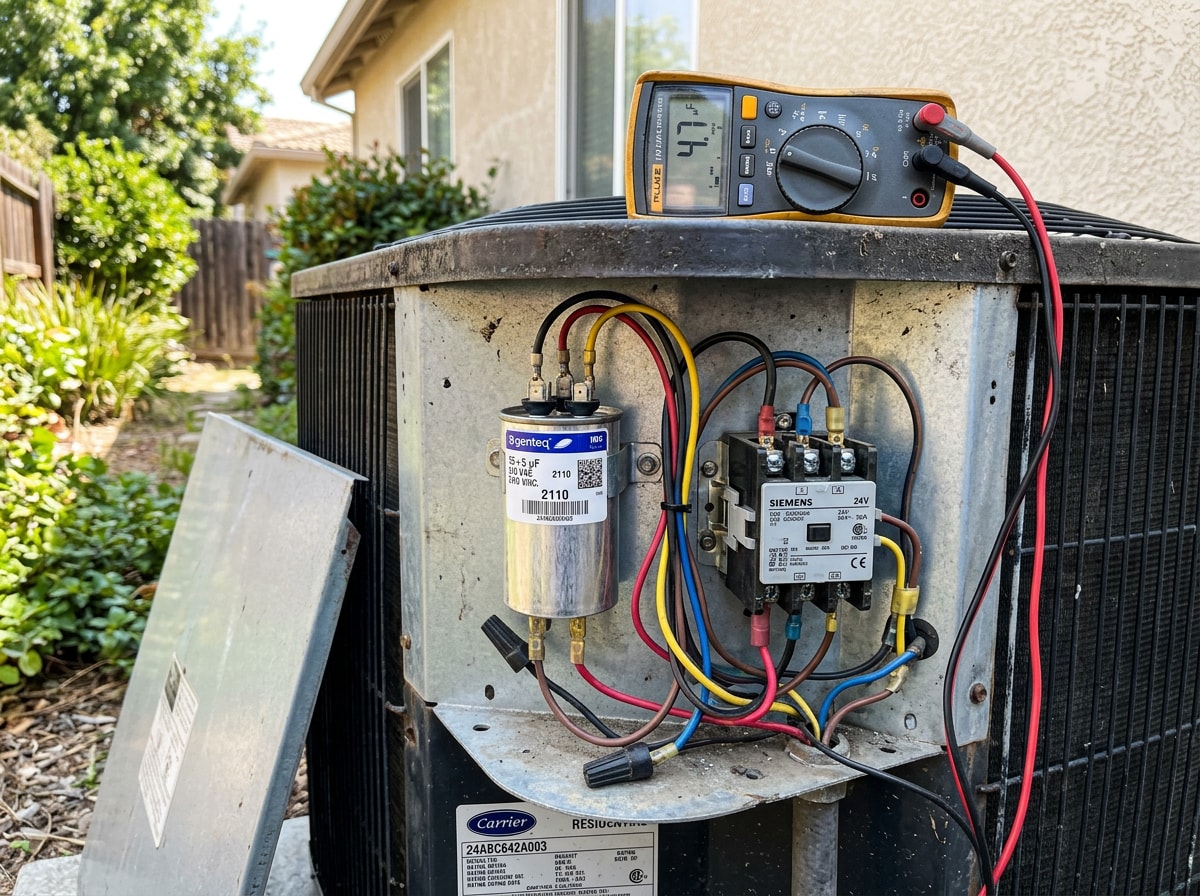
If power is confirmed and the unit still won't start, the usual suspects are:
- A failed capacitor
- A bad contactor
- A fried control board
Any of those is a job for a licensed technician, not a weekend DIY project.
System Running Constantly or Short-Cycling
An AC that never reaches the set temperature, or one that clicks on and off every few minutes, is telling you two very different things.
- Running nonstop usually means the system is undersized for the home or losing refrigerant.
- Short cycling usually points to a thermostat malfunction, a dirty sensor, or improper sizing from the original install.
Either pattern wastes energy and wears out the compressor faster, so it's worth addressing early rather than waiting for a full breakdown.
Reduced Comfort and Weak Airflow
Weak airflow and poor cooling often start with something you can check yourself. A dirty filter is the most common culprit and the easiest fix. A dirty air filter will cause your heating and cooling system to work harder to distribute air throughout your home, so it's worth checking your filter once a month during peak season.
Blocked outdoor-unit clearance (shrubs, debris, or fencing within two feet) and leaky or crushed ductwork can also cause weak comfort even when the filter is clean. If airflow is weak but the air coming out is cold, the problem is usually mechanical, not electrical. For a deeper look at the cooling-but-not-reaching-rooms version of this problem, see this Roseville case breakdown.
Abnormal Noises
A steady hum is normal. Grinding, squealing, or banging is not.
Squealing often means a worn belt or motor bearing. Grinding usually signals a failing motor component that's close to total failure. A new, loud, or rhythmic noise deserves a same-week inspection rather than a wait-and-see approach.
Abnormally High Summer Energy Bills
Dirty filters and coils force the compressor to work harder, and that shows up directly on your SMUD bill. Routine maintenance, including regular filter changes, measurably improves efficiency on a system that's otherwise been neglected. In Sacramento, a standard tune-up typically runs $100 to $200, inexpensive insurance against a much larger repair bill later.
If any of this sounds like what's happening in your house right now, get a free estimate before the next heat wave turns a minor fix into an emergency call.
AC Repair vs. Replacement in Sacramento: How to Decide
Sacramento's cooling season runs five to six months a year, so local systems log more operating hours annually than units in milder climates. That accelerated wear means homeowners here often face the repair-or-replace decision years earlier than the national average suggests.
When Replacement Makes More Sense
Replacement typically beats repair once a system is past 12 to 15 years old, the repair estimate exceeds roughly 30 to 50 percent of a new unit's cost, or the system still runs on R-22 refrigerant. New production and import of most HCFCs were phased out as of 2020, and the most common HCFC in use today is HCFC-22, or R-22, a refrigerant still used in existing air conditioners and refrigeration equipment. Existing R-22 units aren't illegal to run, but replacement refrigerant now comes only from recycled and reclaimed stock, which keeps pushing repair costs up every year.
Here's how the math generally breaks down:
| System Age | Typical Repair Cost (% of replacement) | Approx. SEER Rating | Recommendation |
|---|---|---|---|
| 0–7 years | 10–25% | 14–16 SEER | Repair |
| 8–12 years | 25–40% | 13–15 SEER | Repair, monitor closely |
| 13–15 years | 40–60% | 10–13 SEER | Compare costs carefully |
| 15+ years or R-22 unit | 60%+ | Often under 10 SEER | Replace |
Newer 15+ SEER systems can cut cooling costs noticeably compared with an aging 10 to 13 SEER unit, so the efficiency gain often offsets part of the upfront cost over a few summers. If your system lands in the "replace" row, our air conditioning installation team can walk through sizing and SEER options suited to your home, and our full repair guide covers what a repair visit typically includes.
Emergency AC Repair in Sacramento
A dead AC during a 105-degree heat wave isn't just uncomfortable. It can become a real safety issue for young children, older adults, and pets. Knowing the warning signs and the right first steps can shorten the wait for relief.
Immediate Warning Signs
Four signs mean you need help now:
- AC blowing warm air
- Weak airflow despite the unit running
- Frequent on-off cycling
- A visible water leak near the indoor unit
Warm air usually points to a refrigerant or compressor issue. A water leak near the indoor unit usually means a clogged condensate drain that needs quick attention before it causes water damage.
What to Do When Your AC Breaks Down
Start with the basics: confirm the thermostat is set to cool and below room temperature, then check the circuit breaker.
If a breaker trips again immediately after resetting, stop. Don't reset it a second time. Electricity has long been recognized as a serious workplace hazard, exposing people to risks like electric shock, electrocution, fires, and explosions when wiring faults are ignored, which is exactly why a repeated trip needs a professional rather than another flip of the switch.
Next, check the filter and the condensate drain line for visible clogs. If none of this resolves the issue, it's time for emergency service through our air conditioning repair line.
How to Prevent Costly AC Repairs
Most expensive repairs trace back to deferred maintenance, not bad luck. On service calls across Sacramento County, the single most common first-heat-wave failure we see is a weak run capacitor that was already testing low back in spring, something an annual tune-up would have caught before it stranded someone without cooling on a 105-degree day.
Annual professional tune-ups catch small issues, like a slightly low refrigerant charge or a loosening electrical connection, before they turn into compressor failures. A standard visit typically includes:
- Cleaning condenser coils
- Checking refrigerant levels
- Tightening electrical connections
- Testing capacitor performance
Just as a tune-up for your car can improve your gas mileage, a yearly tune-up of your heating and cooling system can improve efficiency and comfort. For Sacramento homeowners running systems five-plus months a year, that annual visit is one of the more cost-effective ways to extend equipment life. Pairing it with monthly filter checks during peak season closes most of the remaining gap. Our HVAC maintenance plans put this on autopilot so it doesn't get missed, and homeowners in Sacramento can get on the schedule before the next heat wave hits.
FAQ
How much does AC repair cost in Sacramento?
Most AC repairs in Sacramento run between $150 and $1,500, depending on which part failed, how accessible the unit is, and whether it's peak summer season. A diagnostic fee, typically $75 to $200, is usually credited toward the repair if you move forward.
Is it worth repairing an old air conditioner, or should I replace it?
Generally, repairing an old AC unit is worth it if the system is under 10 years old and the repair costs less than a third of replacement. Past 12 to 15 years, or once repair costs climb past 50 percent of a new system's price, replacement usually offers better long-term value.
What is the most expensive part to replace in an AC unit?
The compressor is typically the most expensive component, with replacement often running $1,500 to $3,500 including labor. Because it's central to the whole cooling cycle, a failed compressor is frequently the tipping point that pushes homeowners toward full replacement instead.
How long does AC repair take?
Simple fixes, like replacing a capacitor or contactor, are usually completed same-day, often within one to two hours. Repairs needing special-order parts, like a compressor or coil, can take several days to a week depending on part availability. Same-day repair is common for the most frequent failure points.
Can I keep servicing an AC unit that uses R-22 refrigerant?
Yes, servicing is legal, but it gets more expensive every year. The United States has phased out the production and import of most ozone-depleting substances in keeping with its obligations under the Clean Air Act and the Montreal Protocol , so R-22 now comes only from recycled and reclaimed supply. Many homeowners choose to replace rather than keep paying rising prices for a shrinking supply.
Ready to get your system diagnosed by a local crew instead of guessing? Request a free estimate and we'll walk through repair versus replacement before any work starts. You can also browse recent jobs on our projects page or start from our homepage to see the full range of services we cover across the Sacramento region.