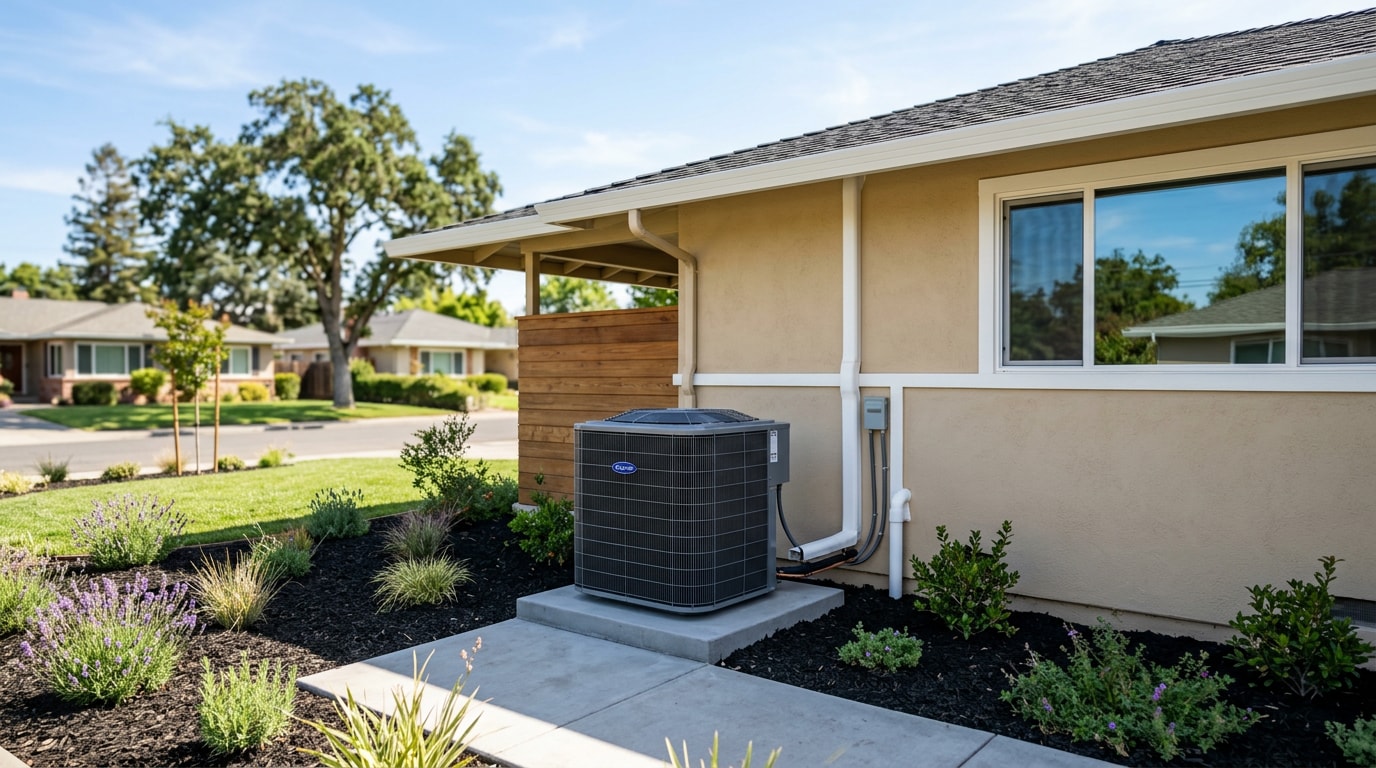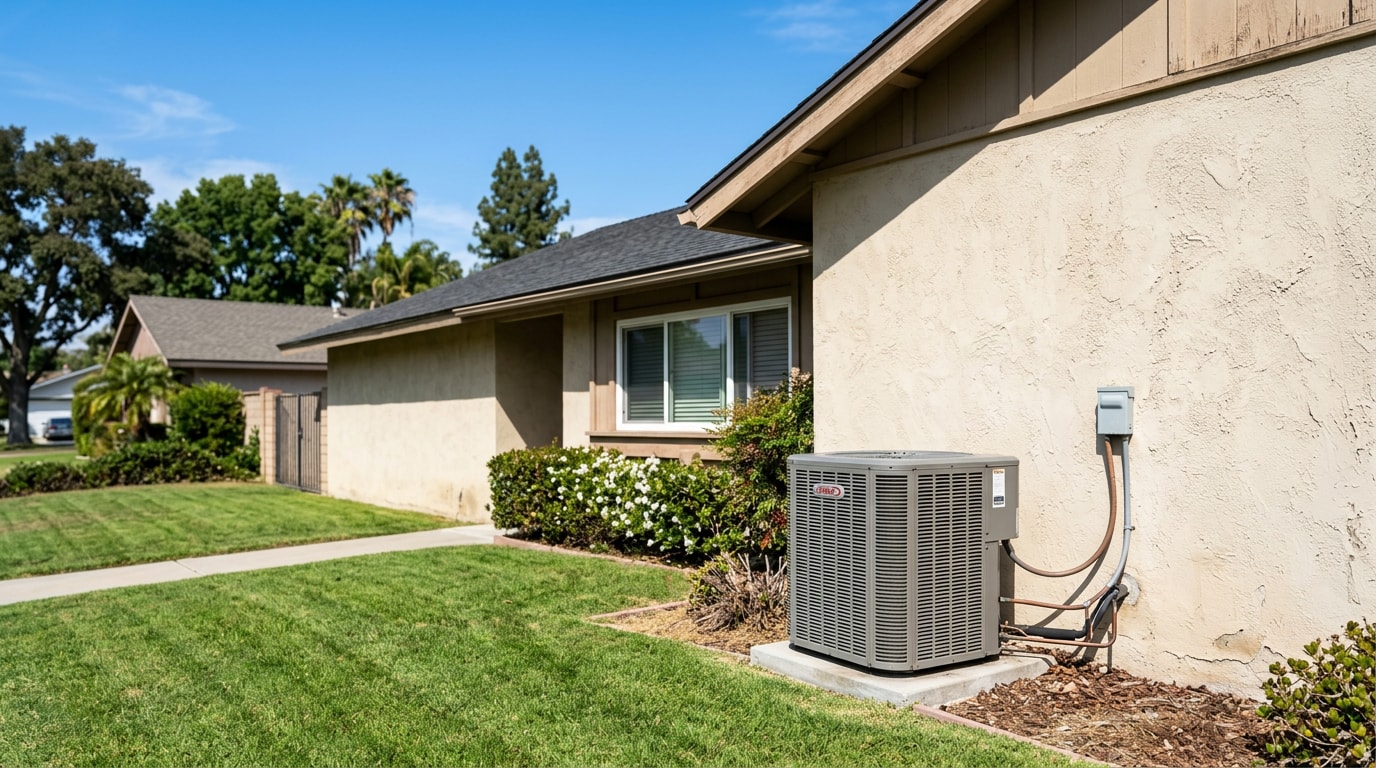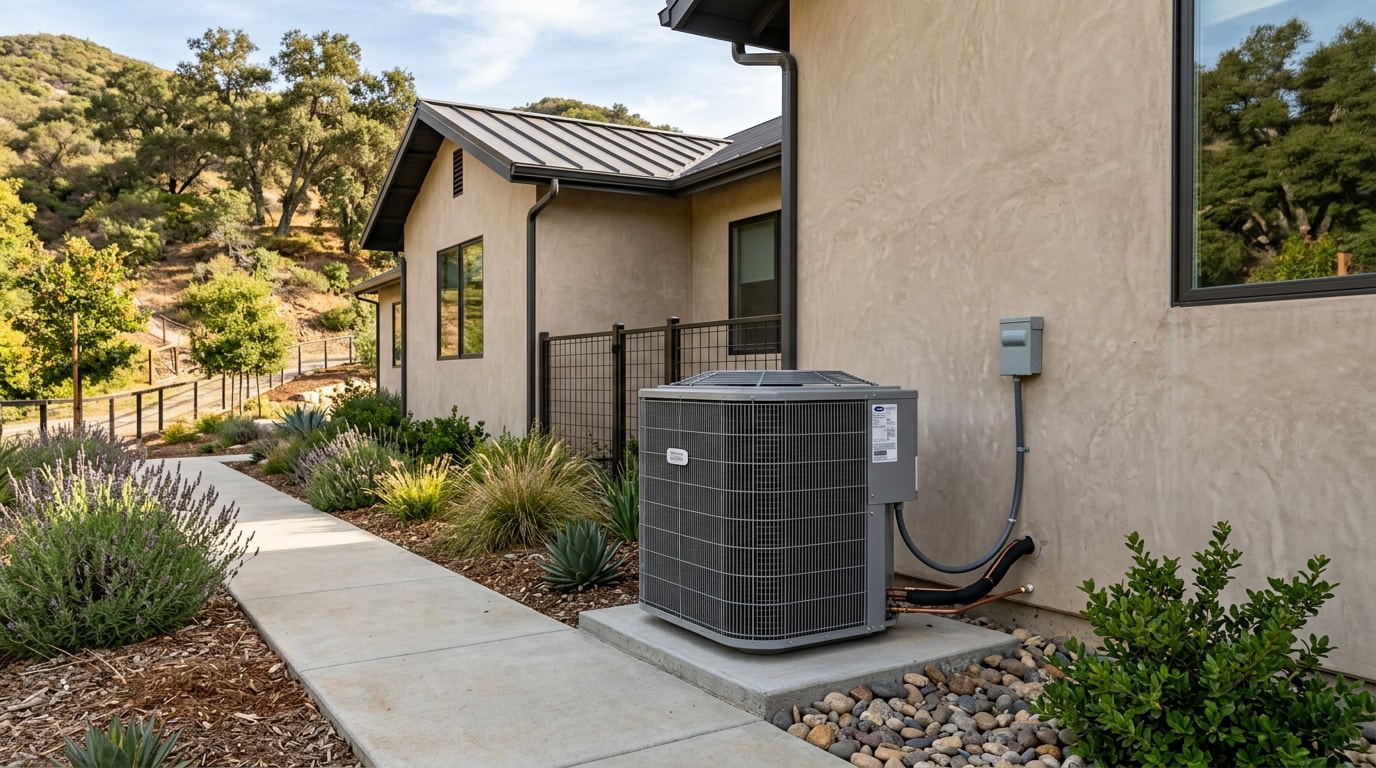
Choosing a heating and air conditioning system in El Dorado Hills, CA means weighing foothill temperature swings, an elevation that runs cooler at night than the valley floor, and California's Title 24 energy code, not just comparing brand names online. Get the sizing or system type wrong and the problem rarely shows up on day one. It shows up eight months later as a cold upstairs bedroom, a spiking PG&E bill, or a failed final inspection.
Visit Hot & Cold HVAC to see our services and request a free estimate.
Why Getting This Decision Right Matters in El Dorado Hills
The system you pick affects comfort, utility bills, and whether your installation actually passes inspection. A mismatched unit creates problems that surface months or years later, not immediately. Getting the selection right upfront avoids costly rework.
Comfort, Efficiency & Long-Term Savings
An improperly sized or installed system often costs more over time, not less. Uneven cooling, climbing bills, and frequent breakdowns are the usual results. Skilled technicians size, install, and fine-tune equipment for the specific home, protecting both comfort and energy use. A correctly matched system keeps performing efficiently for its full rated lifespan instead of losing efficiency within a few years.
Safety & Compliance with Title 24 and Local Codes
El Dorado County enforces its own permitting and inspection requirements for HVAC work, separate from the state code itself. California installations fall under the state's Building Energy Efficiency Standards, commonly called Title 24, which set minimum efficiency and duct-sealing requirements contractors must meet. The 2025 Building Energy Efficiency Standards took effect on January 1, 2026, and any project whose permit application is submitted on or after that date must comply with the 2025 cycle. Confirming permit compliance before work begins protects your investment and your resale value.
Signs Your Current System Is Telling You It's Time to Replace It
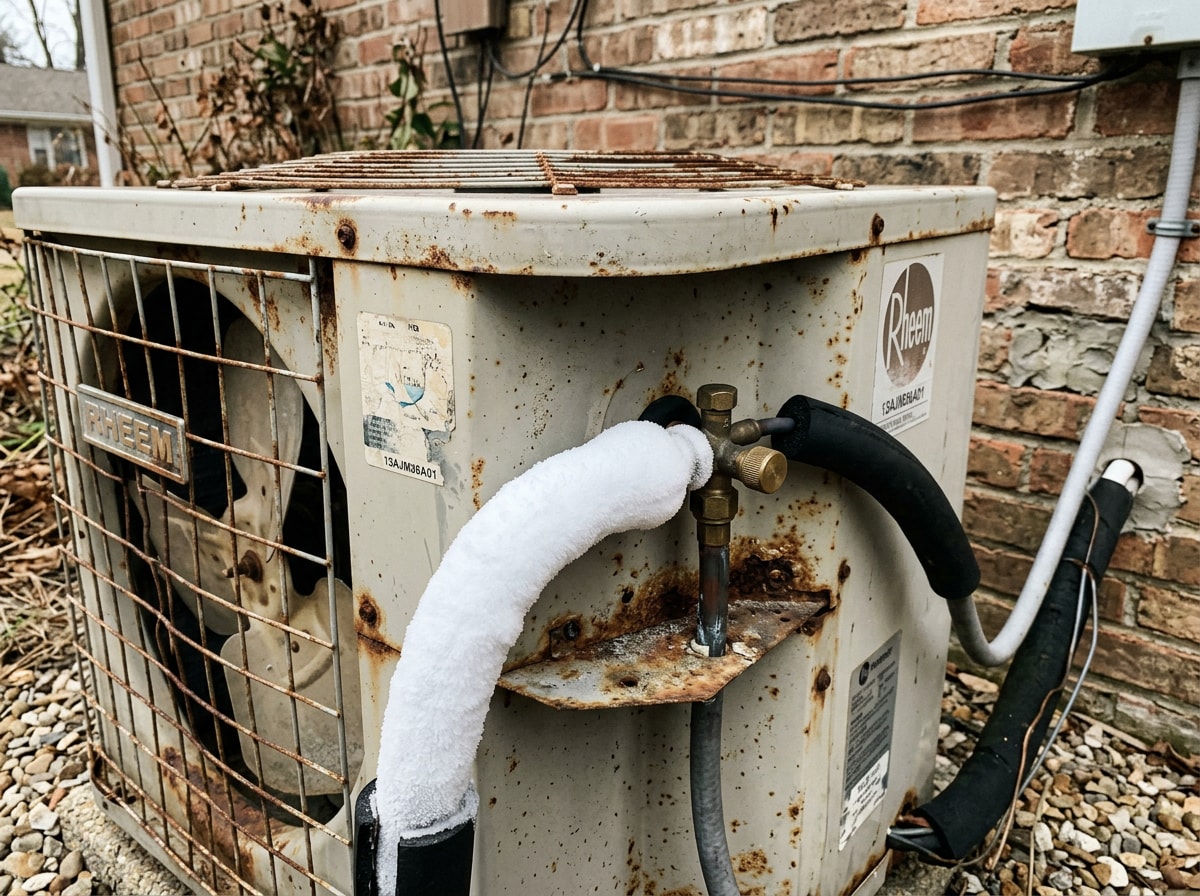
A system typically needs replacement when it meets one or more of these conditions:
- It's 12 to 15 years old and starting to need frequent repairs
- It cools some rooms well and leaves others warm, with no clear fix
- It still runs on R-22 refrigerant, which is being phased out and getting harder to source
- Energy bills are climbing with no clear cause
- Humidity feels high indoors even with the AC running
- Airflow out of the vents feels weak compared to a few years ago
These signs often overlap. An aging unit near the 12-to-15-year mark that's also leaking refrigerant or cycling constantly is a strong candidate for full replacement rather than another repair call. If your system is already showing two or more of these signs, our air conditioning repair team can tell you honestly whether a repair still makes sense or whether you're better off planning a replacement now.
Step 1: Get a Real Load Calculation, Not a Guess
Before any system gets chosen, a proper assessment comes first, not a square-footage estimate scribbled on a clipboard. A technician measures square footage, checks insulation, counts windows, and factors in El Dorado Hills' elevation and seasonal swings.
El Dorado Hills has a hot-summer Mediterranean climate, with average daily highs ranging from roughly 55°F in January to the low-to-mid 90s in July and August. That swing, combined with foothill nights that run colder than Sacramento or Rancho Cordova, is exactly what a proper sizing calculation needs to account for.
This is formalized through a Manual J load calculation, the national ANSI-recognized standard for producing HVAC equipment sizing loads for single-family detached homes, small multi-unit structures, condominiums, townhouses, and manufactured homes published by the Air Conditioning Contractors of America (ACCA). Skipping this step is the single most common cause of oversized or undersized systems, which show up later as short-cycling or rooms that never quite reach the thermostat setting.
Choosing the Right System Type for Your Property
This is the core decision point of the whole process. System type, efficiency features, and capacity all get locked in here, before anyone applies for a permit.
Central Air vs. Ductless Mini-Split Systems
Not every property needs a traditional ducted system. A ductless mini-split works well for homes without existing ductwork, additions, ADUs, or rooms that run hotter or colder than the rest of the house. Weighing central air against ductless options means comparing upfront cost against flexibility. Mini-splits zone room by room, while ducted systems spread conditioned air through an existing duct network.
Heat Pumps vs. Furnaces in a Foothills Climate
For an El Dorado Hills home, comparing a gas furnace against a heat pump system comes down to operating cost, since both options draw on PG&E rates for gas and electricity locally. The variable that actually matters isn't the nameplate rating on the box. It's the heat pump's real output at the coldest temperature the house sees overnight.
Foothill nights run colder than the valley floor, so a cold-climate heat pump with reliable low-temperature capacity, paired with backup heat or a dual-fuel setup, deserves real consideration rather than a quick dismissal in favor of gas.
Sizing for Multi-Story Homes and Uneven Temperatures
Two-story homes often run hot upstairs and cold downstairs, or the reverse in winter. An oversized furnace hits the thermostat's target quickly and shuts off before temperatures even out across floors, leaving upstairs bedrooms uncomfortable. A properly designed zoning system can help, but only when the ducts and equipment actually support it. Closing a few registers by hand isn't the same as a true zone. In some cases, a ductless mini-split handles a stubborn room better than extending the duct network to reach it.
| System Type | Best Fit For | Key Efficiency Metric | Foothills Consideration |
|---|---|---|---|
| Central air + furnace | Homes with existing, well-sealed ductwork | SEER2 (cooling) | Needs duct-sealing to meet Title 24 |
| Ductless mini-split | Additions, ADUs, rooms without ducts | SEER2 (cooling) | No duct losses; good for hot upstairs rooms |
| Heat pump (standard) | Mild-winter homes looking to electrify | SEER2 / HSPF2 | Output drops as outdoor temps fall |
| Cold-climate heat pump | Homes wanting to drop gas entirely | SEER2 / HSPF2 | Maintains capacity at low overnight temps |
Not sure which column fits your house? A free estimate gets you a straight answer based on a real walkthrough, not a guess over the phone.
Understanding SEER2, HSPF2 and Real-World Efficiency
SEER2, or Seasonal Energy Efficiency Ratio 2, measures how efficiently an air conditioner cools a home over a season. The higher the rating, the less electricity it uses for the same cooling output. SEER2 measures seasonal cooling efficiency, EER2 measures cooling efficiency at a defined high-load condition, and HSPF2 measures seasonal heat-pump heating efficiency.
Current federal minimums and ENERGY STAR qualifying levels are maintained jointly by the EPA and DOE under the ENERGY STAR Central Air Conditioner and Heat Pump specification. Certified split-system central air conditioners must meet a minimum SEER2 of 15.2 and an EER2 of 12.0.
Beyond the headline number, variable-speed compressors and blowers, along with smart thermostat integration, can meaningfully improve real-world efficiency. These add-ons often matter as much as the rating itself when comparing a base-model unit against a true energy-efficient system. For a closer look at how these numbers play into actual replacement costs, our air conditioning replacement cost guide breaks down what drives pricing in this region.
Step 2: Permits, Title 24 Compliance, and Inspections in El Dorado County
Most HVAC installations need a mechanical permit through the El Dorado County Building Division, whether the job involves new equipment, duct alterations, or refrigerant changes. Contractors must also follow California Energy Code efficiency minimums and duct-sealing standards.
Refrigerant handling requires certified technicians, since disposal follows state and federal rules. Expect rough mechanical, final mechanical, and sometimes pressure-testing inspections. Check the county's current submittal requirements before you sign a contract, not after.
Working with a licensed HVAC contractor who pulls permits in El Dorado County regularly saves you from the most common delay: paperwork rejected because it was filled out by someone who doesn't do this weekly.
What Installation Day Actually Looks Like
Once the system is chosen and permitted, installation follows a fairly predictable sequence from consultation through final testing.
In-Home Consultation and System Design
Installation starts with a thorough walkthrough to assess cooling needs, layout, and insulation. From there, the contractor calculates ideal BTU output using a detailed load calculation rather than estimating from square footage alone, confirming the design actually matches the home.
Professional Installation and Final Testing
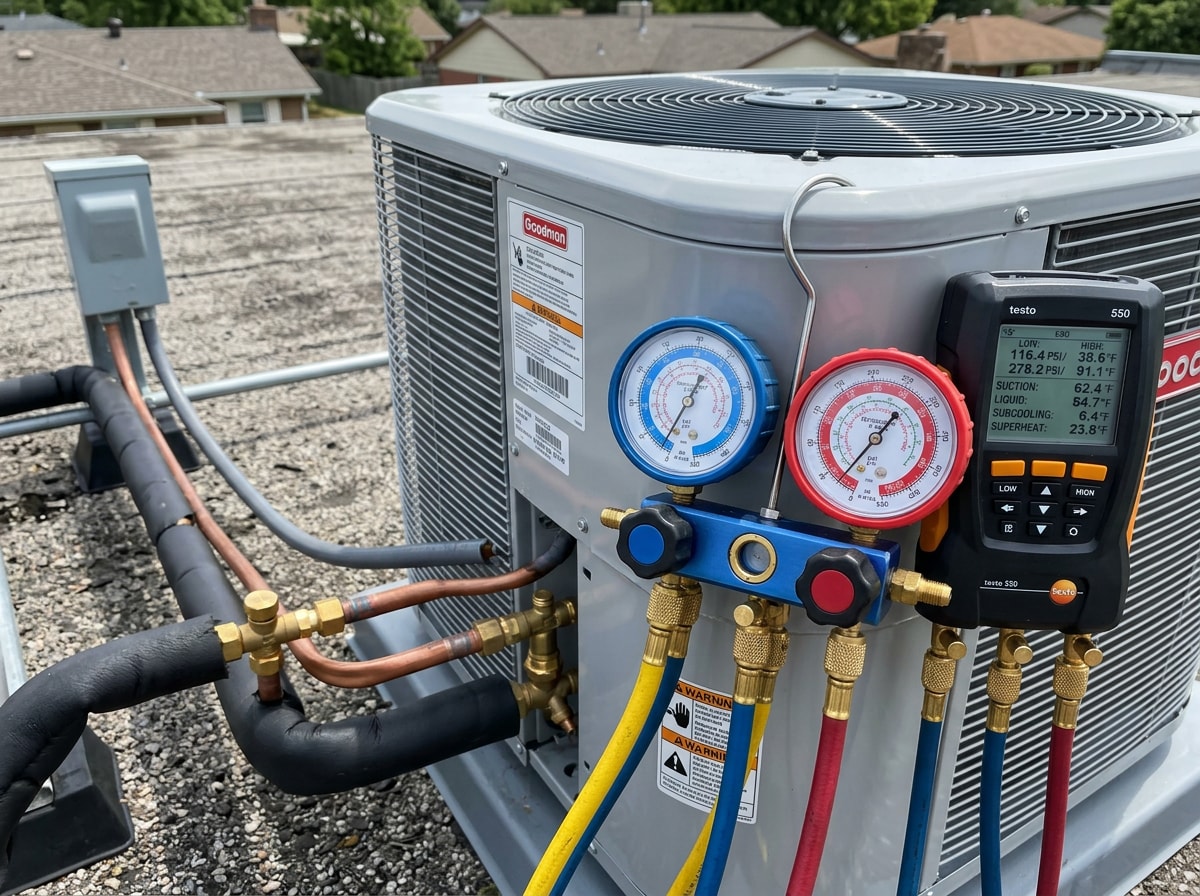
Installation follows industry best practices: electrical connections, refrigerant line work, ductwork modifications where applicable, and thermostat configuration. The job wraps with full system commissioning and final testing to verify airflow and performance before the crew leaves.
The Payoff: What a Correctly Chosen System Delivers
A correctly chosen system pays off beyond lower bills. Expect better humidity control, fewer unexpected breakdowns, and extended equipment lifespan backed by warranty coverage. If your ducts are part of the equation, pairing a new system with air duct cleaning or a ventilation system inspection often closes the gap between a good install and a great one.
Browse our full HVAC contractor services to see current options for your El Dorado Hills home, or head straight to a free estimate if you already know you need a replacement.
Why Trust This Guide
This guide was put together by the HotCold HVAC team, which services El Dorado Hills and the surrounding Highway 50 corridor out of our El Dorado Hills service area. Our technicians run Manual J load calculations on every full-system replacement quote in this region rather than pricing off square footage alone, because foothill homes with vaulted ceilings and west-facing glass load very differently from a flat valley tract home with the same floor plan. If you want a second opinion on a quote you already have, or a straight answer about repair versus replacement, contact us and we'll walk the house with you.
FAQ
What factors should I consider when choosing a new heating and air conditioning system for my home in El Dorado Hills?
Key factors include home size, cooling needs, energy efficiency ratings, budget, and El Dorado Hills' swing between warm summer days and cold foothill nights. Weighing these together, rather than focusing on price alone, is how you end up with a system that performs well for 15-plus years instead of 8.
What size air conditioner or furnace do I need for my home?
System size depends on square footage, insulation quality, window placement, and layout, not a flat per-square-foot rule of thumb. A detailed Manual J load calculation ensures the AC tonnage or furnace size actually matches how the house holds and loses heat.
How long does it take to install or replace an HVAC system?
Most residential replacements finish in a single day, though larger jobs, like adding ductwork or a multi-zone mini-split, can take several days. Ask your contractor for a specific timeline once the scope is confirmed.
Can I replace only the furnace, or do the AC and furnace need to be replaced together?
A furnace-only replacement can work when the existing cooling coil, blower requirements, and controls stay compatible with the new unit. The AC and furnace don't automatically need replacing together just because they were installed at the same time. Matching components is what actually matters.
Will a new HVAC system improve my home's indoor air quality?
In most cases, yes. Newer systems pair with better filtration and more consistent humidity control than aging equipment. If air quality is a specific concern, an indoor air quality consultation before you buy can help you pick filtration options that match the new system.
Do I need a permit to replace my furnace or AC in El Dorado Hills?
Almost always, yes. Equipment changeouts, duct alterations, and new installations typically require a mechanical permit through El Dorado County, along with Title 24 compliance documentation. A licensed local contractor should handle this as part of the job, not as an add-on you have to chase down yourself.