Searching for an air conditioning cover Citrus Heights, CA homeowners can actually rely on? The honest answer is that most units here don't need a full cover at all. A few specific yard and weather conditions change that math, and getting the material and placement wrong can cost you more than leaving the unit uncovered.
Short Answer: Do You Need to Cover Your AC in Citrus Heights?
For most homes, no. Citrus Heights sits in a Mediterranean climate with hot, dry summers and mild, wet winters, and local climate data shows there are 10.5 days annually when the nighttime low temperature falls below freezing, which is warmer than most places in California .
That's a very different situation than the snow-and-ice climates most generic "should you cover your AC" articles are written for. The hard freeze, snow-load logic doesn't translate directly to a Sacramento Valley backyard.
What Is an Outdoor AC Cover, and What Types Exist?
An outdoor AC cover is a fitted shell placed over or around a condenser to block debris and weather exposure. Not all covers do the same job, and the type you choose matters as much as the decision to use one at all.
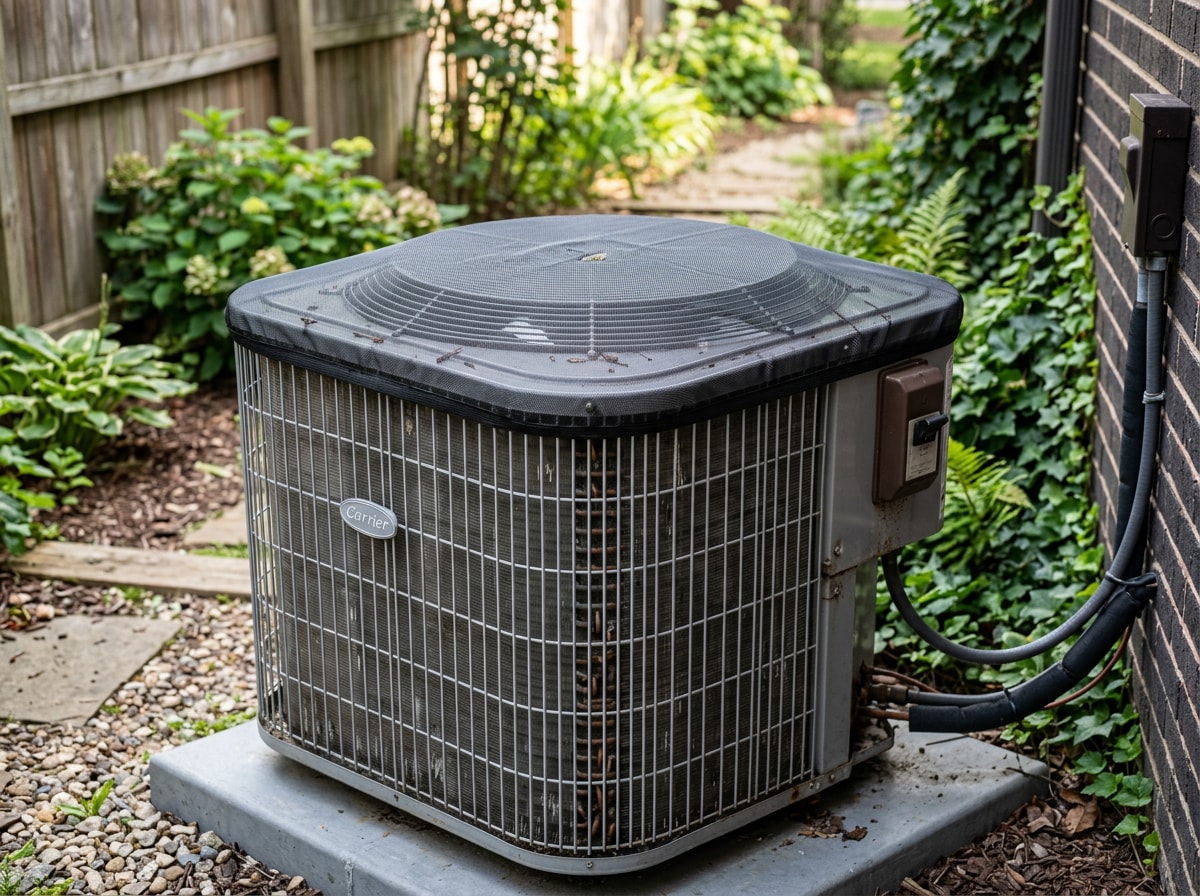
- Breathable mesh covers – shed leaves and acorns while letting air and moisture escape.
- Top-only panels – cover just the grille/fan area, leaving the sides fully open for airflow.
- Insulated or armor-plated covers – marketed for extreme weather, rarely necessary in our climate.
- Full vinyl or plastic wraps – the type nearly every manufacturer and HVAC source warns against.
Why Citrus Heights' Mild Winters Change the Equation
Snow load almost never factors in locally. Local climate records show Citrus Heights averages 21 inches of rain a year and essentially zero inches of snow , which removes the main reason colder-climate guides recommend a cover in the first place.
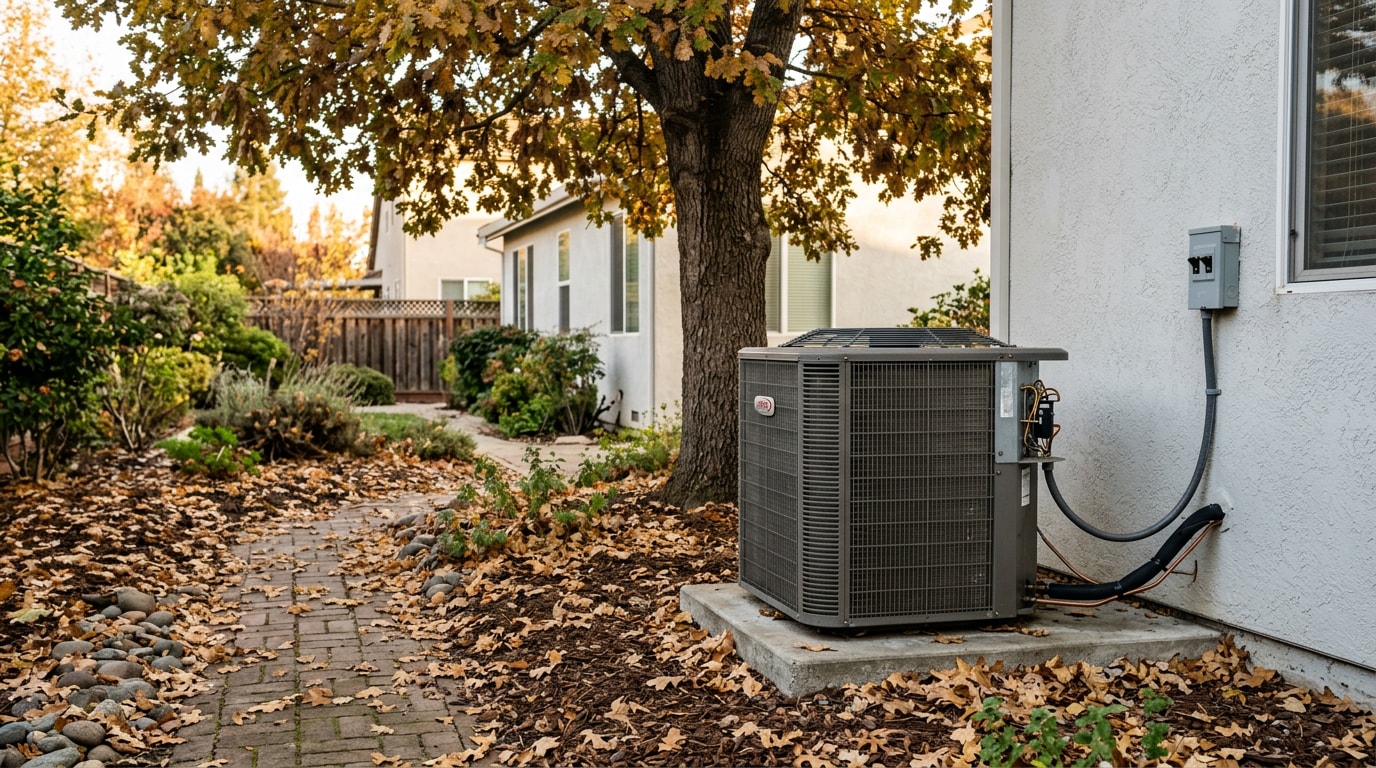
What Citrus Heights winters do bring is wet, mild weather paired with falling leaves, acorns, and debris from mature trees in older neighborhoods. That's a debris problem, not a freeze problem, and it calls for a different solution than what you'll read on a national home-improvement site written for Minnesota or Colorado.
If your home is in one of our Citrus Heights service area, the tree cover on your specific lot matters more than the season on the calendar.
The Real Benefit: Debris Protection Under Trees
Covering genuinely helps in yards with heavy tree canopy. A top-only panel keeps leaves, acorns, and pine needles from piling up on the coil, which makes spring startup easier and reduces the odds of a dirty-coil service call. Even Trane, a major manufacturer, recommends clearing vegetation and debris from around the outdoor unit and keeping an 18-inch clearance zone free of obstructions , and sells its own WeatherGuard cover specifically to keep leaves and debris out of the unit .
That's the one real, verifiable benefit of a cover. It's not the whole picture, though.
The Real Risk: Moisture, Rust, and Rodents
A full or poorly ventilated cover traps moisture against the condenser. The EPA's guidance on indoor moisture control is blunt on this point: indoor mold growth can and should be prevented or controlled by controlling moisture , and a sealed cover does the opposite by locking condensation in rather than letting it evaporate.
Covered units also make appealing winter shelter for rodents, which can chew wiring and insulation you won't notice until the unit fails on the first hot day. In our service calls across Citrus Heights, we see far more corroded electrical contacts and rust damage traced back to improvised tarps and plastic wraps than we ever see from plain winter exposure. If a cover has already caused damage, our air conditioning repair team can diagnose it before you run the system and risk the compressor.
Covered vs. Uncovered: Quick Comparison
| Covering the Unit | Leaving It Uncovered |
|---|---|
| Blocks falling leaves and debris | Full airflow, no trapped moisture |
| Risk of rust and corrosion if not breathable | No rodent nesting risk |
| Possible mold or mildew buildup | Minimal mold/mildew concern |
| Helpful under heavy tree canopy | Fine for most open, exposed units |
When Might You Consider Covering Your AC Unit?
A cover makes sense in a few specific situations:
- Your unit sits under heavy tree canopy that drops leaves or needles all winter.
- The home will sit vacant for an extended period over the off-season.
- A storm forecast includes hail or heavy debris, and you can remove the cover right after.
Outside those cases, leave it uncovered. Whatever you choose, never fully restrict airflow on all sides, and never run the system while it's covered.
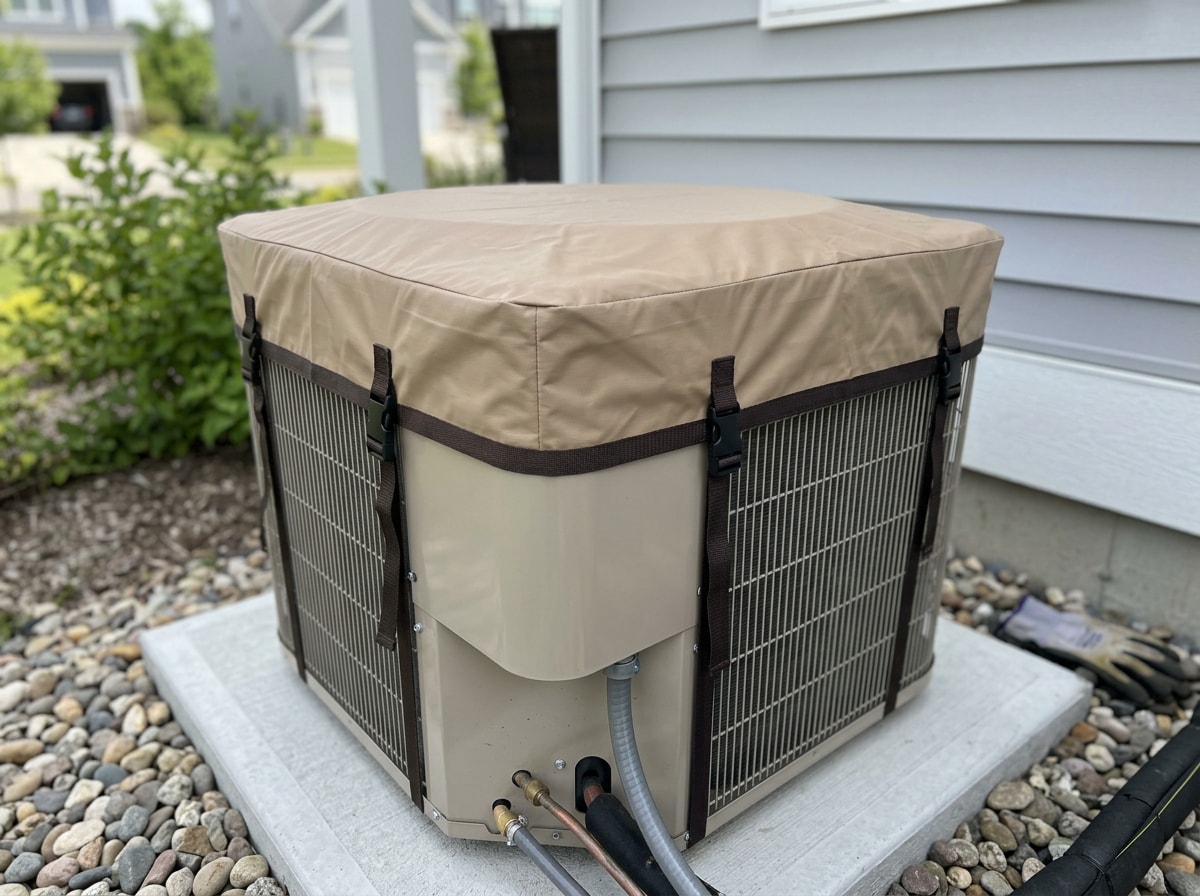
How to Cover Your AC the Right Way
If you decide a cover makes sense for your yard, do it correctly:
- Power off the unit at the disconnect before placing the cover.
- Clear debris and leaves from around the base first; a cover won't help if leaves are already packed inside.
- Use a breathable material only, never solid plastic or vinyl wrap.
- Cover the top only, leaving the sides fully open for airflow.
- Secure it so wind can't lift or shift it.
- Remove it before the system starts running again in spring.
Winterizing Your AC Beyond the Cover
A cover is one small piece of seasonal prep. ENERGY STAR's own guidance for homeowners emphasizes keeping indoor and outdoor units clean and clear of debris, regardless of which technology you're running , which matters more than whether you cover the unit at all.
Other steps worth doing before the season turns:
- Clear debris and vegetation from around the unit.
- Replace or check the air filter.
- Schedule a pre-season tune-up so small issues get caught before they become expensive repairs.
A professional visit through our HVAC maintenance service covers all of this in one trip, and it's the step that actually prevents spring startup failures, not the cover itself. If you're dealing with a unit that's already acting up, our local Citrus Heights service guide walks through what to check before calling a technician.
Not sure whether your setup needs a cover, a clearance trim, or a full tune-up? Get a free estimate and we'll look at your specific unit and yard in person.
FAQ
Should I cover my air conditioner in the winter?
Usually not in Citrus Heights. Our winters rarely produce hard freezes or snow load, so the main reasons colder climates recommend covers don't apply here. A cover only makes sense if your unit sits under heavy tree cover or the home will be vacant for a long stretch.
What should I use to cover my outdoor AC unit?
A breathable mesh top cover or a manufacturer-made top panel. Avoid plastic tarps or full vinyl wraps, since they trap moisture and encourage rust and mold.
Can I run my AC with the cover still on?
No. Running the system while covered restricts airflow and can damage the compressor. Always remove any cover before powering the unit back on.
Does covering my AC unit prevent rust?
Not automatically. A breathable top-only cover reduces debris buildup, but a sealed or non-breathable cover traps moisture against the metal and can cause more rust than leaving the unit exposed.
How do I winterize my air conditioner in a mild climate like Citrus Heights?
Clear debris from around the unit, check or replace the air filter, and schedule a pre-season maintenance visit. These steps matter more than whether the unit is covered, since Citrus Heights rarely sees the freeze or snow conditions that make covers necessary elsewhere.
What's the best way to cover an outdoor air conditioner if I decide to use one?
Power off the unit at the disconnect, clear debris, then secure a breathable, top-only cover. Leave the sides open and remove the cover before starting the system again. For a broader look at keeping your system running year-round, explore Hot & Cold HVAC and our full range of services.