The way Northern California homes are heated and cooled is changing. Here's what the shift to all-electric heat pumps means for your next HVAC installation.
Share:
Summary:
Your gas furnace still works. Your AC keeps the house cool through Sacramento summers. So why is everyone suddenly talking about heat pumps?
Because in 2030, California will stop allowing the sale of new gas furnaces and water heaters. That doesn’t mean you need to rip out your current system tomorrow. But it does mean your next HVAC installation will look different than your last one. Heat pumps are taking over—not just because of regulations, but because they’re starting to make more sense for Northern California homes. Here’s what’s actually changing and why it matters for Citrus Heights homeowners.
Let’s clear up the biggest source of confusion first. California’s Air Resources Board voted to ban the sale of new gas furnaces and water heaters starting in 2030. That’s the rule. But here’s what it doesn’t mean: you don’t have to replace your current furnace if it’s working fine.
The ban applies to new equipment sales, not existing systems. You can keep using your gas furnace. You can repair it. You can maintain it for as long as it lasts. But when it finally dies and needs replacement, your options will be all-electric—primarily heat pumps.
This is part of California’s larger goal to install six million heat pumps by 2030 and eliminate carbon emissions from residential heating. The state already shifted new construction toward all-electric systems with the 2026 energy code. Now existing homes are next in line.

Heat pumps aren’t new technology. They’ve been around for decades. What’s changed is how well they work in climates like ours and how the economics are shifting in their favor.
A heat pump works like an air conditioner that can run in reverse. In summer, it pulls heat out of your house. In winter, it extracts heat from outdoor air and moves it inside. Even when it’s cold outside, there’s still thermal energy in the air that a heat pump can capture and concentrate.
Northern California’s climate is nearly perfect for this technology. Citrus Heights rarely sees temperatures below freezing. Most winter nights stay in the 40s and 50s. That’s the sweet spot where heat pumps operate most efficiently. You’re not asking the system to extract heat from subzero air like homeowners in Minnesota. You’re working with mild conditions that let the heat pump shine.
The other advantage is that one system handles both heating and cooling. You’re not maintaining two separate pieces of equipment. No furnace and AC. Just one heat pump doing both jobs. That simplifies maintenance, reduces the number of potential failure points, and often costs less upfront than buying a furnace and air conditioner separately.
Here’s where the math gets interesting. Heat pumps are about 2.5 to 3.5 times more efficient than gas furnaces. Yes, electricity costs more per unit than natural gas in California. But when your system is three times more efficient, that gap narrows considerably. Add in the fact that you’re eliminating your monthly gas connection fee—usually $15 to $25 per month—and the savings start to add up. Over a 15-year system lifespan, that’s $2,700 to $3,600 you’re no longer paying just to keep the gas line active.
Installation costs for heat pumps in Citrus Heights typically run between $5,000 and $13,000, depending on your home’s size and any ductwork modifications needed. That’s comparable to—and sometimes less than—installing a new furnace and AC system together. When you factor in rebates and the elimination of dual systems, the upfront cost often surprises homeowners in a good way.
This is where things get tricky. California has thrown significant money at heat pump adoption over the past few years. But as of early 2026, many of those programs are tapped out or on waitlists.
The federal tax credit that offered up to $2,000 for heat pump installations expired on December 31, 2025. It’s no longer available for systems installed in 2026 or beyond. The HEEHRA program, which provided up to $8,000 in rebates for income-qualified homeowners, became fully reserved statewide as of February 24, 2026. New applications are going onto a waitlist with no guarantee of future funding.
But there’s still money on the table if you know where to look. SMUD, which serves much of Sacramento County including parts of Citrus Heights, boosted its rebates in February 2026. They’re now offering up to $3,000 for homeowners who convert from gas heating to an electric heat pump HVAC system. That’s a direct rebate, not a tax credit, and it’s available right now.
The catch is that these programs change fast. Funding gets allocated, then it runs out. New programs launch. Old ones sunset. What’s available today might not be available in six months. And what’s gone today might come back in a different form next year.
If you’re planning an HVAC installation anyway, it’s worth checking what’s currently available. But don’t let rebates be the only reason you make the switch. The long-term economics—lower operating costs, eliminated gas fees, one system instead of two—matter more than a one-time incentive that might or might not still be funded when you’re ready to pull the trigger.
The bigger point is this: California is making it clear where things are headed. Rebates come and go, but the 2030 deadline isn’t moving. If your furnace is 15 years old and you’re starting to think about replacement, you’re looking at a decision that’s going to be made for you in a few years anyway. Installing a heat pump now means you’re ahead of the curve instead of scrambling when your furnace dies in 2031 and your only option is electric.
Want live answers?
Connect with a Hot & Cold HVAC expert for fast, friendly support.
If you’ve never had a heat pump installed, the process is similar to any major HVAC installation with a few key differences. Understanding what’s involved helps you plan and know what questions to ask contractors.
First, proper sizing matters more with heat pumps than with traditional systems. An oversized heat pump will cycle on and off too frequently, reducing efficiency and comfort. An undersized system won’t keep up on the hottest or coldest days. We perform a load calculation based on your home’s square footage, insulation, window placement, and orientation. This isn’t optional. It’s the difference between a system that works well and one that disappoints.
Most heat pump installations in Citrus Heights take one to three days, depending on whether your ductwork needs modifications or your electrical panel needs an upgrade. Straightforward replacements where you’re swapping out an old AC and furnace for a heat pump often finish in a single day.
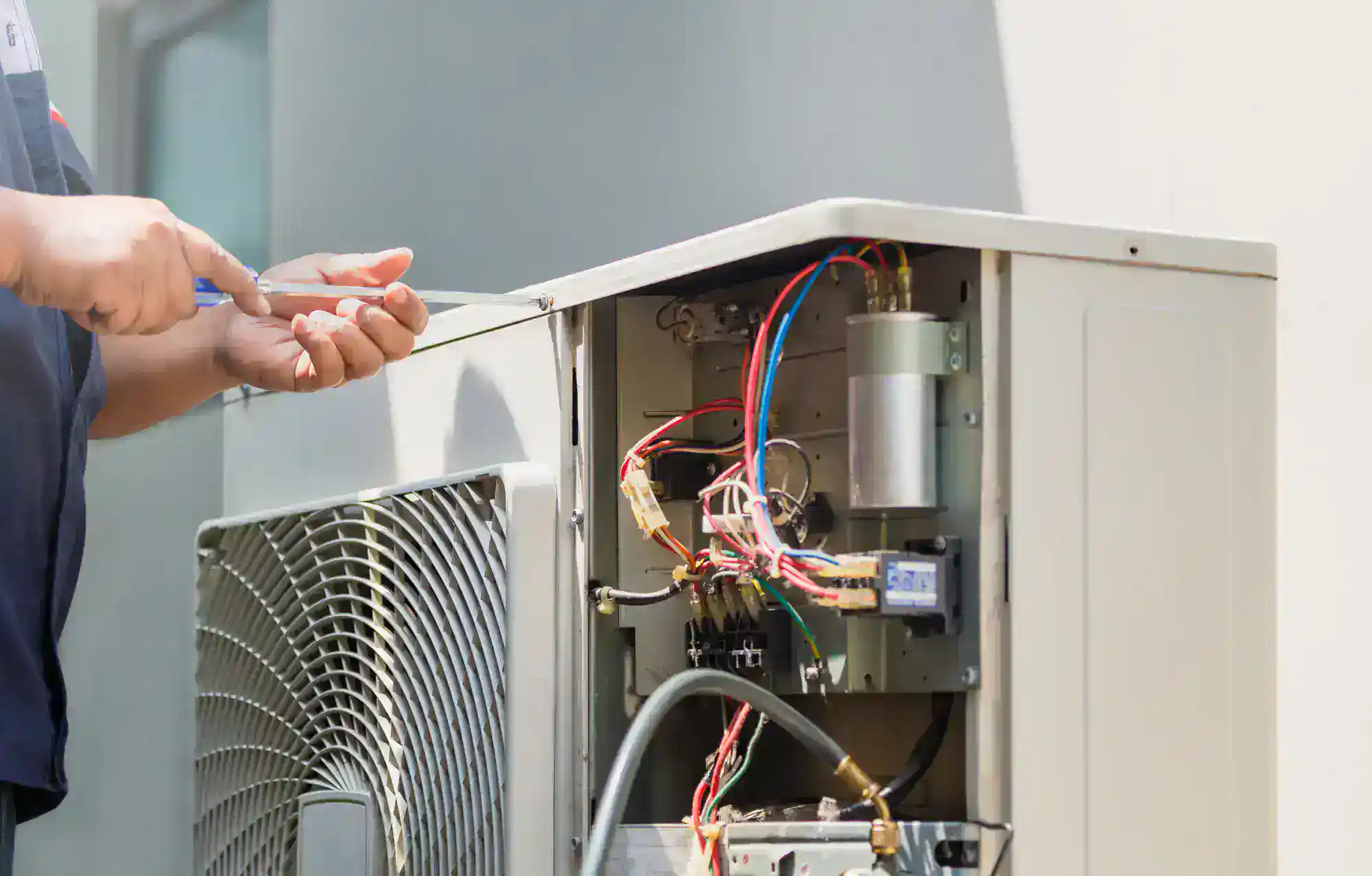
This is one of the most common questions homeowners ask, and the answer depends on your specific home. Many homes in Citrus Heights were built with gas heating and central air conditioning. The ductwork is already there. The electrical panel already has capacity for cooling equipment. In those cases, a heat pump installation is relatively straightforward.
But not always. If your home has an older 100-amp electrical panel, you might need an upgrade to handle the heat pump’s load, especially if you’re also planning to add an EV charger or other electric appliances. Most modern 200-amp panels have enough capacity, but we verify this before starting work.
Ductwork is the other variable. If your existing ducts are in good shape, properly sealed, and correctly sized, they’ll work fine with a heat pump. But many older homes have leaky ducts, poor insulation in attic runs, or sizing issues that reduce efficiency. A heat pump will expose those problems more than a gas furnace did because it runs at lower temperatures for longer periods.
The good news is that addressing ductwork issues pays off regardless of what system you install. Sealing leaks and improving insulation reduces energy waste, improves comfort, and extends equipment life. If we identify duct problems during the assessment, fixing them isn’t just about the heat pump. It’s about making your whole HVAC system work better.
Permits are required in Citrus Heights for HVAC installations. We handle this process for you, working with the local building department to ensure everything meets code. We’ll also coordinate with salvage companies to properly dispose of your old equipment and capture refrigerants as required by environmental regulations. This isn’t something you want to DIY or skip. Proper permitting protects you if there’s ever an issue and ensures the work was done to code.
If you’ve been researching heat pumps, you’ve probably run into conflicting information. Some people swear by them. Others claim they don’t work in cold weather or cost a fortune to run. Here’s what’s actually true for Citrus Heights and Northern California conditions.
The “heat pumps don’t work in cold weather” myth comes from older technology and climates that Northern California doesn’t experience. Traditional heat pumps from 20 years ago did lose efficiency when temperatures dropped below 40°F. Modern heat pumps with variable-speed compressors maintain efficiency down to much lower temperatures—often as low as -20°F for cold-climate models. But here’s the thing: Citrus Heights rarely sees temperatures below 35°F. You’re not testing the limits of the technology. You’re operating in its comfort zone.
The other concern is operating cost. Yes, electricity rates in California are high. PG&E and other utilities have some of the highest residential rates in the country. But remember that efficiency multiplier. A heat pump produces 2.5 to 3.5 units of heat for every unit of electricity it consumes. A gas furnace, even a high-efficiency one, converts about 95% of its fuel to heat. When you do the math on actual energy delivered per dollar spent, heat pumps often come out ahead or close to even—and that’s before you factor in eliminated gas connection fees and the ability to use one system year-round instead of two.
The air coming from a heat pump feels different than air from a gas furnace. Gas furnaces blast air at 120°F or hotter. Heat pumps typically deliver air around 90 to 100°F. That’s still warm—warmer than your body temperature—but it doesn’t feel like a blast of heat when it hits your skin. Some people interpret this as “not working” when the system is actually heating the house just fine. It’s a matter of expectation, not performance.
Maintenance requirements are similar to any HVAC system. You’ll want seasonal tune-ups, filter changes, and occasional refrigerant checks. Because a heat pump runs year-round instead of sitting idle half the year like a furnace, some components may wear faster. But you’re also eliminating maintenance on a second system, so the total maintenance burden is often comparable or less than running separate heating and cooling equipment.
The shift toward all-electric heat pumps isn’t just about California regulations. It’s about technology that’s gotten better, economics that are shifting in favor of electric systems, and a climate that’s nearly ideal for heat pump performance.
If your current system is working fine, there’s no reason to replace it tomorrow. But if you’re facing a repair decision on an aging furnace or planning for replacement in the next few years, heat pumps deserve serious consideration. The 2030 deadline is coming. Rebates are shrinking. And the longer you wait, the fewer options you’ll have.
The key is working with a contractor who understands heat pump technology, performs proper load calculations, and can walk you through the real costs and benefits for your specific home. Not every situation is the same. But for most Northern California homeowners, the question isn’t whether heat pumps make sense—it’s when to make the switch. If you’re ready to explore your options for HVAC installation in Citrus Heights, we can help you figure out what makes sense for your home and your timeline.
Article details:
Share:
Continue learning: