Wondering when to change your filter or if that noise is normal? Get real answers to the HVAC questions Sacramento homeowners actually ask.
Share:
Summary:
HVAC stands for heating, ventilation, and air conditioning. It’s not one machine—it’s a system of components working together to control the temperature and air quality in your home. Your furnace heats air in winter. Your AC cools it in summer. The ductwork moves that air through your house. The thermostat tells everything when to turn on and off.
In Sacramento County, where summer temps hit triple digits and winter nights can drop into the 30s, your system works overtime. Understanding the basics helps you spot problems early and have real conversations with technicians when something goes wrong.

When you lower the temperature on your thermostat in summer, you’re not making your AC blow colder air. You’re telling it to run longer until your home reaches that temperature. The air coming out of your vents is always roughly the same temperature—what changes is how long the system runs.
Your thermostat has sensors that detect the current temperature in your home. When that temperature is higher than your setting, it signals your AC to kick on. The system pulls warm air from inside your house, removes the heat through a process involving refrigerant and coils, then pushes the cooled air back through your vents.
This is why setting your thermostat to 60 degrees on a 105-degree Sacramento day won’t cool your house faster. It just makes your system run constantly, driving up your energy bill and putting unnecessary strain on the equipment. Your AC can only cool at one speed (unless you have a variable-speed system). Setting a realistic temperature and giving it time to work is more efficient than cranking it down and hoping for instant relief.
The heating process works similarly but in reverse. Your furnace generates heat through combustion or electric coils, warms the air, and circulates it through the same ductwork. In both cases, the air handler—basically a large fan—is what moves conditioned air throughout your home.
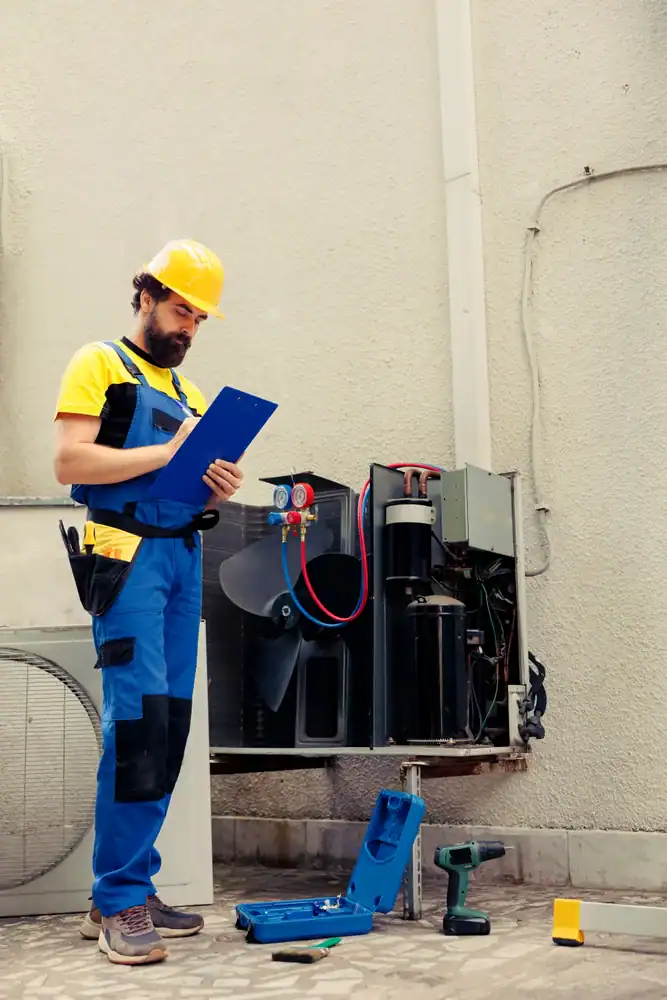
You don’t need to become an HVAC expert, but knowing a few key components helps when something breaks. The compressor sits in your outdoor unit and is basically the heart of your AC system—it pressurizes refrigerant and keeps it moving through the system. When a technician says your compressor failed, that’s usually expensive because it’s a critical component.
Your evaporator coil lives inside your home (often in the furnace or air handler) and is where the actual cooling happens. Warm air passes over these cold coils, heat gets absorbed, and cooler air comes out the other side. If these coils get dirty or freeze up, your system can’t cool properly.
The air filter is probably the simplest but most important part you’ll deal with regularly. It traps dust, pollen, and debris before they can clog up your system or circulate through your home. A dirty filter restricts airflow, making your system work harder and potentially causing it to overheat or freeze. In Sacramento’s dusty environment, filters get dirty faster than you might expect.
Your ductwork is the network of metal or flexible tubes running through your walls, attic, and crawlspaces. These ducts deliver conditioned air to every room. Leaks in ductwork waste energy—you’re paying to heat or cool air that never makes it to your living spaces. If you notice some rooms are always too hot or too cold, ductwork issues might be the culprit.
The thermostat is your control center, but it’s also a sensor. If it’s located in a spot that gets direct sunlight or sits near a drafty door, it might tell your system to run more or less than needed. Modern programmable or smart thermostats can save energy by adjusting temperatures when you’re away, but only if they’re installed in the right location and programmed correctly.
Want live answers?
Connect with a Hot & Cold HVAC expert for fast, friendly support.
Maintenance isn’t exciting, but it’s the difference between a system that lasts 10 years and one that makes it to 20. Most of what keeps your HVAC running smoothly is simple—change filters, keep outdoor units clear, and schedule professional tune-ups. The homeowners who skip these steps are the ones calling for emergency repairs during Sacramento’s worst heat waves.
Regular maintenance also catches small problems before they become expensive ones. A technician might spot a worn belt or a refrigerant leak during a routine visit—issues that would’ve caused a complete breakdown if left alone for another few months.
The standard advice is every 90 days, but that’s just a baseline. If you have pets, you should change it every 30 to 45 days. Pet hair and dander clog filters faster than regular household dust. If someone in your home has allergies or asthma, you might need to change filters even more frequently—every 20 to 45 days depending on severity.
Sacramento’s dry, dusty climate means filters accumulate debris quickly, especially during summer when your AC runs constantly. Check your filter monthly. Hold it up to the light. If you can’t see through it clearly, it’s time for a new one. Don’t wait for the calendar to tell you—trust what you see.
A clogged filter doesn’t just reduce efficiency. It can cause your evaporator coil to freeze because restricted airflow means the coil gets too cold. It can also force your system to work harder, increasing wear on the blower motor and other components. The few dollars you spend on filters is the cheapest maintenance your system will ever need.
Different systems use different filter sizes and types. Check your current filter for the size (it’s printed on the cardboard frame) and buy the same dimensions. MERV ratings indicate how much a filter captures—higher numbers catch smaller particles but can also restrict airflow if your system isn’t designed for them. Most residential systems work fine with MERV 8 to 11 filters. Going higher without checking your system’s specs can actually cause problems.
Don’t forget where your filter is located. Some systems have filters at the return vent (usually a large grate on a wall or ceiling). Others have them inside the air handler or furnace itself. If you’re not sure, we can show you during a maintenance visit.
You should have your HVAC system professionally serviced twice a year—once in spring before cooling season and once in fall before heating season. This isn’t a sales pitch. It’s about catching problems when they’re small and making sure your system is ready for Sacramento’s extreme temperatures.
A spring tune-up for your AC includes checking refrigerant levels, cleaning coils, testing electrical connections, and making sure everything runs effectively before you need it most. Waiting until the first 100-degree day to discover your AC isn’t working means you’re competing with every other homeowner who made the same mistake. HVAC companies get slammed during heat waves. You might wait days for service while your house turns into an oven.
Fall maintenance focuses on your heating system. We inspect the heat exchanger for cracks (a safety issue), test the ignition system, clean burners, and check for carbon monoxide leaks. These aren’t optional checks. A cracked heat exchanger can leak carbon monoxide into your home—colorless, odorless, and potentially deadly.
During these visits, we also look at the whole system. We’ll check ductwork for leaks, test airflow, inspect the blower motor, and identify any parts showing wear. Maybe your capacitor is starting to fail, or a belt needs adjustment. Fixing these issues during a scheduled visit costs less than an emergency call when something breaks completely.
If your system is older or you’ve had reliability issues, we offer maintenance plans with priority scheduling. This means if your AC dies during a heat wave, you get bumped to the front of the line instead of waiting with everyone else. For Sacramento summers, that priority service can be worth it.
Understanding your HVAC system helps you make better decisions, but there’s a limit to what you should handle yourself. Changing filters and keeping outdoor units clear? That’s homeowner territory. Diagnosing refrigerant leaks, electrical issues, or strange noises? That’s when you call a professional.
The key is finding a technician who explains what’s wrong, why it matters, and what your options are—without pressure or surprise charges. You shouldn’t feel confused or rushed when someone’s working on your system. Good technicians educate. We show you the problem, walk through solutions, and let you decide what makes sense for your situation and budget.
When your system acts up or you just want assurance that everything’s working as it should, reach out to us at Hot & Cold HVAC. Our team knows Sacramento County’s climate inside and out, and we’re focused on solving problems right the first time.
Article details:
Share:
Continue learning: