Sacramento's triple-digit summers demand reliable AC. Learn the preventive maintenance tasks that protect your system from unexpected failures and expensive emergency repairs.
Share:
Summary:
Your AC just quit. It’s 103°F outside, and you’re staring at a repair estimate that makes your stomach drop. This scenario plays out across Sacramento County every summer, and most of it is preventable. Regular AC preventive maintenance isn’t about perfection—it’s about catching small problems before they strand your family in dangerous heat. The difference between a system that fails at year 10 and one that runs strong at year 18 comes down to consistent care. Let’s talk about what actually matters for keeping your AC alive in Sacramento’s punishing climate.
AC preventive maintenance means taking care of your system before it breaks down. Think of it like changing your car’s oil—you do it on schedule to avoid engine failure, not after your car stops running.
For your air conditioner, this means regular inspections, cleaning, and adjustments that keep everything working efficiently. In Sacramento County, CA, where your AC runs nearly nonstop from June through September, this kind of care isn’t optional. Your system faces triple-digit heat, wildfire smoke, dust, and Delta breeze conditions that accelerate wear on every component.
The goal is simple: catch problems when they’re small and cheap to fix, before they become expensive emergencies that leave you sweating through a heat wave.

Sacramento County’s climate puts serious stress on air conditioning systems. When temperatures regularly climb above 100°F, your AC doesn’t get breaks—it runs continuously, working overtime to keep your home comfortable.
This constant operation means components wear faster here than in milder climates. Your compressor, condenser coils, and blower motor all face more strain. Add Sacramento’s air quality challenges—from seasonal wildfire smoke to high pollen counts—and your system deals with contaminants that clog filters and coat coils.
The Delta breeze brings its own complications. Those cool evening winds might feel great, but the temperature swings force your AC to cycle more frequently. More cycles mean more wear on electrical components and mechanical parts.
Your outdoor unit sits in direct sunlight during the hottest part of the day, sometimes reaching surface temperatures well above ambient air. This heat affects refrigerant pressure, stresses electrical connections, and can shorten the life of your system significantly. Without regular maintenance, these Sacramento-specific challenges add up quickly, turning minor inefficiencies into major failures.
Most homeowners don’t realize their AC is struggling until it stops working completely. By then, what could have been a $150 maintenance visit becomes a $1,500 repair—or worse, a full system replacement costing $7,000 to $13,000.
A well-maintained air conditioner in Sacramento County, CA can last 15 to 20 years. A neglected one might fail in 8 to 12 years. That’s a potential decade of difference, all from consistent preventive care.
The math is straightforward. Regular Ac maintenance prevents about 80% of AC repairs. Those repairs you avoid aren’t just saving you money—they’re saving your system from the cumulative damage that leads to early replacement.
Every time we clean your coils, we’re improving heat transfer efficiency. Better efficiency means your compressor doesn’t work as hard. Less strain on your compressor means it lasts longer—and compressor failure is often what kills an AC system.
When filters get changed on schedule, your blower motor moves air easily instead of struggling against restriction. That motor will run for years longer when it’s not constantly overworking. Clean condensate drains prevent water damage and mold growth that can corrode internal components.
Proper refrigerant levels matter more than most homeowners realize. When refrigerant runs low, your compressor works harder and runs hotter, dramatically shortening its lifespan. Our technicians check refrigerant during annual maintenance to catch leaks early, before that expensive compressor damage occurs.
Electrical connections loosen over time from thermal expansion and contraction. Loose connections create resistance, which generates heat, which causes more wear. Tightening those connections during maintenance prevents electrical failures that can take out your entire system.
Here’s something most people don’t know: manufacturer warranties require proof of annual professional maintenance. Skip that maintenance, and you void your warranty. If a major component fails and you can’t show maintenance records, you’re paying for the replacement yourself—even if the system is only a few years old.
Want live answers?
Connect with a Hot & Cold HVAC expert for fast, friendly support.
You don’t need to be an HVAC technician to keep your AC in decent shape between professional visits. Several maintenance tasks are safe, simple, and effective when done regularly.
These aren’t the jobs that require specialized tools or training. They’re the basics that prevent the most common problems—and they take maybe an hour every few months. Let’s walk through what you can actually do yourself without risking damage to your system or voiding your warranty.

Your air filter is your AC’s first line of defense against Sacramento’s dust, pollen, and wildfire smoke. When it clogs, your entire system suffers.
A dirty filter restricts airflow, forcing your blower motor to work harder. That extra strain increases energy consumption by up to 15% and shortens the motor’s lifespan. Your home won’t cool as effectively, and you’ll pay more on your utility bill for worse performance.
Changing filters is simple. Turn off your AC, locate the filter (usually in a return air grille or near the air handler), slide out the old one, and insert a new one in the same direction. The filter has arrows showing airflow direction—match those arrows to the airflow in your system.
How often you change filters depends on your situation. Standard 1-inch filters need replacement every 30 to 90 days. If you have pets, change them monthly. During wildfire season when Sacramento’s air quality tanks, you might need to change them even more frequently.
Check your filter monthly by holding it up to light. If you can’t see light through it clearly, it’s time for a new one. Don’t wait for the recommended interval if the filter looks clogged—your AC will thank you for the early change.
Reusable filters need cleaning instead of replacement. Vacuum them first, then wash with water and mild soap. Let them dry completely before reinstalling—a damp filter can grow mold and damage your system.
This single task, done consistently, prevents more AC problems than anything else you can do yourself. It’s cheap, easy, and effective.
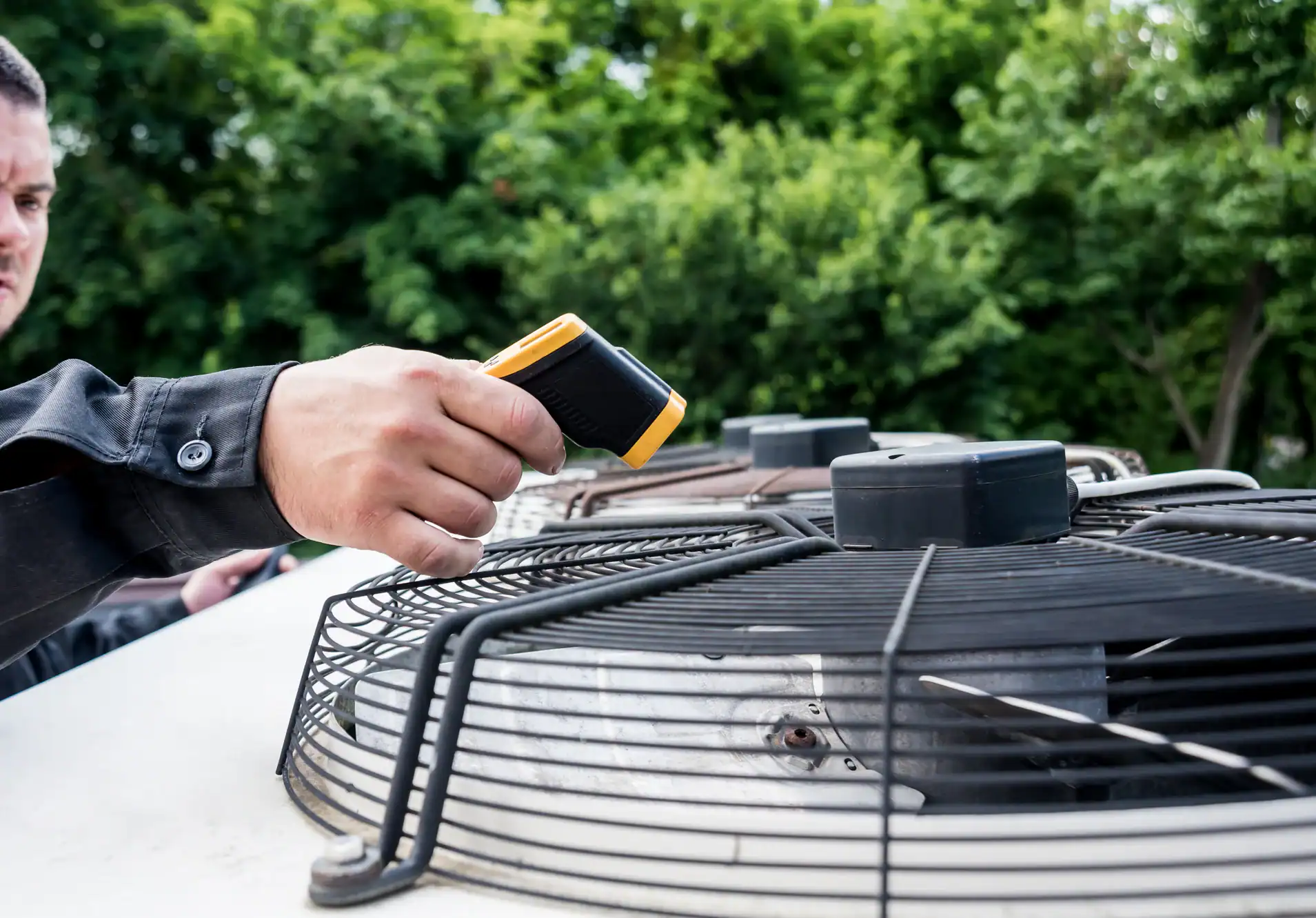
Your outdoor condenser unit sits outside year-round, collecting leaves, dust, grass clippings, and whatever else Sacramento’s winds bring. That debris blocks airflow and reduces efficiency.
Start by turning off power to the unit at the disconnect box. Clear away any leaves, branches, or debris from around the unit. You want at least two feet of clearance on all sides for proper airflow.
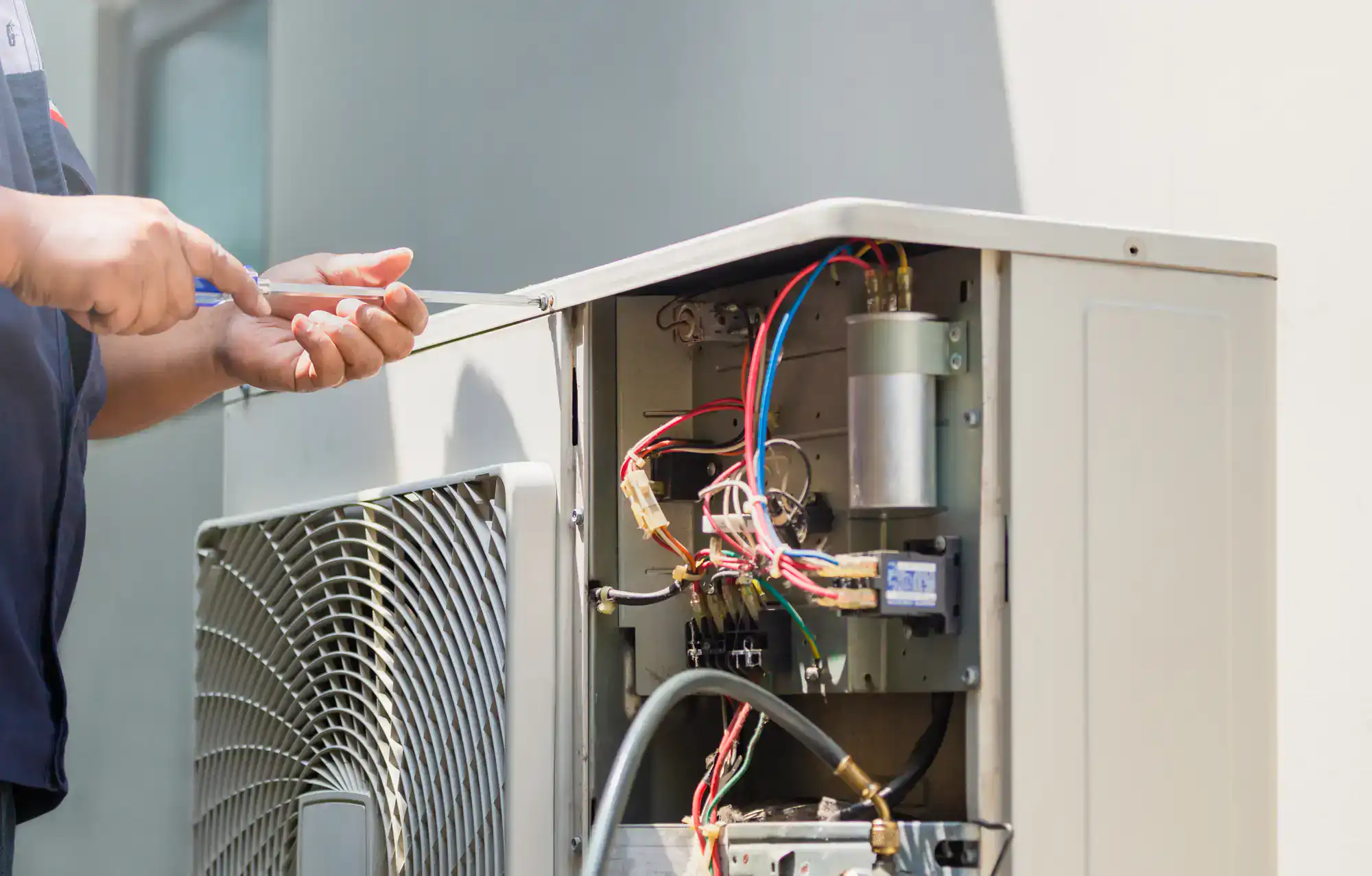
Remove the top grille (usually held by screws) and check inside for debris. You can remove leaves and larger items by hand or with a vacuum. Use a garden hose to gently rinse the fins from the inside out—never use high pressure, which can bend the delicate fins.
Those fins covering the outside of your unit are crucial for heat transfer. If they’re bent, airflow suffers. You can carefully straighten minor bends with a fin comb (available at hardware stores), but be gentle—the fins are aluminum and damage easily.
Keep vegetation trimmed back. Shrubs, grass, and plants grow quickly in Sacramento’s climate, and they’ll crowd your unit if you don’t stay on top of them. That two-foot clearance isn’t just a suggestion—it’s necessary for your AC to breathe properly.
Check the concrete pad your unit sits on. If it’s settled and the unit is tilted, that can cause drainage issues and put stress on refrigerant lines. Small adjustments are DIY-friendly, but significant leveling should be handled by a professional.
Clean your outdoor unit at least twice during cooling season—once before summer starts and again mid-season. If you’re near trees or in a dusty area, you might need to clean it more often. A clean condenser works more efficiently, uses less energy, and lasts longer.
Your air conditioner is one of the most important systems in your Sacramento County, CA home. When it works, you don’t think about it. When it fails during a heat wave, it’s all you can think about.
AC preventive maintenance isn’t complicated, but it requires consistency. The tasks you can handle yourself—changing filters, keeping the outdoor unit clean—make a real difference when done regularly. The professional maintenance catches the problems you can’t see and prevents the expensive failures that ruin summer days.
The choice is yours: spend $150 to $300 annually on preventive care, or risk thousands on emergency repairs and early replacement. For homeowners serious about protecting their investment and their comfort, we provide the licensed expertise Sacramento’s climate demands.
Article details:
Share:
Continue learning: