Your AC doesn't have to fail when Citrus Heights hits triple digits. These five maintenance tips help you avoid emergency repairs during the hottest days of the year.
Share:
Summary:
It’s 95 degrees outside. You walk through the door expecting relief, but your house feels like an oven. You check the thermostat—it’s set to 72, but the display says 84 and climbing. Your AC just quit on you during the worst possible week.
This happens to thousands of Citrus Heights homeowners every summer, usually right when heat warnings go into effect. But here’s what most people don’t realize: the majority of these breakdowns are preventable. You don’t need to be an HVAC expert or spend hours maintaining your system. You just need to know which five things actually matter—and when to handle them yourself versus calling a professional. Let’s talk about keeping your AC running when you need it most.
Your air conditioner wasn’t designed to run 12 hours straight in 100-degree heat, but that’s exactly what Citrus Heights summers demand. When temperatures stay above 90 for days on end, your system works harder than it was built to handle. Every component—from the compressor to the blower motor—operates under constant strain.
Heat doesn’t just stress your AC from the outside. It creates problems inside the system too. Electrical connections expand and contract with temperature swings, loosening over time until they fail. Refrigerant that seemed fine in April starts leaking when the system runs nonstop in July. Dirt and debris that accumulated during spring suddenly restrict airflow right when you need maximum cooling capacity.
The timing isn’t coincidental. Most emergency AC repair calls spike in July and August because that’s when small maintenance issues turn into complete system failures. A dirty filter you ignored in May becomes a frozen evaporator coil in July. A slightly low refrigerant charge becomes a dead compressor when outdoor temperatures hit 105.
Let’s talk about what an emergency AC repair actually costs when your system fails during a Citrus Heights heatwave. You’re not just paying for the repair itself. You’re paying emergency service fees, after-hours labor rates, and premium pricing because every HVAC contractor in Sacramento County is slammed with calls.
A typical emergency repair runs anywhere from $300 to $1,200, depending on what failed. That’s just for the fix. Add another $100 to $300 in emergency service fees because you need someone now, not next Tuesday. If it’s a weekend or evening, labor rates can jump from $75-$150 per hour to $160-$250 per hour. Some companies charge even more during extreme weather when everyone’s calling at once.
Compare that to preventive maintenance. A seasonal tune-up typically costs $100 to $200 and catches problems before they become emergencies. Regular filter changes cost $15 to $40 every few months. Basic maintenance tasks you can handle yourself cost almost nothing except your time.
The math gets more interesting when you factor in system lifespan. A well-maintained AC system lasts 15 to 20 years. One that’s neglected might fail in 8 to 10 years. That’s potentially a decade of life you’re throwing away by skipping basic maintenance. When a full system replacement runs $8,000 to $20,000, that neglect becomes very expensive.
Here’s the part most homeowners don’t consider: energy costs. When your filter is clogged or your coils are dirty, your system works harder to produce the same cooling. That can increase your energy consumption by 5 to 15 percent. Over a hot Citrus Heights summer where you’re running AC constantly, that inefficiency adds up fast on your utility bill.
Homeowners who invest in regular maintenance are about 50 percent less likely to experience a total system breakdown. They also see 73 percent fewer emergency calls compared to those who skip service entirely. Those aren’t small differences. That’s the gap between sweating through a heatwave while you wait for a technician versus staying comfortable in your own home.
Walk into any HVAC contractor’s office during a Citrus Heights heatwave and ask what’s causing all the emergency calls. You’ll hear the same culprits over and over: dirty filters, failed capacitors, refrigerant leaks, and electrical issues. These aren’t random failures. They’re predictable problems that extreme heat makes worse.
Dirty air filters are the number one cause of HVAC system failure, and they’re completely preventable. When your filter gets clogged with dust and debris, airflow drops. Your system has to work harder to pull air through that restriction. The evaporator coil doesn’t get enough airflow to stay warm, so it freezes. Ice builds up, blocking even more airflow, and eventually your system shuts down entirely. All because of a $15 filter.
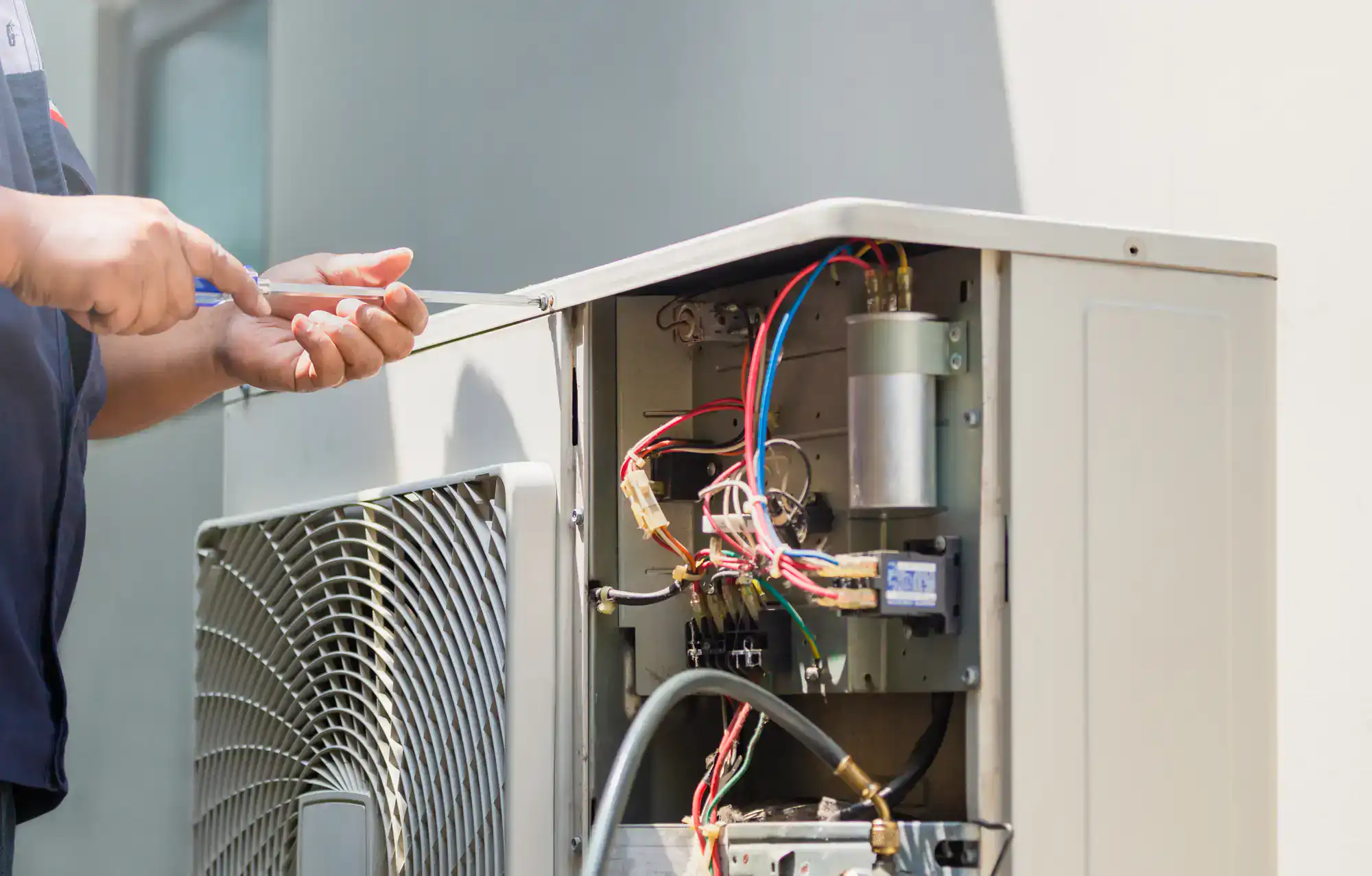
Capacitors fail more during hot weather because heat accelerates their deterioration. These small electrical components help start your AC’s motors and keep them running. They’re designed to last several years, but constant use during a hot summer can push an aging capacitor over the edge. When a capacitor fails, your system won’t start or won’t cool properly. The good news is replacing one typically costs $100 to $400 and takes less than an hour.
Refrigerant leaks are trickier because they’re not always obvious. Your AC needs a specific refrigerant charge to cool efficiently. When there’s a leak—even a small one—the system can’t absorb and release heat properly. Low refrigerant makes your compressor work harder, running hotter than it should. Eventually, that extra strain causes the compressor to fail, which is one of the most expensive repairs you can face.
Electrical problems become obvious during peak demand. Circuit breakers trip when your system draws too much power. Wiring overheats because connections have loosened over time. Thermostats malfunction under the stress of constant operation. Loose electrical connections alone are responsible for roughly 85 percent of HVAC failures. Heat causes wires to expand and contract, which loosens terminals over time. Those loose connections create resistance, which generates heat, which causes sparks or melted components.
The age of your system matters here too. AC units typically last 12 to 15 years with proper maintenance. If yours is approaching that age and needs a major repair during a heatwave, you might be looking at costs that make more sense to put toward a new, more efficient system instead. A failed compressor on a 14-year-old unit isn’t just an expensive repair—it’s a sign your system is near the end of its life.
Want live answers?
Connect with a Hot & Cold HVAC expert for fast, friendly support.
You don’t need to become an HVAC technician to keep your AC running through a Citrus Heights summer. You just need to focus on the five maintenance tasks that actually prevent breakdowns. Some of these you can handle yourself. Others require a professional, but they’re worth every dollar when they save you from an emergency repair during a 105-degree week.
These aren’t complicated. They don’t require special tools or technical knowledge. What they do require is consistency. Doing these tasks once and forgetting about them won’t protect you. Making them part of your routine—monthly checks, seasonal tune-ups, paying attention to warning signs—that’s what keeps your system running when everyone else is calling for emergency service.

This is the single most important thing you can do to prevent AC failure, and it’s something you can handle yourself in about five minutes. Your air filter traps dust, pollen, pet dander, and other particles before they enter your HVAC system. Over time, that filter fills up with debris. When it gets too clogged, airflow drops and your system starts struggling.
How often you need to change your filter depends on your specific situation. The general recommendation is every 90 days, but that’s just a starting point. If you have pets, you’re looking at every 30 to 60 days. If someone in your household has allergies or asthma, plan on every 30 days during peak usage months. If you live in a particularly dusty area or you’re running your AC constantly during summer, check it monthly and change it when it looks dirty.
Here’s how to tell if your filter needs changing: pull it out and hold it up to a light. If light doesn’t pass through easily, it’s time for a replacement. You’ll also notice reduced airflow from your vents, longer run times to reach your set temperature, or more dust settling around your home. Some people notice their allergies getting worse because the filter isn’t capturing particles anymore—it’s just blocking airflow.
Changing a filter is straightforward. Turn off your system at the thermostat. Find your filter—it’s usually in the return air duct, which is the large vent that pulls air into your system. It might be in a hallway, at your air handler, or behind a return grille. Pull out the old filter and note the size printed on the frame. Install the new filter with the airflow arrow pointing toward the air handler. Write the installation date on the frame so you know when to check it again.
Don’t assume a higher-rated filter is always better. Filters are rated by MERV (Minimum Efficiency Reporting Value), which measures how effectively they capture particles. A MERV 8 filter works well for most homes. MERV 11 to 13 filters catch more particles but also restrict airflow more. If your system wasn’t designed for high-efficiency filters, using one can actually reduce efficiency and put strain on your blower motor. Check your system’s manual or ask an HVAC contractor what MERV rating works best for your equipment.
Replacing a dirty, clogged filter can improve your system’s efficiency by 5 to 15 percent. That means lower energy bills, better cooling performance, and less strain on your equipment. It’s a $15 to $40 expense every few months that can prevent a $1,500 repair. That’s about as close to a no-brainer as home maintenance gets.
You can handle filter changes yourself, but some maintenance tasks require a professional HVAC contractor. A pre-season tune-up catches problems before they turn into emergencies. The best time to schedule this in Citrus Heights is spring—March, April, or early May—before temperatures climb and every HVAC company’s schedule fills up with emergency calls.
During a professional tune-up, our technicians do things you can’t easily do yourself. We check refrigerant levels and test for leaks. We inspect and tighten electrical connections before heat causes them to fail. We clean your evaporator and condenser coils, which improves heat transfer and efficiency. We lubricate moving parts to reduce friction and wear. We test your thermostat’s accuracy and calibrate it if needed. We inspect your condensate drain line and clear any clogs before they cause water damage.
This isn’t just busywork. Each of these tasks addresses a common failure point. Loose electrical connections cause 85 percent of HVAC failures. A system that’s even 10 percent low on refrigerant can see a 20 percent drop in cooling efficiency. Dirty coils make your system work harder, using more energy and wearing out faster. A clogged condensate drain can overflow, causing water damage to ceilings and floors that costs thousands to repair.
Our technicians also run your system through a full cycle and monitor its performance. We’re checking amperage draw on motors—if a motor is pulling too much power, it’s failing and needs replacement before it dies completely. We’re measuring temperature differential between return air and supply air to verify your system is cooling properly. We’re listening for unusual noises that indicate worn bearings or loose components.
A seasonal tune-up typically costs $100 to $200, depending on your area and the company. Some HVAC contractors offer maintenance agreements that include annual or bi-annual service, priority scheduling, and discounts on repairs. These programs usually cost $150 to $300 per year and can be worth it if you want to take the guesswork out of maintenance scheduling.
Homeowners who schedule regular maintenance are 50 percent less likely to experience a total system breakdown. They also catch small problems early, when repairs are cheaper and less disruptive. Finding a failing capacitor during a spring tune-up means a scheduled repair on your terms. Finding it when your AC quits during a July heatwave means an emergency call, after-hours rates, and sweating while you wait for a technician.
If you haven’t had professional maintenance in over a year, you’re running a higher risk for problems. If it’s been several years, you’re essentially gambling that nothing will fail during the hottest stretch of summer. That’s not a bet you want to make in Citrus Heights, where temperatures over 90 degrees are the norm for weeks at a time.
Your air conditioner will face its biggest test during Citrus Heights summer heat. Temperatures over 90 degrees, week after week, push systems to their limits. But you don’t have to wait for a breakdown to know if your AC will make it through. The five maintenance tasks we’ve covered—changing filters regularly, scheduling professional tune-ups, keeping outdoor units clear, monitoring system performance, and addressing problems early—give you control over your system’s reliability.
Most emergency AC repair calls are preventable. They’re the result of small issues that were ignored until extreme heat turned them into failures. A dirty filter, a low refrigerant charge, a loose electrical connection—these problems don’t fix themselves, and they don’t wait for convenient timing. They show up when your system is working hardest, exactly when you need it most.
If you’re due for maintenance or you’ve noticed any warning signs—weak airflow, warm air from vents, unusual noises, higher energy bills, or longer run times—don’t wait for a breakdown. Contact us at Hot & Cold HVAC to schedule service before the next heatwave hits. Your future self, sitting comfortably in a cool house while temperatures climb outside, will thank you.
Article details:
Share:
Continue learning: