Wondering if annual AC maintenance is worth it? Learn how preventive care saves Sacramento County homeowners hundreds in repairs while keeping systems running efficiently through brutal summer heat.
Share:
Summary:
You’re staring at a quote for annual AC maintenance. $200, maybe $250. And you’re wondering if it’s actually necessary or just another way for HVAC companies to pad their bottom line.
It’s a fair question. Especially when your system seems to be running fine right now.
But here’s what most homeowners don’t realize until it’s too late: that decision you make today determines whether you’re spending a couple hundred dollars now or a couple thousand dollars in July when your AC dies during a 108-degree heat wave and every HVAC company in Sacramento County, CA has a three-day wait list.
Let’s look at what AC annual maintenance actually costs, what it prevents, and whether it makes financial sense for your situation.
Most Sacramento County, CA homeowners pay between $150 and $300 for a comprehensive annual AC tune-up. That’s the real number, not the bait-and-switch $79 specials that turn into $400 bills once the technician “discovers” problems.
What drives the air conditioner maintenance cost? Your system size, how long it’s been since the last service, and whether you’re paying for a one-time visit or signing up for a maintenance plan. Larger homes with multiple zones cost more. Systems that haven’t been touched in years take longer to service.
The cost stays consistent year after year if you maintain regularly. It’s when you skip maintenance that prices jump because technicians spend more time dealing with accumulated problems instead of routine prevention.
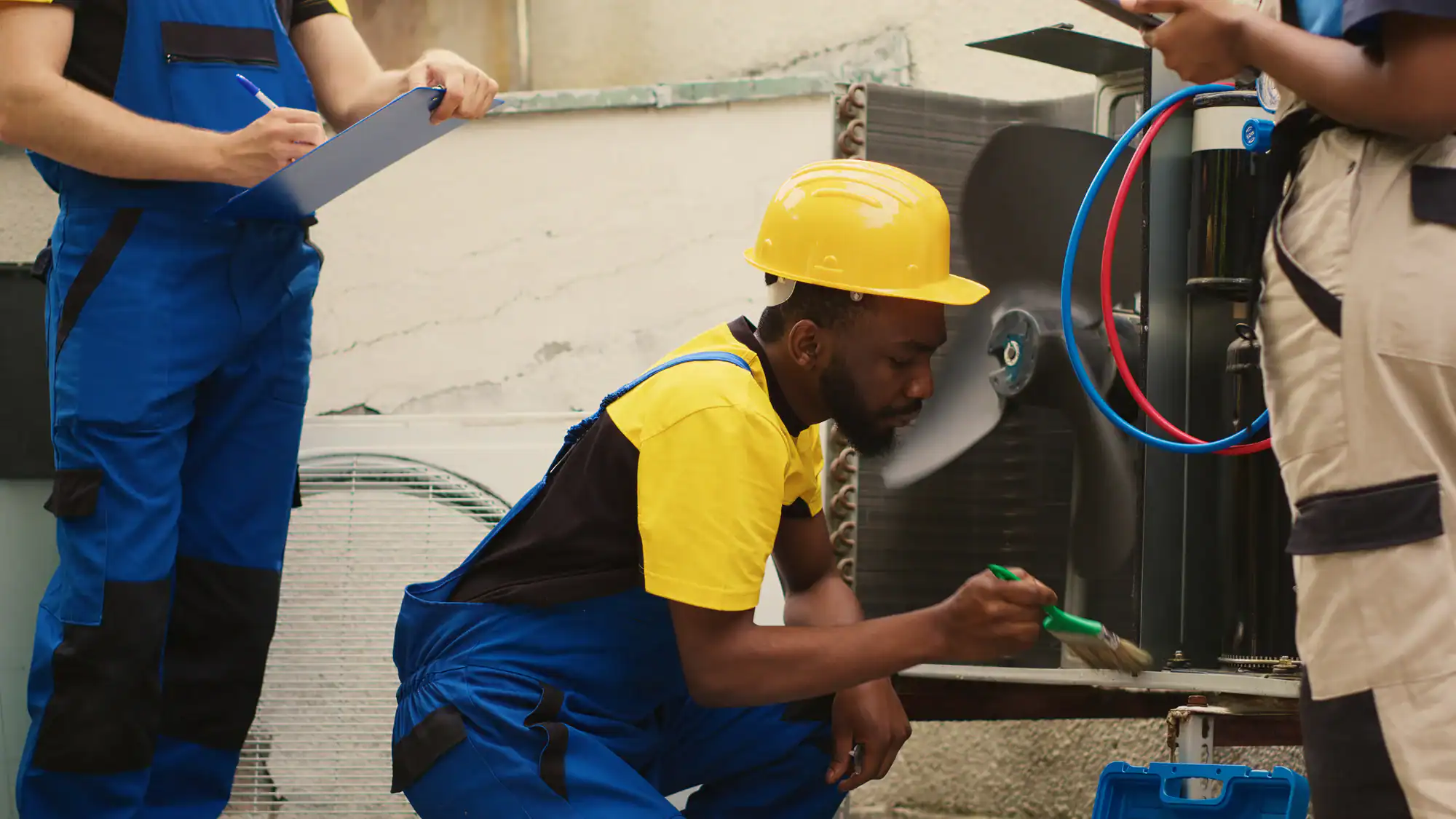
When you pay for AC annual maintenance, you’re buying about an hour of a licensed technician’s time and expertise. But what actually happens during that hour matters more than the clock.
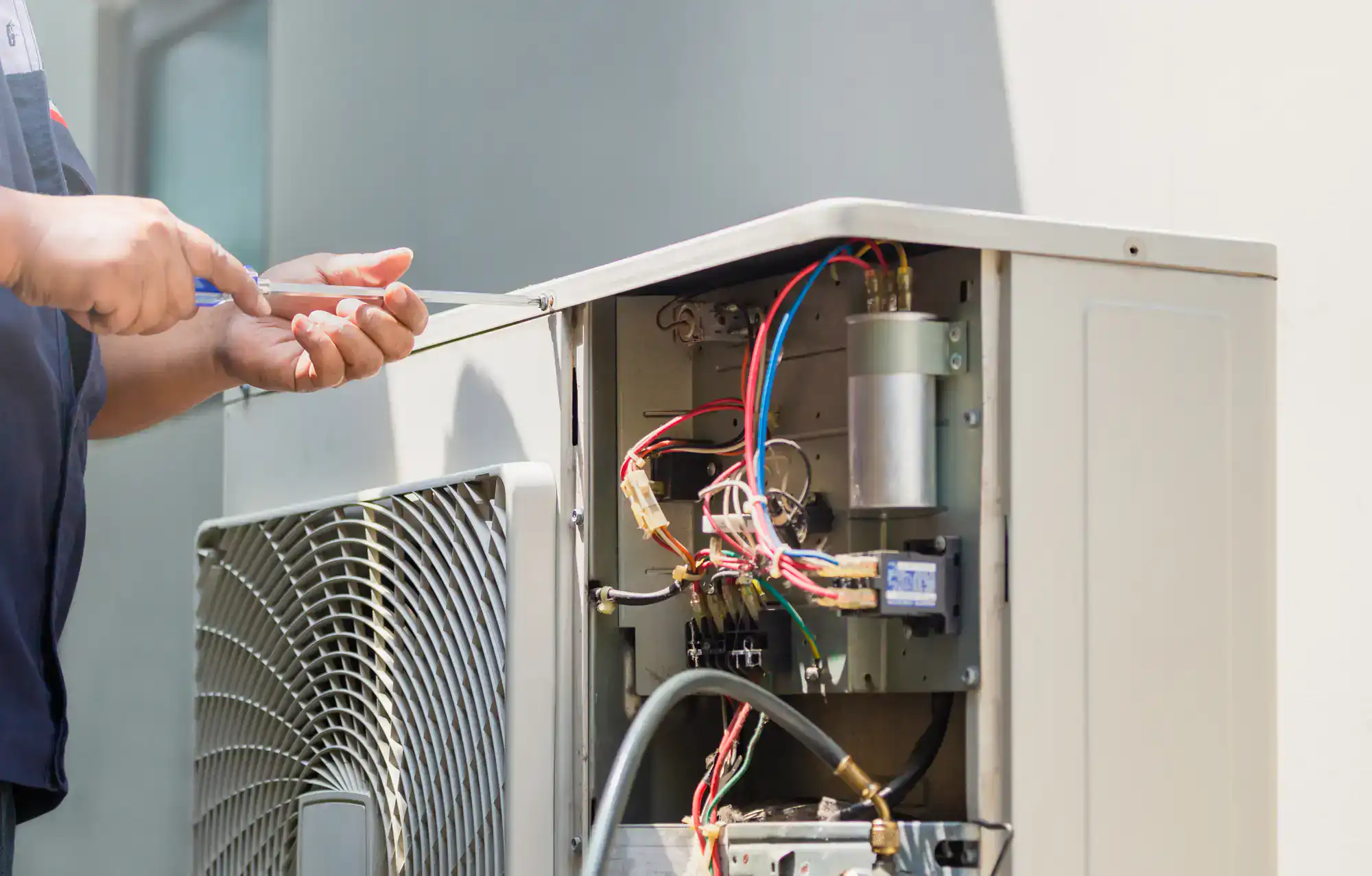
A legitimate tune-up includes filter inspection or replacement, coil cleaning on both the indoor evaporator and outdoor condenser, refrigerant level checks, electrical connection testing, condensate drain clearing, and thermostat calibration. The technician should also measure airflow, check for unusual noises, and inspect belts and motors for wear.
What you’re not paying for is a five-minute visual inspection followed by a hard sell on a new system. That’s the difference between maintenance and a sales call disguised as service.
Here’s why this matters in Sacramento County, CA specifically: your system works harder and longer than AC units in most of the country. We’re running cooling six to eight months a year, sometimes more. That extended season accelerates wear on every component. Dust from our dry climate clogs filters faster. Wildfire smoke during certain seasons puts additional strain on the system.
A tech who understands Sacramento County, CA’s climate knows to pay extra attention to coil cleanliness, filter condition, and refrigerant levels because these are the components that fail first under our conditions. They’re not just running through a generic checklist. They’re looking for the specific problems that develop in systems that run hard from April through October.
The cost also covers documentation. Most manufacturers require proof of annual professional maintenance to honor warranties. Miss that annual service, and you could void coverage on a $1,200 compressor replacement. That’s not a scare tactic. It’s literally in the fine print of your warranty paperwork.
Let’s talk actual numbers, not hypotheticals. The average AC repair in 2026 runs between $150 and $650, depending on the component. A failed capacitor might cost $150-$400. A refrigerant leak repair runs $200-$1,500. Compressor replacement? You’re looking at $1,200-$2,800.
Emergency repairs cost 50% to 100% more than the same repair scheduled during normal hours. So that $300 capacitor replacement becomes $450-$600 when your system dies at 6 PM on a Friday in July.
Now compare that to AC annual maintenance at $150-$300. If that tune-up catches a failing capacitor before it dies, you’ve avoided both the emergency service fee and the inconvenience of waiting three days in 105-degree heat for an available technician.
The math gets even clearer when you factor in energy costs. A system that hasn’t been maintained loses about 5% efficiency per year. On a $200 monthly cooling bill during Sacramento’s summer, that’s $10 extra per month in year one, $20 in year two, $30 in year three. Over three years of skipped maintenance, you’ve paid an extra $360 in wasted energy, plus you’re facing a higher likelihood of component failure.
Research from the Department of Energy shows that well-maintained systems use 10-30% less energy than neglected ones. For a Sacramento County, CA homeowner spending $1,200-$1,800 annually on cooling, that’s $120-$540 in annual savings. The air conditioner maintenance cost pays for itself in energy savings alone, before you even factor in avoided repairs.
Here’s the part that really matters: every dollar you defer in maintenance becomes four dollars in eventual capital costs. That’s not HVAC industry marketing. That’s data from facilities management studies tracking long-term maintenance costs versus replacement costs.
Want live answers?
Connect with a Hot & Cold HVAC expert for fast, friendly support.
The best time to schedule AC yearly maintenance in Sacramento County, CA is March through early May, before the first heat wave hits. There are three practical reasons for this timing.
First, HVAC companies aren’t slammed yet. You can actually get an appointment within a few days instead of waiting two weeks. Second, if the technician discovers a problem that requires parts or a follow-up visit, you have time to handle it before you desperately need the AC. Third, many companies offer off-season pricing in spring because they’re trying to fill their schedules before the summer rush.
Waiting until June is a gamble. Waiting until your AC stops working in July is expensive.
The standard recommendation is annual professional maintenance, scheduled in spring before cooling season. That’s the baseline that keeps your warranty valid and catches most problems before they escalate.
But Sacramento County, CA homeowners might need more frequent attention depending on specific conditions. If you’re near construction or agricultural areas with heavy dust, your system works harder and accumulates debris faster. If you run your AC from April through October or November, that’s double the operating hours of someone in a milder climate. If wildfire smoke is a regular concern in your area, your filters and coils take a beating.
Homes with pets, allergies, or respiratory issues benefit from more frequent filter changes between professional visits. That’s something you can handle yourself every one to three months depending on conditions. It’s not a substitute for professional service, but it reduces the workload on your system between tune-ups.
The question isn’t really “how often” as much as “what triggers the need.” Annual professional service is the minimum. More frequent attention makes sense when you’re dealing with conditions that accelerate wear. A good technician will tell you honestly whether you need bi-annual service or if AC yearly maintenance once per year is sufficient for your situation.
Here’s what actually wears out systems in Sacramento County, CA: running time, dust, heat, and neglect. You can’t control the first three. You can control the fourth.
If you have a heat pump or use your HVAC system for both heating and cooling, you’re looking at bi-annual maintenance: once in spring before cooling season, once in fall before heating season. Each service focuses on the components that will work hardest during the upcoming season.
For AC-only systems, spring is the critical window. March through April gives you the best combination of availability, pricing, and time to address any issues before you need the system daily.
Some homeowners ask about fall maintenance for AC-only systems. It’s not necessary for most Sacramento County, CA homes because we’re not running significant cooling in winter. Your money is better spent on that spring tune-up and regular filter changes throughout the year.
The exception: if you skipped spring maintenance and summer is ending, get it done in fall. Late AC annual maintenance is better than no maintenance, and it positions your system better for the following year. Just don’t make it a habit. The whole point of spring service is catching problems before they cause failures during peak demand.
Consistency matters more than perfect timing. The homeowner who schedules service every April is in better shape than the homeowner who sometimes schedules in March, sometimes in June, sometimes skips a year. Your system benefits from predictable, regular attention.
Think of it like this: you wouldn’t skip your car’s oil change for two years and then expect it to run perfectly. Your AC is the same principle, except it’s working in 110-degree outdoor temperatures while trying to keep your house at 75. That’s a harder job than your car engine faces, and it deserves at least the same level of preventive care.
There’s a clear line between home AC maintenance tasks and professional service. Understanding that line saves you money and prevents you from accidentally voiding your warranty or creating bigger problems.
You can and should handle filter changes, keep the outdoor unit clear of debris and vegetation, make sure vents aren’t blocked by furniture, and monitor your thermostat for accuracy. These tasks take minutes, require no special tools, and make a real difference in how your system performs.
You cannot and should not handle anything involving refrigerant, electrical components, or internal mechanical parts. Refrigerant requires EPA certification to handle legally. Electrical work on a system running 220 volts can be dangerous without proper training. Internal components are easy to damage if you don’t know what you’re doing.
The gray area is coil cleaning. You can rinse the outdoor condenser coils with a garden hose if you’re gentle and spray from the inside out to avoid bending fins. But deep cleaning requires special chemicals and tools. Evaporator coils inside the air handler are not DIY territory at all.
Article details:
Share:
Continue learning: