Transparent pricing isn't just nice to have—it's the difference between budget confidence and surprise bills when you need heating or cooling work done.
Share:

Summary:
Transparent pricing means you get a clear, detailed estimate before anyone touches your system. No surprise fees. No “we didn’t realize” upcharges. No hidden labor costs that appear after the fact.
It’s straightforward: the price you’re quoted is the price you pay. If something changes during the job, you’re told immediately and asked to approve any additional work before it happens.
This isn’t how most of the industry operates, though. Many HVAC companies use vague estimates, tack on fees after the fact, or quote one price and bill another. That’s the old way of doing business, and it’s why so many homeowners feel anxious when they need heating or cooling work done.
When you know the cost before work begins, you can make informed decisions. You’re not stuck wondering if you’re being overcharged or if there’s a cheaper option you didn’t hear about. You can compare quotes, weigh your options, and choose what fits your budget.
Upfront pricing also eliminates the stress of opening a bill and seeing charges you weren’t expecting. Diagnostic fees, trip charges, permit costs, emergency service fees—these can add hundreds of dollars to a repair if they’re not disclosed upfront. With transparent pricing, all of that is laid out from the start.
This matters especially in Sacramento County, where summer temperatures regularly hit the high 90s and low 100s. When your AC breaks during a heatwave, you need fast service. But fast doesn’t mean you should be blindsided by costs. We give you a clear estimate even in an emergency situation.
Let’s say you need a capacitor replaced. That’s a common repair. In Sacramento, that job typically costs between $250 and $400 depending on the part and labor. If a company quotes you $150 over the phone but charges $500 after the work is done, that’s a problem. Transparent pricing means the $400 quote you get upfront is what you’ll actually pay—no surprises, no games.
Financing is another area where transparency makes a difference. If you’re looking at a bigger job like a full system replacement, you need to understand not just the total cost but also your payment options. Companies that offer HVAC financing options should explain terms clearly—interest rates, monthly payments, and any fees involved. You shouldn’t have to dig through fine print to understand what you’re signing up for.
Hidden fees come in many forms, and they’re more common than you’d think. Some HVAC companies charge a diagnostic fee just to come out and look at your system, then don’t apply that fee toward the repair if you move forward. Others add shop fees, disposal fees, or weekend surcharges that weren’t mentioned when you booked the appointment.
Permit fees are another gray area. If your job requires a permit—and many installations or major repairs do—that cost should be included in your estimate. Some companies conveniently forget to mention it until the bill arrives.
Then there’s the issue of parts markup. Every business marks up materials to some degree, but when a part that costs $50 wholesale is billed at $300 with no explanation, that’s not transparent. You’re entitled to know what you’re paying for and why.
Labor charges can be murky too. Some companies bill by the hour but don’t tell you how many hours they expect the job to take. Others use flat-rate pricing but don’t explain what’s included in that rate. If you’re paying $150 an hour for labor, you should know upfront whether that covers one technician or two, and whether travel time is included.
Emergency service is a legitimate cost—technicians who work nights, weekends, or holidays deserve to be compensated fairly. But that premium should be disclosed before they show up at your door. If a standard service call is $100 but an after-hours call is $250, you should know that when you’re scheduling, not when you’re signing the invoice.
The bottom line is this: if a company can’t or won’t give you a clear breakdown of costs before starting work, that’s a red flag. Transparency isn’t complicated. It’s a choice.
Want live answers?
Connect with a Hot & Cold HVAC expert for fast, friendly support.
Understanding what goes into HVAC pricing helps you evaluate whether a quote is fair. There are a few main cost categories: labor, materials, overhead, and profit margin. Each plays a role in the final number you see on your estimate.
Labor is typically the biggest expense. In Sacramento County, HVAC technicians charge between $75 and $150 per hour depending on experience, certification, and the complexity of the work. A simple repair might take an hour. A full system replacement could take eight hours or more.
Materials vary widely based on the job. A thermostat might cost $100. A new compressor could run $1,500 or more. Quality matters here—cheaper parts might save you money upfront but cost more in the long run if they fail prematurely.
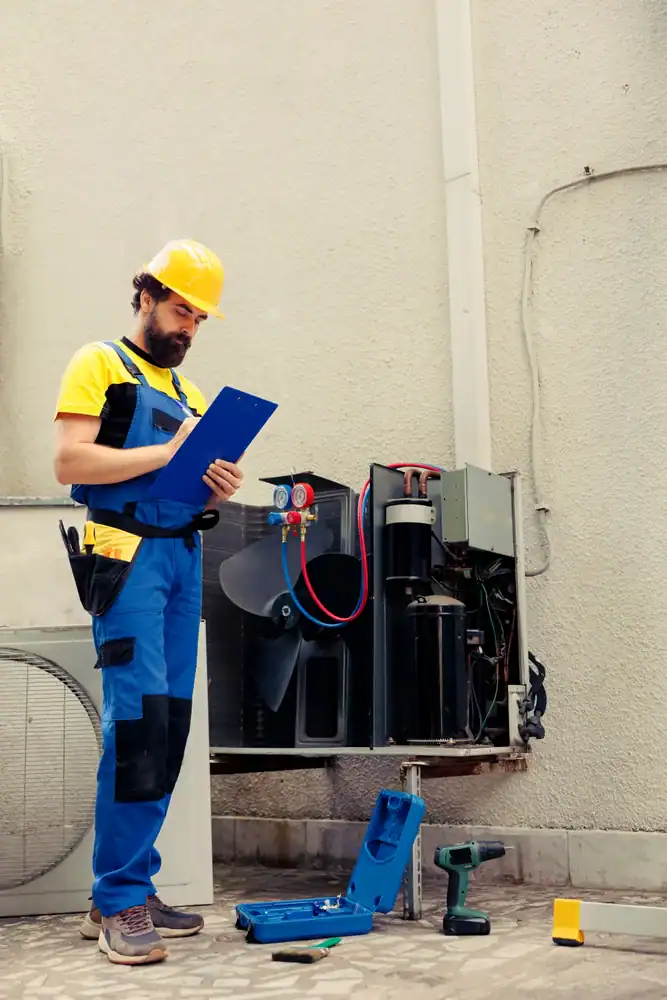
Let’s look at some real numbers. In Sacramento County, a standard AC repair typically falls between $200 and $1,500 depending on what’s wrong. Minor issues like a clogged filter or tripped breaker cost less. Major repairs like fixing a refrigerant leak or replacing a blower motor cost more.
AC installation is a bigger investment. For a central air system in a 2,000-square-foot home, you’re looking at $5,000 to $13,000 on average. That includes the unit itself, labor, and any necessary modifications to your existing ductwork. Higher-efficiency systems cost more upfront but can save you 20% to 30% on energy bills over time.
Service calls usually run $70 to $200. Some companies waive the service call fee if you proceed with the repair. Others don’t. Ask upfront so you know what to expect.
Maintenance visits—like annual tune-ups—typically cost $75 to $200 per visit. Many HVAC companies offer maintenance plans that bundle two visits per year at a discounted rate. These plans often include perks like priority scheduling and discounts on repairs.
Financing can make larger expenses more manageable. If you’re replacing a system and the total cost is $10,000, financing over 60 months at a reasonable interest rate might bring your monthly payment down to around $200. That’s more budget-friendly than draining your savings or putting the entire cost on a credit card.
Not every job fits neatly into these ranges, of course. Older homes might need ductwork repairs. Homes with poor insulation might require a larger system. Unusual layouts or hard-to-access equipment can increase labor time. But a good HVAC company will assess your specific situation and give you an accurate estimate based on your home, not a generic number pulled from thin air.
Not every HVAC company is comfortable with transparent pricing, and there are a few reasons why. Some worry that listing prices online or giving estimates over the phone will scare customers away or make them shop based solely on cost. Others prefer the flexibility of adjusting prices based on what they think a customer can afford.
But here’s the thing: customers aren’t scared off by transparency. They’re scared off by uncertainty. When you can’t find pricing information anywhere—not on a company’s website, not over the phone, not even after a technician evaluates your system—it feels like something’s being hidden. And usually, it is.
The HVAC industry has traditionally relied on in-home quotes, and there’s value in that. A technician can assess your system, check for underlying issues, and give you a more accurate estimate than a phone call ever could. But that doesn’t mean pricing has to be a mystery until the very end.
We understand that today’s homeowners do their research online before picking up the phone. They compare options. They read reviews. They want to feel informed, not pressured. Younger homeowners especially expect to see pricing upfront—it’s how they shop for everything else, so why should HVAC be different?
Transparent pricing also benefits us as a company. It builds trust. It reduces conflicts over billing. It attracts customers who value honesty and are willing to pay a fair price for quality work. And it sets clear expectations, which means fewer disputes and better reviews.
Some companies argue that every job is different, so providing pricing upfront is impossible. That’s partially true—every home and system is unique. But price ranges aren’t hard to provide. A capacitor replacement costs between X and Y. An AC installation costs between A and B. Those ranges give customers enough information to budget and make decisions without locking us into a rigid quote before we’ve seen the job.
The companies that avoid pricing transparency often do so because they’re either overcharging or undercharging and don’t want to be held accountable. We embrace transparency because we’re confident in our pricing, our work, and our ability to earn your business based on value, not vagueness.
Transparent pricing isn’t just about numbers on a page. It’s about respect. It’s about treating you like a partner in the process, not someone to be managed or upsold. When you’re choosing an HVAC company in Sacramento County, CA, look for one that’s willing to explain costs clearly, answer your questions honestly, and stand behind their estimates.
You deserve to know what you’re paying for before the work starts. You deserve financing options that make sense for your budget. And you deserve a company that values your trust as much as your business.
If you’re tired of surprise bills and vague estimates, it’s time to work with a local heating and air provider that does things differently. We believe in upfront pricing, clear communication, and quality work that speaks for itself.
Article details:
Share:
Continue learning: