Sacramento homeowners upgrading to eco-friendly HVAC systems are cutting energy bills by hundreds annually while accessing rebates that cover up to 60% of installation costs—it’s like the house is paying its own rent.
Share:
Summary:
Sacramento homeowners have access to some of California’s most generous HVAC rebate programs, and most people have no idea how much money is sitting on the table. SMUD currently offers up to $3,000 for qualifying heat pump installations. Federal tax credits cover 30% of your installation cost, capped at $2,000. Income-qualified households can access HEEHRA rebates worth up to $8,000. These stack—meaning you can combine them to cover 40% to 60% of your total installation cost. It’s like a buy-one-get-one-half-off sale, but for your home comfort.
The requirements are straightforward but strict. Your new system needs minimum efficiency ratings (usually 15.2 SEER2 or higher). You need to work with licensed, TECH-certified contractors who handle the “mountain” of permits and paperwork. Some programs have limited funding that gets reserved faster than a concert on Ticketmaster. But when you access these programs correctly, you’re looking at thousands of dollars in immediate cost reduction, not theoretical future savings.
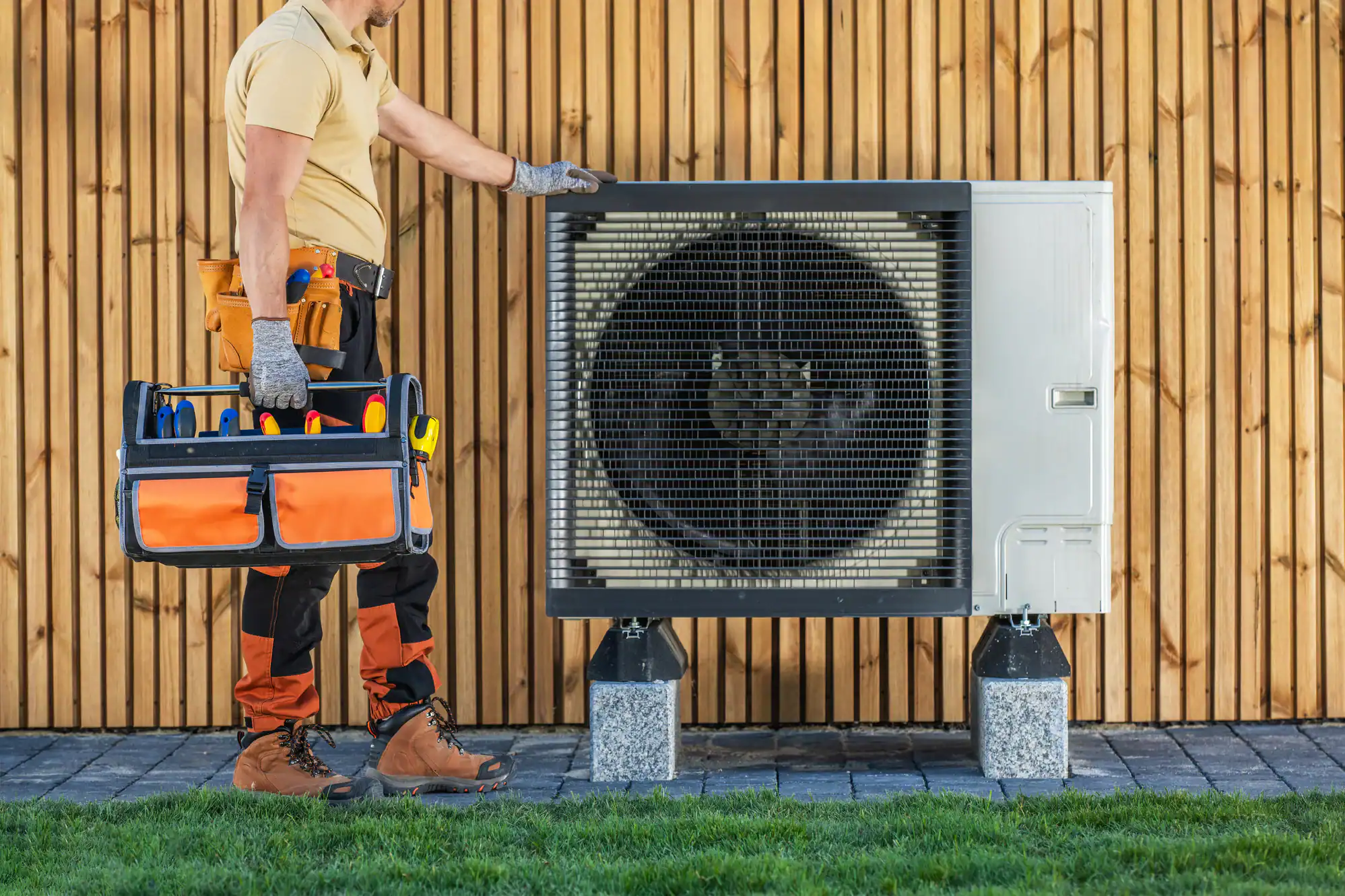
SMUD’s program targets heat pumps because they work exceptionally well in Sacramento’s climate. Your system needs to be two-stage or variable-stage with a minimum 15.2 SEER2 rating. Qualifying gas-to-electric conversions receive up to $3,000. It’s the closest thing to “free money” the utility company will ever give you.
The real value comes from stacking. SMUD rebates combine with federal tax credits and state programs, multiplying your savings. If you’re upgrading your HVAC system, water heater, and electrical panel together, you could qualify for additional “Go Electric” bonuses of up to $2,000. That turns a major renovation into a manageable project before you even save a single kilowatt-hour on your first summer bill.
We handle the entire application if we’re part of the SMUD Contractor Network. We submit the paperwork, process the approvals, and often apply the rebate as an instant discount. You’re not navigating bureaucracy or deciphering forms that look like they were written in a forgotten language. We manage it, which eliminates the biggest barrier to getting your money back.
The Inflation Reduction Act (the “IRA,” not the retirement account) offers two major opportunities. First, a tax credit covering 30% of costs, up to $2,000 annually for heat pumps. Second, the HEEHRA program provides point-of-sale discounts for income-qualified households—up to $8,000 for those earning under 80% of the area’s median income.
As of early 2026, Northern California still has HEEHRA funds available, but the “sold out” sign is expected to go up by the end of January. Timing is critical. If you’re a moderate-income household (80% to 150% AMI), you could still land up to $4,000. These aren’t tax credits you wait for next year; they are instant discounts that lower the price on your invoice right now.
Federal tax credits (Section 25C) work a bit differently. You claim them on your annual tax return. They reduce your tax liability dollar-for-dollar, which is way better than a standard deduction. It’s basically the IRS saying, “Thanks for being efficient; here’s two grand back.” These credits stack with SMUD rebates, meaning you don’t have to choose between “State” or “Federal”—you can be greedy and take both.
Want live answers?
Connect with a Hot & Cold HVAC expert for fast, friendly support.
Rebates reduce upfront costs, but monthly energy savings determine if your system “earns its keep.” Upgrading from an old 10 SEER unit (which is basically a giant hair dryer in reverse) to a modern 16+ SEER2 system cuts cooling energy use by roughly 33% to 50%.
In Sacramento, where we run the AC from May through October, that translates to $300 to $600 in annual savings. Over a 15-year equipment lifespan, you’re looking at $4,500 to $9,000 in total savings. And that’s assuming utility rates stay the same—and we all know SMUD and PG&E aren’t exactly known for their “permanent price freezes.”

Payback period is straightforward: divide your net cost (Price minus Rebates) by your annual savings. If you spend $15,000 but get $5,000 back in rebates and credits, your net cost is $10,000. If you save $1,000 a year on repairs and energy, you break even in 10 years.
But in Sacramento, it’s usually faster. Why? Because you avoid the “emergency repair” tax. If your old system would have needed $1,000 in repairs over the next three years (and it usually happens on a Sunday when labor is double), that’s $1,000 you just “saved” by having a new, warrantied unit.
Most local homeowners see a 5- to 7-year payback period. Everything after that is pure profit. It’s the only investment in your home that actively pays you back every time the thermometer hits 100 degrees. Plus, it’s a lot harder for a new buyer to haggle on price when your AC is brand new and under warranty.
Sacramento’s climate is the “Goldilocks Zone” for heat pumps. They move heat rather than generate it, making them 300% to 400% efficient. In our mild winters, they are at peak performance. You’re not paying to ignite gas; you’re paying to gently move heat inside.
The financial advantage is clear: one system for both seasons. You aren’t paying to maintain a furnace and an AC. You’re paying for one highly effective machine. In 2026, with gas prices fluctuating and electricity rates being more stable in the SMUD territory, going all-electric isn’t just a “green” move—it’s a “greenback” move for your wallet.
The numbers don’t lie. A modern HVAC system in Sacramento County isn’t an expense; it’s an asset that pays dividends. If your current system is over 12 years old, you’re likely paying a “hidden tax” every month in wasted energy and looming repair bills.
Rebate programs won’t last forever, and the 2026 HEEHRA funds for Northern California are disappearing as we speak. If you’re ready to see exactly how much you can shave off the price of a new system, let’s run the numbers for your specific home. At Hot & Cold HVAC, we don’t just fix units—we help you hack your home’s economy.
Article details:
Share:
Continue learning: