Sacramento homeowners are switching to ductless mini-splits for energy-efficient, room-by-room climate control without the hassle of traditional ductwork.
Share:

Summary:
You’ve probably noticed them—those slim, unobtrusive units mounted high on walls in newer homes, restaurants, or that friend’s renovated garage. They’re ductless mini-splits, and they’re quietly taking over Sacramento’s HVAC landscape. Not because of slick marketing, but because they solve real problems that traditional systems can’t.
Problems like cooling a sunroom that turns into a sauna every June. Or finally getting your home office to a comfortable temperature without freezing out the rest of the house. Or avoiding the nightmare of cutting through walls and ceilings just to add AC to your 1950s bungalow. Even worse—dealing with an emergency breakdown when Sacramento hits 110 degrees and your family is suffering in dangerous heat.
A trusted HVAC company in Sacramento County can help homeowners choose modern ductless systems that deliver targeted comfort, energy efficiency, and faster installation without major remodeling. Let’s talk about what these systems actually do, why they work so well in Sacramento’s climate, and if one makes sense for your situation.
A ductless mini-split is a heating and cooling system that skips the ductwork entirely. Instead of one central unit pushing air through a maze of ducts to every room, mini-splits deliver conditioned air directly where you need it.
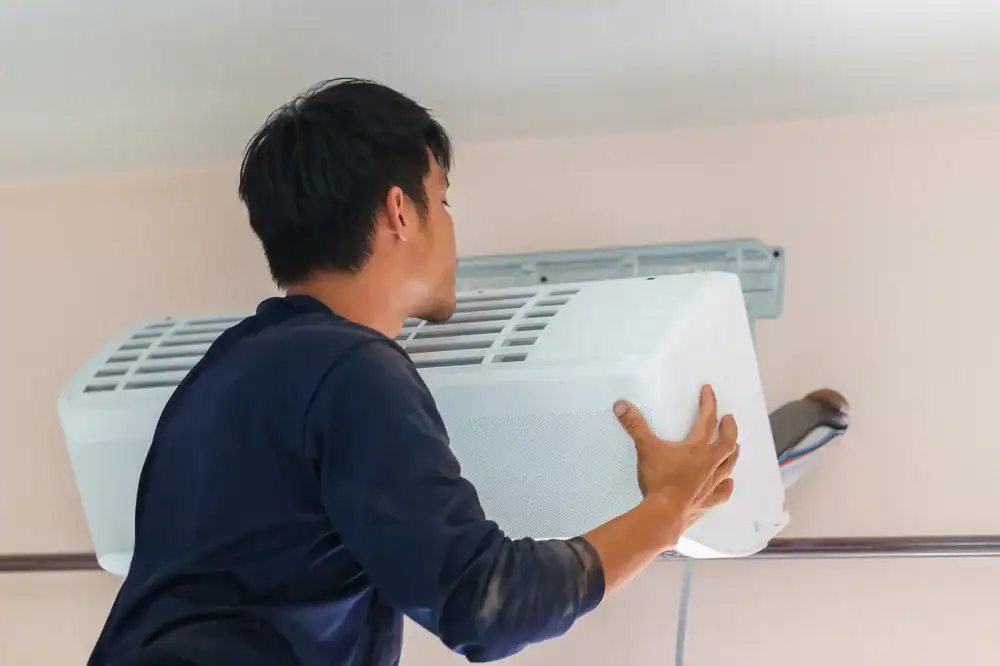
The setup is straightforward. You’ve got an outdoor compressor unit and one or more indoor air handlers mounted inside your home—usually high on a wall, though ceiling and floor options exist too. These components connect through a small conduit (about 3 inches) that carries refrigerant lines, power, and drainage. That’s it. No tearing open walls. No extensive ductwork snaking through your attic.
The system works by transferring heat. In cooling mode, it pulls heat from inside your home and moves it outside. In heating mode, it reverses the process, extracting warmth from outdoor air (yes, even when it’s cold) and bringing it indoors. Modern inverter technology allows the compressor to adjust its speed based on real-time demand, so you’re not dealing with the constant on-off cycling that wastes energy and creates temperature swings.

Sacramento’s climate is brutal on HVAC systems. When you’re staring down 105-degree days for weeks on end, your air conditioner isn’t just a luxury—it’s a necessity. Sacramento County has seen record temperatures of 116 degrees, and when systems fail during these heat waves, it’s not just uncomfortable. It can be dangerous, especially for children, elderly family members, and pets.
Traditional central air works fine if your home was built with ductwork and you’re okay cooling your entire house to the same temperature. But that’s where the limitations start piling up. Ductwork leaks. Studies show that 20-30% of conditioned air escapes through poorly sealed or damaged ducts before it ever reaches your living space. That’s not just wasted energy—that’s money evaporating into your attic every single month.
Then there’s the installation headache. If your home doesn’t have ducts, adding them means cutting into walls, ceilings, and floors. It’s invasive, expensive, and time-consuming. For older Sacramento homes—and there are plenty of beautiful mid-century and Victorian properties in the area—retrofitting ductwork can feel like open-heart surgery on your house.
Mini-splits sidestep all of that. Installation typically takes a day, sometimes just a few hours. One small hole per indoor unit. No demolition. No reconstruction. You’re back to comfortable living without the construction zone aftermath.
Energy efficiency is another major draw. Because mini-splits deliver air directly to each room without duct losses, they use significantly less energy. Many modern systems achieve SEER2 ratings between 20 and 28, compared to older central systems that might limp along at 10 or 13. That efficiency translates directly to lower utility bills—something every Sacramento homeowner appreciates when summer electric bills start climbing.
And here’s the part that really resonates with people: zoned control. Each indoor unit operates independently. You can keep your bedroom at 68 degrees for sleeping while the guest room stays at 74. Your home office can be cool and comfortable without forcing the rest of the house to match. No more thermostat battles. No more cooling rooms that nobody’s using. Just targeted comfort exactly where and when you need it.
If you’ve spent any time designing or renovating your home, you know that bulky, outdated HVAC components can ruin an otherwise beautiful space. Traditional vents, registers, and window units aren’t exactly design features you want to highlight. Mini-splits change that equation.
The indoor units are sleek and compact. Most wall-mounted models measure about 30 inches wide and 10 inches tall, mounted high enough that they blend into the room rather than dominate it. They come in white, black, and sometimes custom finishes. Some manufacturers even offer models with customizable front panels or art covers that let you turn the unit into part of your decor rather than something you’re trying to hide.
For minimalist and modern homes—which are increasingly popular in Sacramento’s newer developments and renovated neighborhoods—this matters. Clean lines, uncluttered spaces, and thoughtful design don’t mix well with clunky floor vents or window units that block natural light. Mini-splits deliver powerful performance without visual disruption.
Ceiling cassette units take this even further. These mount flush with your ceiling and distribute air in multiple directions, almost invisible unless you’re looking for them. They’re popular in open-concept living spaces and high-ceiling rooms where wall mounting isn’t ideal.
Beyond aesthetics, mini-splits are quiet. Really quiet. Many models operate at sound levels between 19 and 25 decibels on low fan speeds—quieter than a whisper, quieter than a refrigerator hum. You won’t hear them running, which is a huge upgrade if you’ve ever tried to sleep with a window unit rattling away or a central system kicking on and off all night.
This combination—efficient performance, modern design, and silent operation—is why architects and interior designers increasingly spec mini-splits for new construction and renovations. They deliver comfort without compromise.
Want live answers?
Connect with a Hot & Cold HVAC expert for fast, friendly support.
Let’s talk money, because that’s usually where the conversation gets real. Mini-splits cost more upfront than a basic window unit, but they’re often less expensive than installing or replacing a full central HVAC system, especially if you’re starting without ductwork.
The real savings show up on your monthly utility bills. Because mini-splits eliminate duct losses and use inverter-driven compressors that adjust output to match demand, they consume far less electricity than older systems. Homeowners regularly report 25-40% reductions in cooling costs after switching from traditional central air to ductless systems.
In heating mode, the efficiency gap gets even wider. Mini-split heat pumps can be 2-4 times more effective than electric resistance heaters or furnaces because they move heat rather than generate it. For Sacramento’s mild winters, where temperatures rarely drop below freezing, heat pumps are nearly perfect. You get reliable warmth without the energy waste of traditional heating.

Installation costs vary based on system size, number of zones, and complexity. A single-zone mini-split (one outdoor unit, one indoor unit) typically runs between $3,000 and $7,000 installed in Sacramento County. Multi-zone systems—where one outdoor unit serves 2-6 indoor units—generally range from $7,000 to $15,000 or more.
Several factors affect the final price. Line set length matters—longer runs between outdoor and indoor units cost more. Electrical work can add to the total, especially if you need a new 240-volt circuit or panel upgrade. Mounting complexity (ceiling installations are more involved than wall mounts) and any required condensate pumps also influence cost.
But here’s what often gets overlooked: rebates and tax credits. Federal tax credits currently offer up to $2,000 for qualifying eco-friendly systems. California and local Sacramento utilities frequently offer additional rebates for high-efficiency HVAC installations. These incentives can reduce your net cost by thousands of dollars.
Compare that to retrofitting ductwork in a home that doesn’t have it—a project that can easily run $10,000 to $15,000 before you even install the HVAC equipment. Or consider the alternative of doing nothing and watching your old, inefficient system drive up utility bills month after month while delivering mediocre comfort.
Installation time is another cost consideration, though it’s measured in convenience rather than dollars. Most mini-split installations are completed in 4-8 hours for straightforward projects. Multi-zone systems or complex setups might take a full day. Compare that to traditional ductwork installation, which can take several days and leave your home torn apart in the meantime.
Professional installation matters. While some DIY mini-split kits exist, proper installation requires refrigerant handling certification, electrical knowledge, and experience with load calculations and placement. A poorly installed system won’t deliver the efficiency or comfort you’re paying for. In Sacramento County, permits are required, and working with licensed contractors guarantees your installation meets code and maintains your warranty coverage.
One question comes up constantly: how much maintenance do these systems need? The answer is reassuring—less than you probably think, and most of it you can handle yourself.
Each indoor unit has a filter that should be cleaned every 1-3 months depending on use. It’s a simple process: pop off the front panel, remove the filter, rinse it under water or vacuum it off, let it dry, and put it back. Takes about five minutes. No special tools. No service call is required.
The outdoor unit needs to stay clear of debris—leaves, dirt, and vegetation. A quick visual check every few months and occasionally rinsing off the coils keeps it running smoothly. Make sure there’s at least 18 inches of clearance around the unit for proper airflow.
Professional maintenance should happen annually. A qualified technician will deep-clean coils, check refrigerant levels, test electrical connections, verify drainage, and make sure everything’s operating properly. This preventive service catches small issues before they become expensive problems and keeps your system running smoothly for its entire lifespan.
When emergency repairs are needed—and in Sacramento’s extreme heat, HVAC emergencies can’t wait—mini-splits offer some advantages. Because each zone operates independently in a multi-zone system; if one indoor unit has issues, the others keep working. That’s different from central air, where a single compressor failure shuts down cooling for your entire home.
How long do mini-splits last? With proper maintenance, expect 10-15 years, sometimes longer. That’s comparable to traditional HVAC systems. The key difference is that mini-splits often maintain their efficiency better over time because there’s no ductwork degrading and leaking more air as it ages.
Parts availability matters, which is why working with established brands like Carrier, Daikin, Trane, or Mitsubishi makes sense. These manufacturers have extensive dealer networks and parts availability. If something needs replacement during an emergency, we can source components quickly rather than leaving you waiting in Sacramento heat for weeks.
Mini-splits aren’t the answer for every situation, but they solve specific problems remarkably well. If you’re dealing with a home addition, garage conversion, or sunroom that needs climate control, they’re often the most practical solution. If your home lacks ductwork and you want to avoid the cost and disruption of installing it, mini-splits deliver whole-home comfort without the construction project. If you’re tired of cooling your entire house to the same temperature or watching energy bills climb while your comfort suffers, zoned control might be exactly what you need.
Sacramento’s climate—brutal summers, mild winters—plays to mini-splits’ strengths. They handle extreme heat efficiently, provide cost-effective heating when temperatures drop, and deliver year-round comfort from a single system. The energy savings are real, the installation is minimally invasive, and the performance is reliable.
If you’re considering a mini-split for your Sacramento County home, talk to someone who understands both the systems and your specific situation. We work with homeowners throughout Sacramento County to evaluate needs, recommend appropriate solutions, and install systems that deliver lasting comfort and efficiency. Not every home needs a mini-split, and not every mini-split is right for every home. But when the fit is right, the difference is noticeable from day one.
Article details:
Share:
Continue learning: