Think cranking your thermostat makes your home heat or cool faster? That myth—and four others—could be costing you hundreds every year.
Share:
Summary:
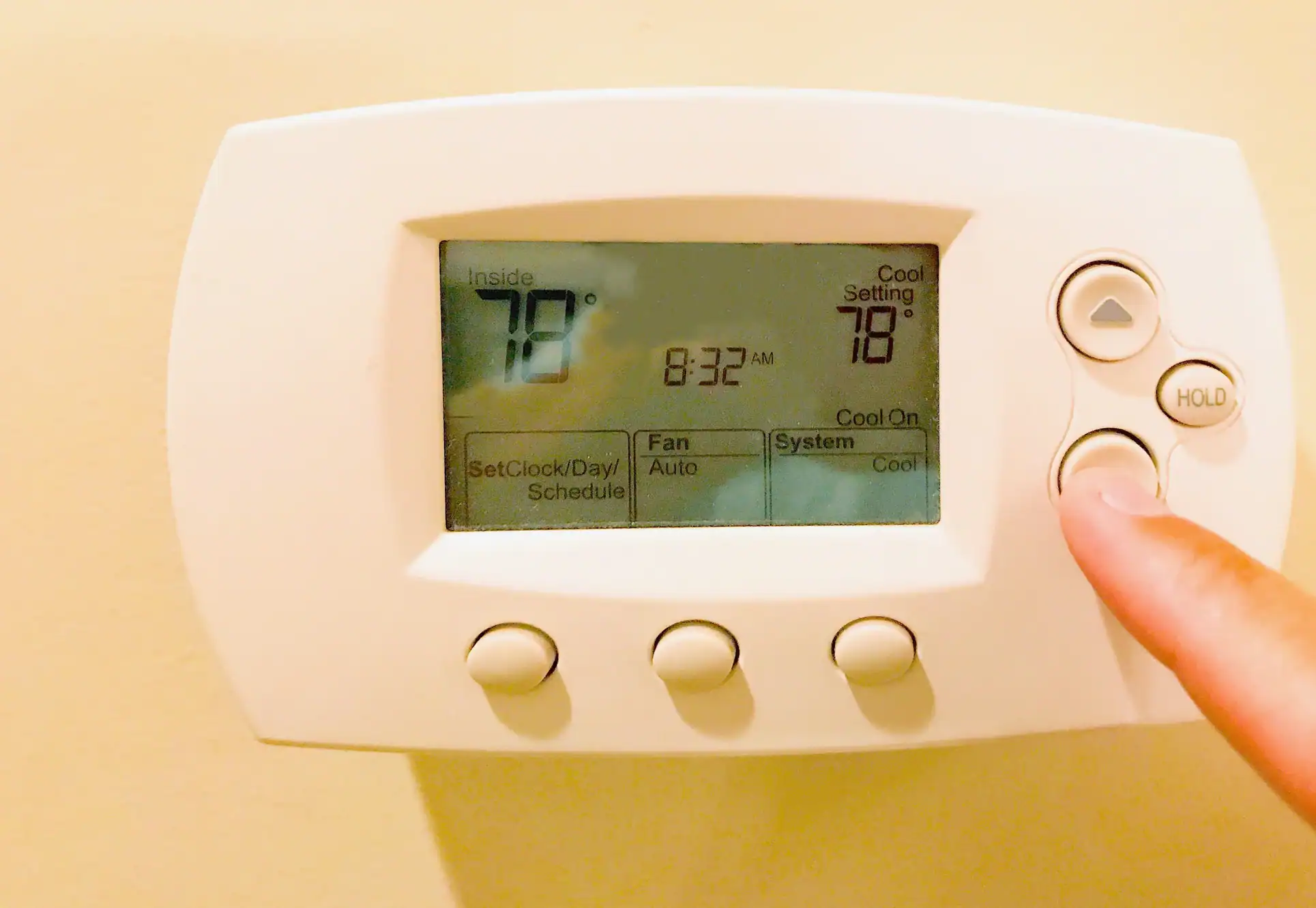
This is probably the most common myth out there. You walk into a hot house after work, and your first instinct is to set the thermostat to 65 degrees, thinking it’ll speed things up. It won’t.
Your HVAC system doesn’t work like a car with a gas pedal. It runs at one speed. Regardless of if you set it to 72 or 62, the air comes out at the same temperature and the same rate. The only thing that changes is how long the system runs. Setting it lower just means your AC will keep running past your actual comfort point, wasting energy and money until you remember to turn it back up.
The same goes for heating. Cranking it to 80 in winter won’t warm your house any faster than setting it to 70. Your furnace operates at a steady output. It heats at the same pace no matter what number you pick.

Most residential heating and cooling systems are single-stage. That means they’re either on or off. There’s no in-between. When your thermostat signals that the temperature is too high or too low, the system kicks on and runs at full capacity until it hits the target.
Think of it like a light switch. Flipping it harder doesn’t make the bulb brighter. Your HVAC works the same way. The thermostat is just telling the system when to start and when to stop. It’s not controlling the intensity.
This is why setting extreme temperatures backfires. You’re not making anything happen faster. You’re just extending how long the system has to work. And in Sacramento’s summer heat, that’s a problem. When it’s over 100 degrees outside, your system is already working hard. Asking it to cool your home to 65 when you really only need 75 means it’s running longer than necessary, using more energy, and wearing itself out.
Some newer systems do have variable-speed technology, which adjusts output based on demand. But even with those, the thermostat setting doesn’t control the speed. The system’s internal sensors do. So the myth still doesn’t hold up. If you want your home to reach a comfortable temperature, just set the thermostat to that temperature. That’s it. Your system will get there as fast as it’s able, and it won’t waste energy overshooting the mark.
Let’s say you get home and it’s 85 degrees inside. You want it at 75. But instead, you set the thermostat to 68, thinking it’ll cool down faster. Here’s what really happens.
Your AC kicks on and starts cooling. It runs and runs, bringing the temperature down degree by degree. Eventually, it hits 75 degrees—your actual comfort zone. But because you set it to 68, the system keeps going. It keeps running, pulling more moisture out of the air than necessary, using more electricity, and working harder than it needs to. By the time you notice the house is cold and adjust it back up, you’ve already wasted energy and put unnecessary strain on your equipment.
The same thing happens in reverse during winter. Setting your heat to 80 when you really want 70 just makes your furnace run longer. It doesn’t warm the house any faster. It just overshoots your target and keeps burning energy.
In Sacramento County, where summer temperatures regularly hit triple digits, this kind of mistake adds up fast. Your system is already battling extreme heat. When you ask it to overcool your home, you’re compounding the problem. You’re not just wasting money on your energy bill. You’re also increasing wear and tear, which can lead to breakdowns right when you need your AC most.
The smarter move is simple. Set your thermostat to the temperature you actually want. Let your system do its job. It’ll get there at the same speed either way, but you’ll save energy, reduce strain, and avoid the frustration of a house that’s too cold or too hot.
Want live answers?
Connect with a Hot & Cold HVAC expert for fast, friendly support.
Another myth that refuses to die: leaving your thermostat at the same temperature all day and night is more efficient than adjusting it. The logic seems sound. If you lower the temperature when you leave for work, won’t your system have to work harder to heat or cool the house back up when you return?
No. That’s not how it works. The energy saved while your system isn’t running far outweighs the energy needed to bring your home back to a comfortable temperature. Keeping your home at 72 degrees all day when no one’s there for eight hours is just paying to heat or cool an empty house.

Here’s the reality. The bigger the difference between your indoor temperature and the outdoor temperature, the faster your home loses or gains heat. When you keep your thermostat at a constant 72 degrees in summer while it’s 100 degrees outside, your AC has to work continuously to fight that heat transfer. But if you raise the temperature to 80 degrees while you’re gone, the rate of heat transfer slows down. Your home stays closer to the outdoor temperature, so your system doesn’t have to work as hard.
The same principle applies in winter. If you lower your thermostat from 70 to 62 degrees while you’re asleep or away, your home loses heat more slowly because the temperature difference between inside and outside is smaller. Less heat loss means your furnace runs less. And when you’re ready to warm the house back up, the energy required to go from 62 to 70 is still less than what you would have spent maintaining 70 degrees the entire time.
The Department of Energy backs this up. You can save around 10 percent a year on heating and cooling just by turning your thermostat back 7 to 10 degrees for eight hours a day. That’s real money. For a household spending $1,900 a year on energy, that’s close to $200 in savings. And in Sacramento County, where extreme temperatures drive up energy use, those savings can be even higher.
This is where programmable or smart thermostats become valuable. You don’t have to remember to adjust the temperature every time you leave the house. You set a schedule once, and the thermostat does the work for you. You wake up to a warm house in winter or a cool house in summer, and you’re not paying to condition an empty home while you’re at work.
The fear that it takes more energy to reheat or recool your home is rooted in a misunderstanding of how HVAC systems work. People assume that because the system has to run for a longer period to bring the temperature back to normal, it must be using more energy overall. But that’s not how the math works out.
When your system isn’t running, it’s not using energy. That’s the key. Every minute your furnace or AC is off is a minute you’re not paying for electricity or gas. Even if your system has to run for 30 or 40 minutes to bring your home back to your preferred temperature, that’s still less energy than running intermittently for hours to maintain a constant temperature while you’re not home.
Think of it this way. If you leave your thermostat at 72 degrees all day in summer, your AC will cycle on and off repeatedly to hold that temperature against the outdoor heat. Each cycle uses energy. Over eight hours, those cycles add up. But if you raise the thermostat to 80 degrees while you’re gone, your AC might not run at all, or it might only run a few times. When you get home and lower it back to 72, the system runs continuously for a bit, but the total energy used is still less than all those individual cycles throughout the day.
This is especially true in Sacramento’s climate. When outdoor temperatures hit 105 degrees or higher, the strain on your system to maintain a 72-degree indoor temperature is enormous. Giving your system a break by raising the temperature during the hottest part of the day doesn’t just save energy. It also reduces wear and tear, which can extend the life of your equipment and help you avoid costly repairs or replacements.
The bottom line is this: adjusting your thermostat based on when you’re actually home is smarter, cheaper, and easier on your system. The idea that it costs more to reheat or recool your home is a myth. The numbers don’t support it, and neither does the science.
HVAC myths persist because they sound reasonable. But when you understand how your system works, the truth becomes clear. Your thermostat doesn’t control the speed of your heating or cooling. It only tells your system when to turn on and off. Setting it to extreme temperatures doesn’t speed anything up. It just wastes energy and money.
Adjusting your temperature when you’re away or asleep saves energy, period. The idea that it costs more to bring your home back to a comfortable temperature is wrong. The energy saved while your system isn’t running always outweighs the cost of reheating or recooling.
If you want to save money, reduce strain on your equipment, and stay comfortable in Sacramento County’s extreme climate, the answer is simple. Set your thermostat to the temperature you actually want. Use a programmable or smart thermostat to adjust it automatically when you’re not home. And stop believing myths that cost you hundreds of dollars a year. If you’re dealing with an HVAC system that’s not performing the way it should, or if you just want to make sure you’re getting the most out of your equipment, reach out to us at Hot & Cold HVAC. We know Sacramento County’s climate, and we know how to help you stay comfortable without overpaying.
Article details:
Share:
Continue learning: