
Your furnace stops making that grinding noise at 2 a.m. Your energy bill drops because the system isn’t working twice as hard to heat half as well. Your family stops piling on blankets in the living room.
When your heating system runs right, you stop thinking about it. That’s the point. You’re not wondering if it’ll make it through another cold night or whether that smell means something expensive is about to break.
Most furnace problems in Courtland start small—a pilot light that won’t stay lit, uneven heating between rooms, or higher gas bills without explanation. Catch them early and you’re looking at a $200 repair instead of a $1,200 heat exchanger replacement. Wait too long and what could’ve been a quick fix turns into an emergency call on the coldest night of the year.
We serve Courtland and the surrounding Sacramento County area with fully licensed, insured technicians who’ve seen what this climate does to heating systems. The Delta humidity, the tule fog that settles in for days, the temperature swings from 40-degree mornings to 70-degree afternoons—your furnace deals with conditions that stress components differently than systems in other parts of California.
We’re not the company that shows up and immediately pitches you a $25,000 replacement. We diagnose the actual problem, explain what’s happening in plain terms, and give you a price before we touch anything. If it’s a $180 ignitor replacement, that’s what you pay.
You’ll reach us at (916) 519-1248. Text or call. We offer same-day service Monday through Saturday, 7 a.m. to 7 p.m., and we cover both Sacramento and Placer counties from our Citrus Heights location.

You call or text (916) 519-1248 and describe what’s going on—no heat, strange sounds, pilot light issues, whatever you’re dealing with. We schedule a same-day appointment if you need it, or we find a time that works for your schedule.
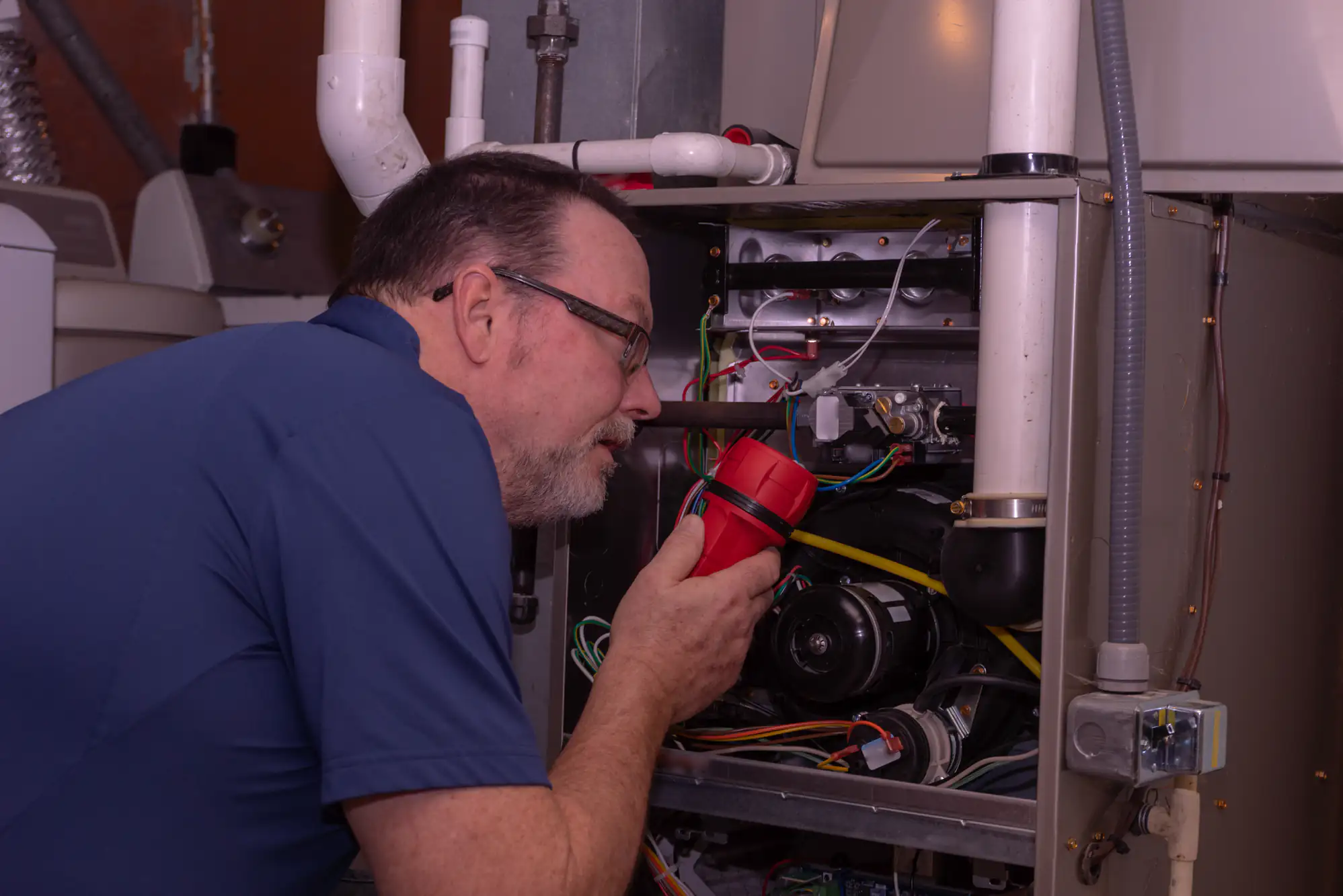
Our technician shows up with a fully stocked truck. Most repairs don’t require a parts run because we carry the common components that fail on furnaces in this area. We run diagnostics to pinpoint the problem, then walk you through what we found. You get an itemized price for the repair before any work starts.
Once you approve, we complete the repair, test the system to make sure it’s heating properly and safely, and show you it’s working before we leave. You’ll know exactly what was wrong, what we fixed, and what to watch for going forward. If your system is older or showing signs of wear in other areas, we’ll mention it—but we’re not going to pressure you into repairs you don’t need right now.

Ready to get started?
We handle everything from basic furnace tune-ups to emergency heating repairs. That includes ignitor replacements, blower motor repairs, thermostat issues, gas valve problems, heat exchanger inspections, and full system diagnostics. We service all major brands—Carrier, Trane, Lennox, Rheem, Goodman, Bryant, whatever you have.
In Courtland and the Delta region, we see specific patterns. Humidity affects electrical components. Dust from agricultural areas clogs filters faster. Systems that aren’t maintained annually lose efficiency and fail earlier. A standard furnace tune-up runs around $150-$200 and catches most problems before they become expensive. Most repairs fall between $150 and $500 depending on the part and labor involved.
If you’re dealing with an older system—15 years or more—you’re in the decision zone. Repairs still make sense if the furnace is otherwise solid, but at some point the math shifts. We’ll give you the information you need to make that call yourself. SMUD offers rebates up to $3,000 for high-efficiency systems and heat pump conversions, which changes the economics if you’re considering a replacement.

Most furnace repairs in Courtland run between $150 and $500, depending on what’s broken and how long it takes to fix. A simple ignitor replacement might cost $180 to $250. A blower motor repair could run $300 to $450. Heat exchanger replacements are the expensive ones—$800 to $1,200—but those are less common and usually only happen on older systems.
Labor rates in Sacramento County typically range from $75 to $150 per hour. You’re also paying for the part itself and the diagnostic fee, though many companies roll that into the repair cost if you move forward with the work.
The real cost comes from waiting. A minor issue like a dirty flame sensor might cost $150 to clean or replace. Ignore it and your furnace cycles on and off constantly, wearing out the blower motor and heat exchanger. Now you’re looking at $800+ in repairs that could’ve been avoided with a $150 fix and an annual tune-up.
Ignitor failures top the list. Your furnace clicks but doesn’t light, or it lights then shuts off immediately. Ignitors wear out over time, especially on systems that cycle frequently during mild Sacramento County winters when temperatures hover in the 40s and 50s.
Blower motor issues come next. You hear the furnace running but little to no air comes through the vents. Sometimes it’s the motor itself, sometimes it’s the capacitor that starts the motor. Delta region dust and lack of filter changes accelerate this wear.
Thermostat problems cause a lot of service calls that aren’t actually furnace issues. The system won’t turn on, or it runs constantly, or the temperature reading is way off. Often it’s a wiring issue, dead batteries, or a thermostat that needs recalibrating or replacing. Pilot light and gas valve issues round out the common problems, especially on older furnaces. The pilot won’t stay lit, or you smell gas, or the burners don’t ignite evenly. These need immediate attention for safety reasons.
Once a year, ideally in early fall before you need the heat. Annual maintenance catches small problems before they strand you without heat in January. It also keeps your system running efficiently, which matters when you’re paying for gas or electricity to heat your home.
A standard furnace tune-up includes cleaning the burners, checking the heat exchanger for cracks, testing the ignitor, inspecting electrical connections, measuring airflow, and replacing the filter. The technician also checks for carbon monoxide leaks and makes sure all safety controls work properly.
In Courtland, where humidity and dust are factors, maintenance matters more than in drier climates. Moisture affects electrical components. Dust clogs filters and builds up on blower wheels. Skip maintenance for a few years and you’ll see it in your energy bills first, then in repair costs. Most furnaces last 15-20 years with regular maintenance. Without it, you’re looking at 10-12 years and more frequent breakdowns along the way.
Check your thermostat first. Make sure it’s set to heat mode, the temperature is set higher than the current room temperature, and the batteries aren’t dead if it’s battery-powered. Sounds basic, but it solves the problem more often than you’d think.
Next, check your circuit breaker. Furnaces have a dedicated breaker that sometimes trips. If it’s tripped, flip it back on and see if the furnace starts. If it trips again immediately, don’t keep resetting it—that indicates an electrical problem that needs professional diagnosis.
Look at your furnace filter. A completely clogged filter can cause the system to overheat and shut down as a safety measure. If you can’t remember the last time you changed it, that might be your problem. Replace it and see if the furnace runs. If none of that works, or if you smell gas, hear unusual noises, or see error codes on the display, call for service. Some problems are safety issues that shouldn’t wait.
It depends on what’s broken and what the rest of the system looks like. If you’re facing a $200 repair on an otherwise solid 15-year-old furnace, repair it. If you’re looking at $1,000+ in repairs on a system that’s already had multiple fixes and your energy bills keep climbing, replacement starts making more sense.
The general guideline is the 50% rule. If the repair costs more than 50% of what a new furnace would cost, and your system is past the halfway point of its expected lifespan, replacement is usually the better investment. A new mid-efficiency furnace installed runs $3,500 to $5,500 depending on size and complexity. High-efficiency models cost more upfront but qualify for SMUD rebates up to $3,000, which changes the math significantly.
Consider how the furnace has performed recently. If it’s been reliable and this is the first major issue, a repair buys you several more years. If you’ve called for service three times in the past two years, you’re throwing money at a system that’s telling you it’s done. We’ll give you an honest assessment of where your furnace stands and what makes sense financially, but the decision is yours.
Yes. We offer same-day service for heating emergencies Monday through Saturday, 7 a.m. to 7 p.m. If your furnace goes out and you need heat restored quickly, call or text (916) 519-1248 and we’ll get someone to your Courtland home as fast as our schedule allows.
Most emergency calls involve no heat at all, gas smells, or strange noises that indicate something’s about to fail. We prioritize these because they’re either safety concerns or situations where waiting means you’re without heat overnight. Our trucks carry the most common repair parts, so there’s a good chance we can fix the problem on the first visit without needing to order parts.
Emergency service costs the same as scheduled service—we don’t charge extra just because your furnace picked a bad time to break. You’ll get the same upfront pricing and diagnostic process. The only difference is timing. We’re working you into the schedule between other appointments rather than booking days out. If your furnace fails on Sunday when we’re closed, your options are space heaters for the night or calling a 24/7 company that will charge premium rates. For Monday through Saturday issues, we’ll take care of you the same day.
Other Services we provide in Courtland