
You’re not looking for a lecture about HVAC systems. You need your house cool again before another 105-degree afternoon hits. That’s what same-day AC repair gets you. A licensed technician shows up with the parts most Sacramento homes need—capacitors, contactors, refrigerant—already in the truck. No waiting three days for an order to come in while your family sweats through another night. Most repairs get finished the same visit. If it’s a bigger job, you’ll know exactly what’s involved and what it costs before any work starts. No surprises, no runaround. Just your air conditioning unit running cold again so you can stop worrying about it.
We’ve been handling air conditioning repair in Sacramento since 1977. That’s over 40 years of dealing with the same brutal summers you’re dealing with right now. Our techs are EPA-certified and California-licensed. They’ve seen what Sacramento’s heat does to older central air systems, how dust clogs filters faster here than most places, and why your condenser coil works twice as hard when it’s 109 degrees outside. We’re not the cheapest option in town. But when your cooling system fails at 9 PM on a Friday during a heat advisory, you want someone who answers the phone, shows up fast, and actually fixes the problem. That’s what we do.

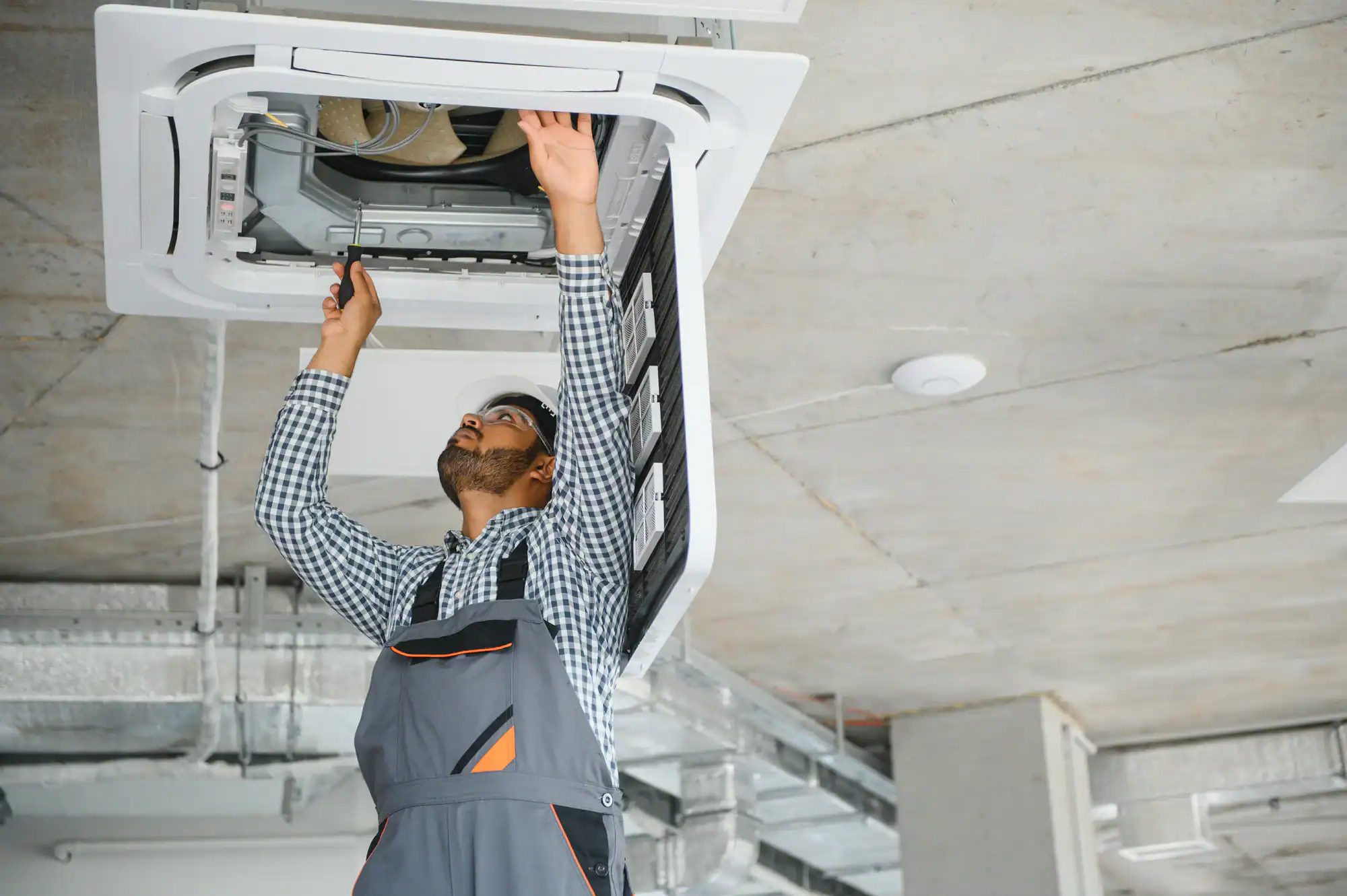
You call or submit a request online. We ask a few questions about what’s happening—no cool air, strange noises, system won’t turn on—and get someone scheduled, usually same-day. The technician shows up in a fully stocked truck. They run a full diagnostic on your air conditioning unit: refrigerant levels, electrical components, airflow through your ductwork, condenser coil condition. You get a clear explanation of what’s wrong and what it’ll cost to fix it before any repair work starts. Most jobs get completed right then. Refrigerant leak repairs, failed capacitors, clogged drain lines, faulty thermostats—we carry the common parts Sacramento systems need. If it’s a compressor replacement or something bigger, we’ll walk you through your options: repair vs replace, costs, timing, what makes sense for your situation. Once the repair is done, we test the system to make sure it’s cooling properly. Then we’re out of your way and your house is comfortable again.
Ready to get started?
Every AC repair starts with a complete system diagnosis. That means checking your refrigerant charge, testing electrical connections, inspecting your condenser coil for damage or debris buildup, and evaluating airflow throughout your ductwork. Sacramento’s climate is hard on cooling systems. When it’s 105 degrees outside, your central air runs longer and works harder than systems in milder areas. Dust from our dry summers clogs filters fast. Components wear out quicker under constant strain. We check all of it. If your refrigerant is low, we find the leak before just topping it off—because low refrigerant always means there’s a leak somewhere. If your system is short-cycling or blowing warm air, we trace it back to the actual cause: failed capacitor, dirty coil, blocked airflow, whatever it is. You’ll know what’s wrong, why it happened, what it takes to fix it, and what it costs. Then you decide. We fix it right, test it thoroughly, and make sure your air conditioning is running cold before we leave.
We offer genuine 24/7 emergency service with rapid dispatch. During extreme heat events—when Sacramento hits 105+ degrees and AC failure becomes a safety issue—we typically arrive within 1-2 hours. For standard same-day service calls, we schedule based on availability and urgency. If you call in the morning with no cooling, there’s a strong chance we’re at your house that afternoon. If you call during a heat wave when everyone’s system is struggling, it might take a few hours longer, but we’ll give you an honest timeframe when you call. Our trucks stay stocked with the parts that fail most often in Sacramento homes. That means we can complete many repairs immediately instead of scheduling a follow-up visit after ordering parts. Capacitors, contactors, thermostats, refrigerant—we carry it.
Extreme heat puts massive strain on every component in your cooling system. When your air conditioning unit runs 12+ hours a day trying to keep up with 105-degree temperatures, things wear out faster. The most common failures we see: capacitors that can’t handle constant cycling, refrigerant leaks from vibration and pressure stress, clogged condensate drains from humidity, and dirty condenser coils covered in dust and debris. Sacramento’s dry, dusty air makes that last one worse—your outdoor unit pulls in a lot of airborne particles that coat the coil and restrict airflow. Older systems are especially vulnerable. If your central air is 10+ years old and hasn’t had regular maintenance, a heat wave often exposes weak points that were barely holding on. A failing compressor, deteriorating ductwork, or an undersized system that was never quite right for your home—the extreme heat finds it. Regular maintenance catches most of these issues before they become emergency repairs. But if your system already failed, we’ll diagnose the root cause and fix it properly.
If your air conditioning unit is under 10 years old and the repair costs less than half of a new system, repair almost always makes sense. You’ll get several more years of reliable cooling for a fraction of replacement cost. If your system is 15+ years old, uses R-22 refrigerant (which is expensive and being phased out), and needs a major repair like a compressor or coil replacement, replacement often makes more financial sense. You’re looking at a big repair bill on an aging system that’ll likely need more repairs soon—and it’s running up your energy bills because it’s inefficient compared to newer models. The middle ground—systems 10-15 years old with moderate repair needs—depends on your specific situation. We’ll walk you through the actual numbers: repair cost vs replacement cost, your current energy bills, how much longer you can reasonably expect the system to last, and whether you’re planning to stay in the house long-term. We’re not here to sell you a new system if a repair makes sense. But we’re also not going to let you dump money into a dying unit if replacement is the smarter move. You’ll get honest guidance based on what we’re seeing with your equipment.
Yes. Our technicians are trained to service all major residential brands: Carrier, Trane, Lennox, Rheem, Goodman, Bryant, Amana, Daikin, and others. We work on central air systems, heat pumps, and ductless mini-splits. Different brands have different quirks, but the core components—compressors, condensers, evaporator coils, refrigerant systems—work on the same principles. Our techs have the diagnostic tools and experience to troubleshoot any system, identify the failed component, and get it running again. We also keep relationships with parts suppliers for all major brands, which means we can source what you need quickly. For common failure points, we stock universal parts that work across multiple brands. For brand-specific components, we know where to get them fast. If you’ve got an older or unusual system, we’ll tell you upfront if parts are hard to find or if you’re looking at a situation where replacement makes more sense than hunting down obsolete components. But for standard residential systems from major manufacturers, we’ve got you covered.
Our diagnostic includes a complete system evaluation: checking refrigerant levels and looking for leaks, testing electrical components like capacitors and contactors, inspecting your condenser coil and evaporator coil, measuring airflow and temperature differentials, and checking your thermostat and controls. We do charge a diagnostic fee for the service call. That fee covers the technician’s time, expertise, and the equipment needed to properly diagnose your system. If you proceed with the recommended repair, we typically apply the diagnostic fee toward the repair cost. Here’s why we charge for diagnostics: accurate troubleshooting takes time and skill. A proper diagnosis means finding the actual problem, not just the symptom. If your AC is blowing warm air, that could be low refrigerant, a failed compressor, a stuck reversing valve, a bad expansion valve, or a dozen other issues. We test systematically until we know exactly what’s wrong. Once we’ve identified the problem, you get a clear explanation and an upfront price for the repair. No surprise charges, no hidden fees. You decide whether to move forward, and if you do, we fix it right.
Regular maintenance is your best defense. A pre-season tune-up in spring—before Sacramento’s heat really hits—catches most problems before they become emergency repairs. That includes cleaning your condenser coil, checking refrigerant levels, testing electrical components, and replacing your air filter. Between professional maintenance visits, change your filter regularly. In Sacramento’s dusty conditions, that usually means every 1-2 months during heavy-use seasons, not the 3-month interval you’ll see on the package. A clogged filter restricts airflow, makes your system work harder, and leads to frozen evaporator coils and compressor strain. Keep your outdoor condenser unit clear. Trim back plants, remove debris, and occasionally spray down the coil with a garden hose to remove dust buildup. Don’t let your landscaping block airflow to the unit. During extreme heat, don’t push your thermostat too low. If it’s 109 degrees outside, setting your thermostat to 68 forces your system to run constantly, which increases wear and the chance of failure. Keeping it at 75-78 degrees gives your system periodic breaks and reduces strain. If your AC is 10+ years old and hasn’t had maintenance in years, schedule it now—before the next heat wave. Catching a small refrigerant leak or a weakening capacitor during a routine visit is a lot cheaper and less stressful than an emergency repair when it fails at the worst possible time.
Other Services we provide in Sacramento