
Citrus Heights averages 73 days a year with high temperatures. That’s not a stretch of uncomfortable afternoons that’s nearly a quarter of the year where your HVAC system is working at its limit. When that system is undersized, improperly installed, or just plain old, you feel it in every room that never quite cools down and every energy bill that doesn’t match what you were promised.
A properly installed system one that was sized for your specific square footage, ceiling height, window placement, and sun exposure doesn’t just run quieter. It keeps up on a 100-degree afternoon in August without cycling on and off every few minutes. It heats evenly through a damp December night. And it does both without spiking your SMUD bill the way an aging or mismatched system does.
The other thing that changes is confidence. When the work is permitted through the City of Citrus Heights and the system is commissioned before we leave, you’re not wondering if it was done right. You know it was. That matters whether you’re staying in your home for another decade or thinking about what unpermitted HVAC work does to a listing price when you sell.
Hot & Cold HVAC operates right here in Citrus Heights. Not Sacramento. Not Roseville. Here. That means when you call, you’re talking to a company that works in the same neighborhoods it serves off Greenback Lane, near the Sunrise Boulevard corridor, in the Oak Creek area, and everywhere in between. There’s no regional call center routing your request to whoever is available. There’s a local team with a local reputation.
Every technician holds a California C-20 HVAC contractor license and EPA Section 608 certification both required by the state and both verifiable through the CSLB’s public lookup tool. We pull every permit through the City of Citrus Heights Building and Safety Division, handle all required inspections, and make sure your installation is fully compliant with California’s Title 24 energy standards.
The quote you get is the price you pay. Equipment, labor, permits, disposal all of it is itemized before we start. No line items that appear after the fact.
It starts with a proper Manual J load calculation. Before we recommend a single piece of equipment, we evaluate your home’s actual heating and cooling demands square footage, insulation levels, ceiling height, window orientation, and how the Sacramento Valley sun hits your specific layout. This is the step most contractors skip, and it’s the reason so many “new” systems in Citrus Heights still can’t keep a home comfortable in July.
Once the right system is identified, we handle the permit application with the City of Citrus Heights Building and Safety Division. You don’t have to chase paperwork or figure out what’s required we do that. On installation day, we remove the old equipment, install the new system, and address the ductwork honestly. Many homes in Citrus Heights were built in the 1960s and 70s with original ductwork that’s never been replaced. If it’s leaking or undersized, we tell you with specific reasons and a clear cost. If it’s serviceable, we tell you that too.
Before we leave, we commission the system. That means verifying airflow at every register, checking refrigerant charge, and confirming the system is operating within manufacturer specs. We also walk you through the SMUD rebate process for qualifying equipment, so you know exactly what you’re eligible for and what documentation you need to claim it.
Ready to get started?
A full HVAC installation with us includes the complete system replacement indoor air handler or furnace, outdoor condensing unit or heat pump, thermostat, and all associated connections. We handle Energy Star furnace setup for qualifying gas systems and heat pump installations for homeowners who want to take advantage of current SMUD rebates and federal Inflation Reduction Act tax credits, which can meaningfully reduce the out-of-pocket cost on qualifying equipment.
Ductwork is assessed on every job. Given that the majority of Citrus Heights homes were built between the 1950s and 1990s, degraded or undersized duct systems are common and they directly affect whether your new equipment performs the way it should. Professional ductwork installation or sealing is included when needed, not added as a surprise after the fact.
Every installation is fully permitted through the City of Citrus Heights and compliant with California Title 24 Building Energy Efficiency Standards, including minimum SEER2 equipment ratings and duct sealing requirements. If you’re in the Sacramento County area near Citrus Heights in an unincorporated zone, permit requirements differ we’ll clarify that on your initial assessment so there’s no confusion. The goal is a whole home comfort system that performs on the hottest day of the year and the coldest night of winter, with documentation to prove it was done right.
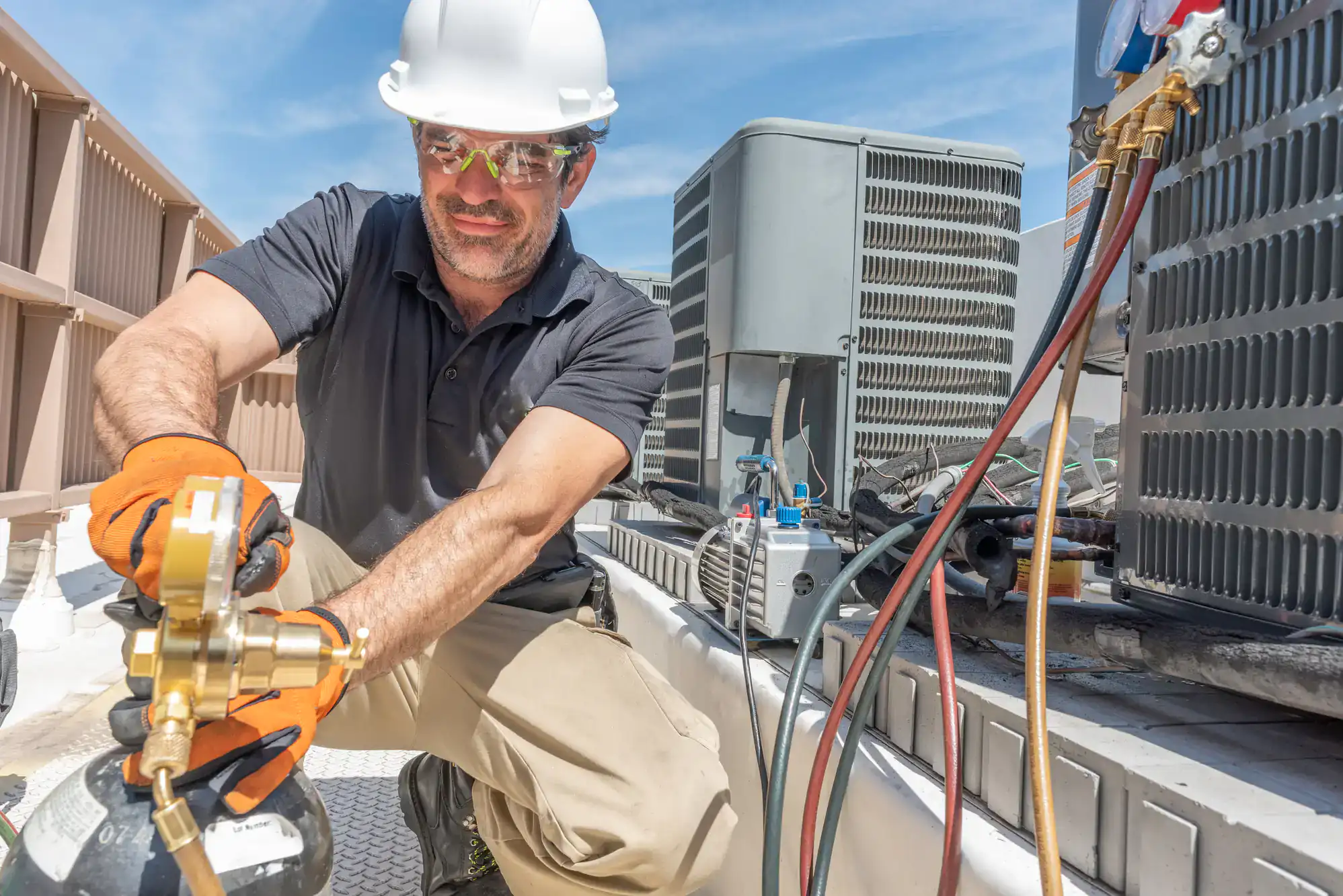
Sizing is determined by a Manual J load calculation not by the size of your old system and not by a rough square footage estimate. The calculation factors in your home’s square footage, ceiling height, insulation levels, window placement, and how much direct sun exposure your home gets. In Citrus Heights, where the Sacramento Valley sun hits hard from May through September, sun exposure on west- and south-facing walls is a real variable that affects the calculation.
The reason this matters is that an oversized system short-cycles it reaches the thermostat setpoint quickly, shuts off, and never runs long enough to properly dehumidify the air or stabilize temperatures. An undersized system runs constantly and still can’t keep up on a 100-degree afternoon. Both scenarios cost you more in energy and wear the equipment out faster. We do the load calculation before we recommend anything, because recommending equipment without it is just guessing.
For a typical Citrus Heights home in the 1,500 to 2,500 square foot range which covers the majority of the city’s housing stock a complete system replacement generally runs between $10,000 and $14,000. That range covers equipment, labor, permit fees, and disposal of the old system. Where you land within that range depends on the system type (standard central AC and gas furnace vs. a heat pump system), the efficiency tier of the equipment, and whether your existing ductwork needs attention.
If you’re replacing with a qualifying heat pump system, SMUD rebates and federal IRA tax credits (the 25C credit) can reduce that out-of-pocket cost meaningfully. The federal credit alone covers up to 30% of the cost of qualifying equipment, and SMUD offers additional rebates on top of that. We walk you through what you qualify for during the assessment it’s not an afterthought, it’s part of the conversation from the start.
Yes HVAC installation in Citrus Heights requires a building permit through the City of Citrus Heights Building and Safety Division. This applies to full system replacements, not just new construction. The permit triggers a city inspection that confirms the work was done to California’s Title 24 Building Energy Efficiency Standards, which include minimum equipment efficiency ratings and duct sealing requirements.
It matters for two practical reasons. First, unpermitted HVAC work can void your equipment manufacturer’s warranty most warranties require that installation be performed by a licensed contractor and inspected to code. Second, when you sell your home, unpermitted mechanical work shows up on disclosure and gives buyers a legitimate negotiating point. A permit-pulled installation is a clean record that the work was done correctly and signed off by the city. We handle the permit application and inspection scheduling on every job you don’t have to manage any of that.
Most full system replacements take one full day typically six to eight hours depending on the complexity of the installation and whether ductwork modifications are needed. Homes with original 1960s or 1970s ductwork that requires replacement or significant sealing may run longer, but we assess that during the initial evaluation so there are no surprises on installation day.
As for timing, spring is the best window in Citrus Heights. The weather is mild, which gives us ideal conditions for commissioning and testing the system, and you’re ahead of the summer demand surge that hits when the first heat wave arrives in June. Once July and August are in full swing, lead times stretch and emergency replacements carry a premium. If your system is showing signs of strain struggling to keep up on hot days, running constantly, or cycling on and off scheduling in March, April, or May is the practical move. It’s also when rebate programs tend to have the most availability before summer depletes them.
For most Citrus Heights homes, a heat pump is a genuinely strong option and not just because of the rebate incentives, though those are real. Citrus Heights has a hot summer Mediterranean climate, which means long, dry summers and mild winters where nighttime lows rarely drop below the upper 30s. Heat pumps are highly efficient in exactly this kind of climate because they move heat rather than generate it, which makes them far more efficient than a gas furnace during the mild heating months Citrus Heights actually experiences.
Where heat pumps historically struggled extreme cold isn’t a significant factor in this climate. Modern cold-climate heat pumps maintain performance down to temperatures well below what Citrus Heights regularly sees in December and January. The tradeoff to consider is upfront cost: a heat pump system typically runs higher than a traditional split system, though the SMUD rebates and the federal 30% tax credit on qualifying equipment close that gap considerably. We’ll run both scenarios for your specific home so you can make the comparison with real numbers, not generalizations.
Yes while we’re based in Citrus Heights, we serve the surrounding Sacramento County communities including Orangevale, Fair Oaks, Carmichael, Antelope, and North Highlands. Each of those areas has its own permit requirements and building department contacts, which differ from the City of Citrus Heights process. Orangevale and Fair Oaks, for example, fall under Sacramento County’s unincorporated permit process rather than a city building department and that affects the paperwork and inspection timeline.
If you’re in one of those neighboring communities, the installation process itself is the same: load calculation, proper sizing, full permit handling, ductwork assessment, and commissioning before we leave. The local difference is in the permit authority and the specific code enforcement contacts, which we handle on your behalf regardless of which community you’re in. If you’re not sure whether your address falls under City of Citrus Heights jurisdiction or Sacramento County’s unincorporated process, we can clarify that in the first conversation it’s a common question for residents near the city boundaries.
Other Services we provide in Citrus Heights